



Mezzanine vs. Warehouse Expansion: Which Is Right for Your Business?
The Space Challenge Every Growing Business Faces
Your warehouse is running out of room. Orders are growing, inventory is expanding, and your team is tripping over each other. You have two primary options: build out with a warehouse expansion or build up with an industrial mezzanine.
This is one of the most consequential facility decisions a business makes. The wrong choice can mean months of unnecessary disruption, hundreds of thousands in avoidable costs, and a solution that does not adapt when your needs change again.
This guide provides a structured decision framework so you can compare both options on the factors that actually matter: timeline, disruption, flexibility, permits, and total value rather than just upfront price.
Side-by-Side Comparison
Before we dive into each factor, here is the high-level comparison:
| Factor | Mezzanine | Warehouse Expansion |
|---|---|---|
| Timeline | 2 to 6 weeks (engineering to installation) | 6 to 18 months (design through occupancy) |
| Operational Disruption | Minimal - installation takes days | Significant - months of construction activity |
| Cost Range | 50 to 70% less than expansion | Full construction costs including foundation, roofing, HVAC |
| Permits | Simpler permit process (interior modification) | Full building permit, zoning approval, site plan |
| Flexibility | Relocatable, expandable, modular | Permanent, fixed |
| Space Created | Doubles footprint area vertically | Extends footprint area horizontally |
| Lease Impact | No lease renegotiation needed | May require new lease or land purchase |
Timeline and Disruption
This is where the two options diverge most dramatically.
Mezzanine: Weeks, Not Months
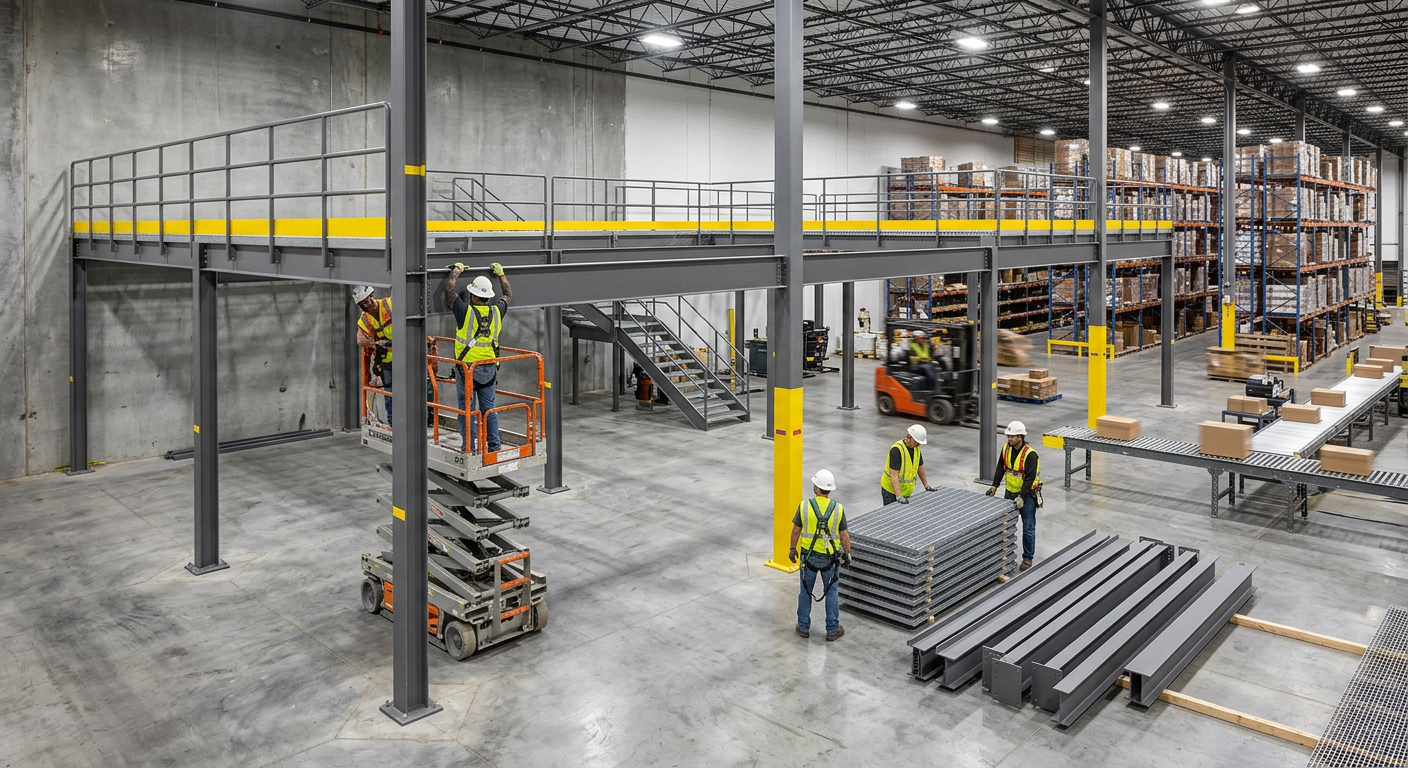
A typical mezzanine project from initial engineering to completed installation takes 2 to 6 weeks. Cogan's prefabricated, modular approach means that most of the work happens off-site in our manufacturing facility. On-site installation is primarily assembly, and a standard mezzanine can be erected in 2 to 5 days with minimal impact on your daily operations.
Many of our clients schedule installation over a weekend or during a planned shutdown, meaning zero lost production days.
Warehouse Expansion: A Major Construction Project
A building expansion is a full-scale construction project. From architectural design and engineering through permitting, foundation work, steel erection, roofing, HVAC, electrical, and final inspection, you are looking at 6 to 18 months. During this time, construction activity will affect your existing operations through noise, dust, restricted access, and safety considerations.
The permit process alone can take 2 to 4 months in many municipalities, and construction delays are common.
Flexibility and Future-Proofing
Mezzanines Adapt With Your Business
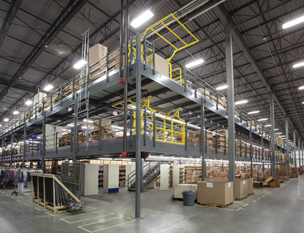
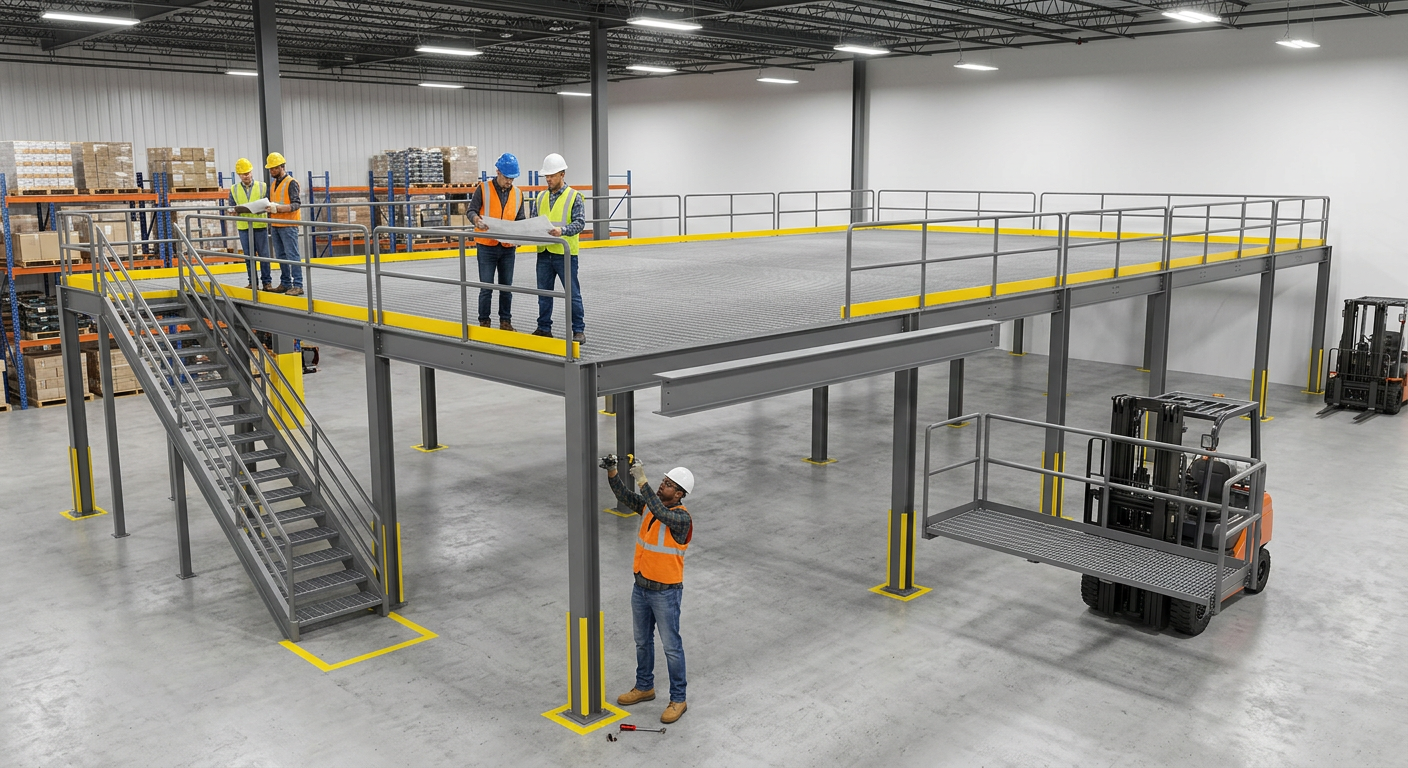
A free-standing mezzanine is a modular, relocatable asset. If your business moves to a new facility, the mezzanine can be disassembled and reinstalled. If you need more space, additional bays can be added. If your layout changes, the mezzanine can be reconfigured.
This flexibility is particularly valuable for businesses in leased spaces, companies experiencing rapid growth, and operations where workflow layouts evolve frequently.
Building Expansions Are Permanent
A building addition is a permanent modification to the structure. It cannot be moved, and reconfiguring it requires additional construction. If you outgrow the expansion or your business relocates, the investment stays with the building, not with your company.
Permits and Compliance
Mezzanine Permits
Mezzanines require a building permit in most jurisdictions, but the process is significantly simpler than for a building expansion. Because a mezzanine is an interior modification that does not alter the building envelope, you typically avoid site plan amendments, zoning variances, and the complex approvals associated with external construction.
Cogan provides complete engineering packages with PE-stamped drawings that satisfy permit requirements, streamlining the approval process.
Expansion Permits
A building expansion requires full building permits, and often site plan approval, zoning compliance review, environmental assessments, and coordination with multiple municipal departments. The permit timeline alone can add 2 to 4 months to the project.
Not Sure Which Option Is Right for You?
Our team can assess your facility and help you determine whether a mezzanine, expansion, or combination approach is the best fit.
Get a Free ConsultationDecision Framework: Which Is Right for You?
Use this framework to guide your decision:
Choose a Mezzanine When:
- You have adequate ceiling height (18 feet or more is ideal)
- You need additional space within weeks, not months
- You want to minimize operational disruption
- You are in a leased space and want a relocatable asset
- Your layout or space needs may change in the future
- Budget is a primary concern and you want the most space per dollar
- You need to double your floor area within the existing footprint
Choose a Building Expansion When:
- You have low ceilings that cannot accommodate a mezzanine
- You need to increase your total building volume (more cubic feet, not just floor area)
- You require specialized infrastructure such as loading docks, drive-in doors, or heavy HVAC
- You own the building and plan to stay long-term
- Local codes restrict mezzanine floor area (the 40% rule in some jurisdictions)
Consider Both Together
In many cases, the best answer is a phased approach: install a mezzanine now to address your immediate space needs quickly and cost-effectively, then plan a building expansion for the longer term if needed. The mezzanine can be relocated into the expanded space once construction is complete.
See the Transformation
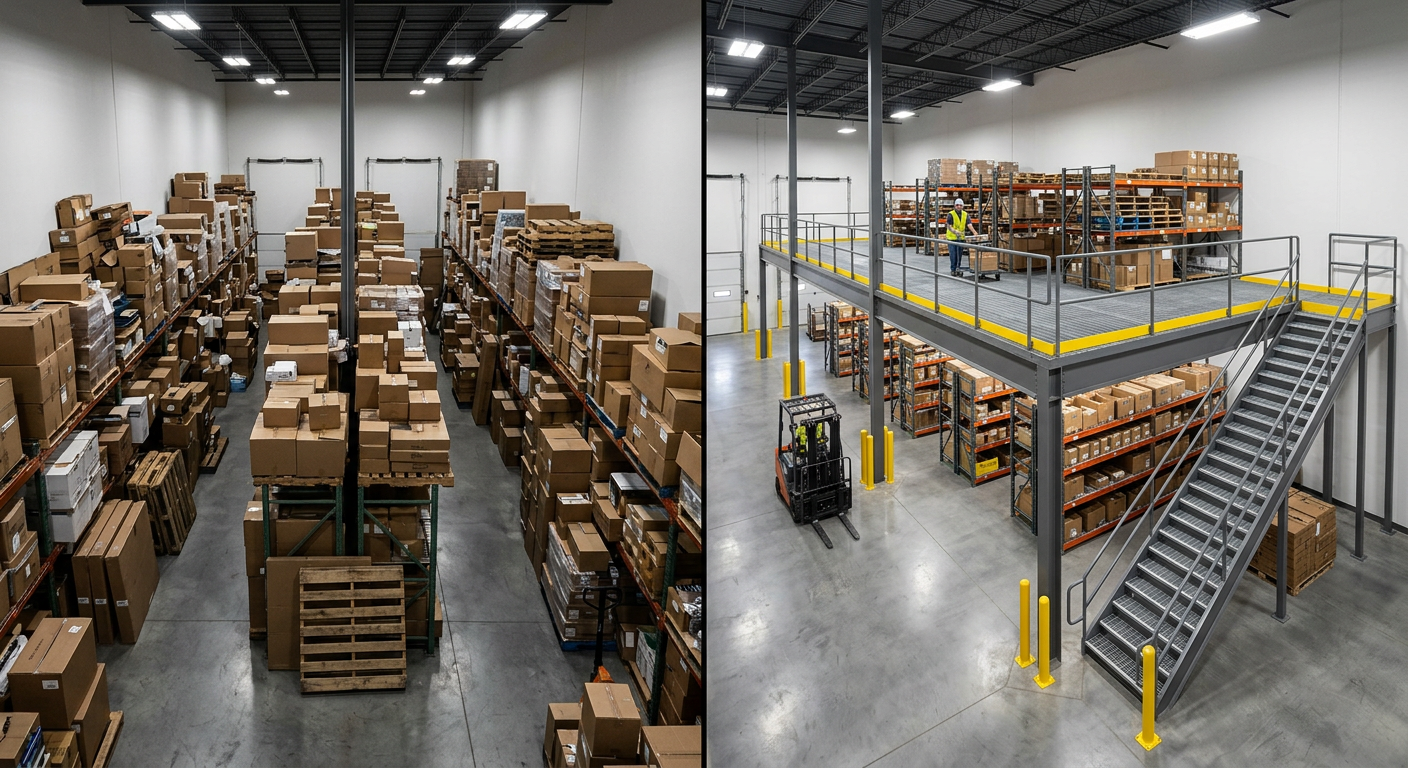
Drag the slider to see how a mezzanine transforms an underutilized warehouse into an organized, two-level operation:
Ready to Maximize Your Space?
Get a free, no-obligation quote for a custom-engineered mezzanine designed for your facility.
Get Your Free QuoteFrequently Asked Questions
Yes. A mezzanine typically costs 50 to 70 percent less than a building expansion when you account for all costs: foundation, roofing, HVAC, electrical, permitting, and lost productivity during construction. A mezzanine also installs in days rather than months, reducing the indirect costs of disruption.
Absolutely. Free-standing mezzanines do not require attachment to the building structure and can be disassembled and moved when your lease ends. Many landlords welcome mezzanines because they improve the property value. Always check your lease terms, but most industrial leases allow interior modifications with landlord approval.
A minimum clear ceiling height of 14 to 16 feet is typically needed to provide adequate headroom on both levels. Ideally, 18 feet or more gives you comfortable clear heights above and below the mezzanine. Cogan engineers assess your specific ceiling height, intended use, and code requirements to determine the optimal mezzanine elevation.
A mezzanine typically requires sprinkler modifications to ensure coverage on both levels. Bar grating flooring allows existing overhead sprinklers to reach the ground level, which can simplify requirements. Cogan works with your fire protection contractor to ensure full code compliance. This is significantly simpler and less costly than the fire protection requirements for a building expansion.
Related Articles
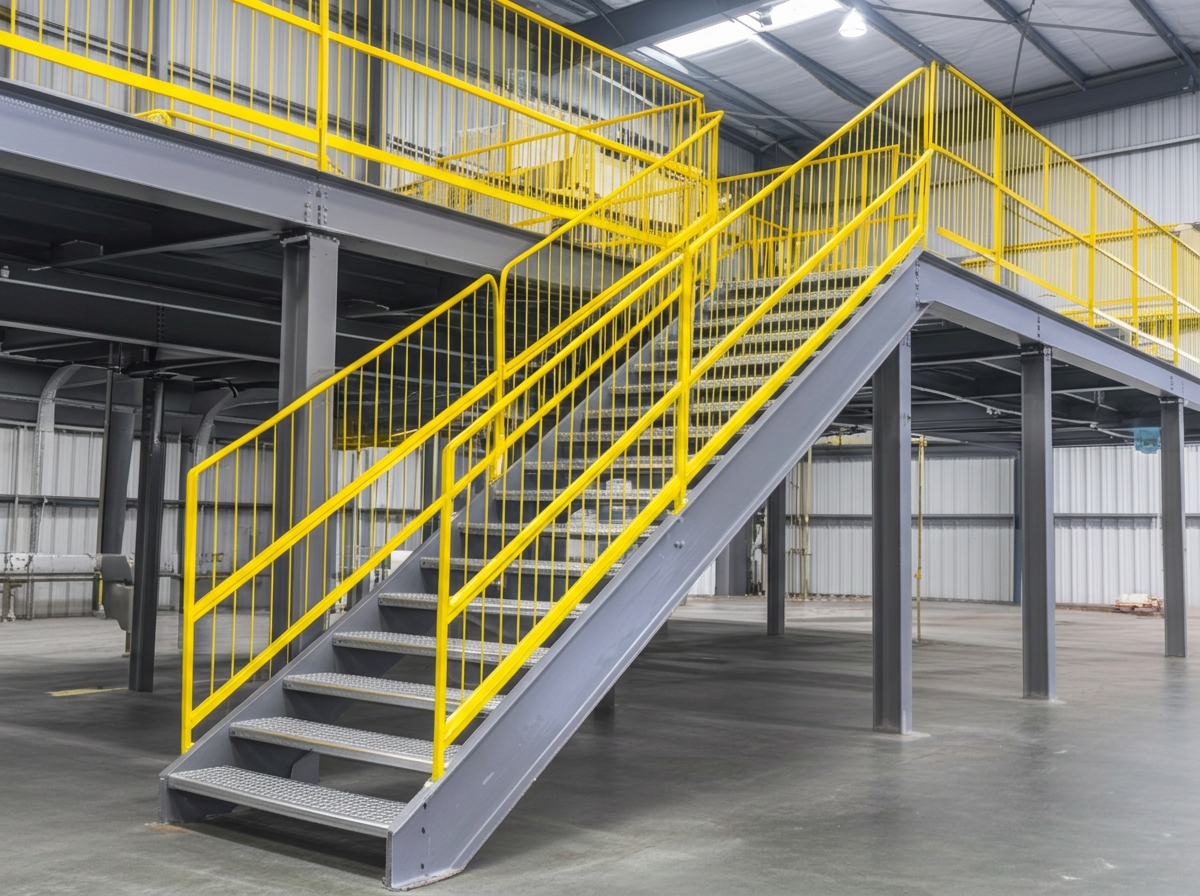
Industrial Mezzanines: A Complete Guide
Industrial mezzanines are intermediate floor systems installed between a building's floor and ceiling to create additional usable space without expanding the building's footprint. Learn about types, benefits, applications, and engineering considerations.
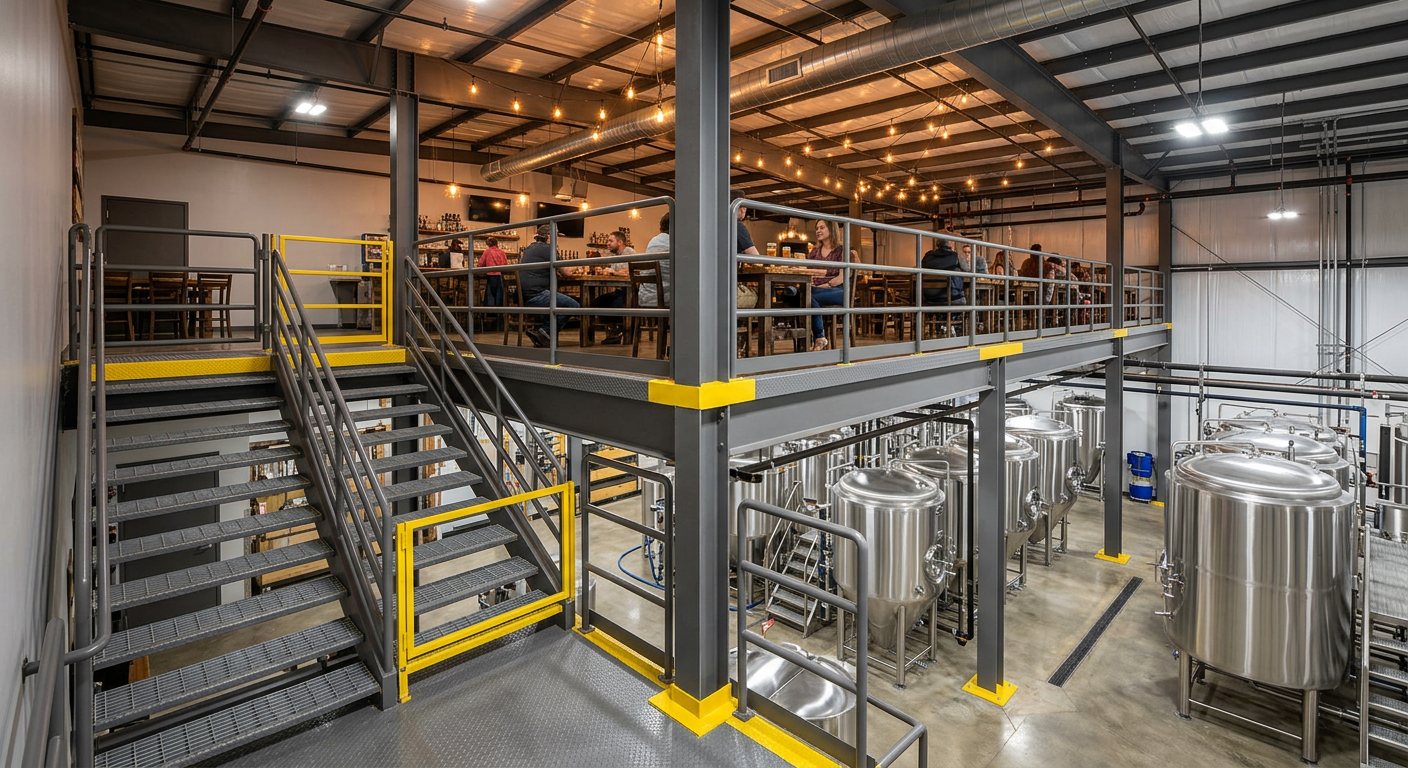
10 Creative Mezzanine Applications
Mezzanines aren't just for warehouses. Discover 10 creative applications from breweries and climbing gyms to auto dealerships and micro-fulfillment centers.
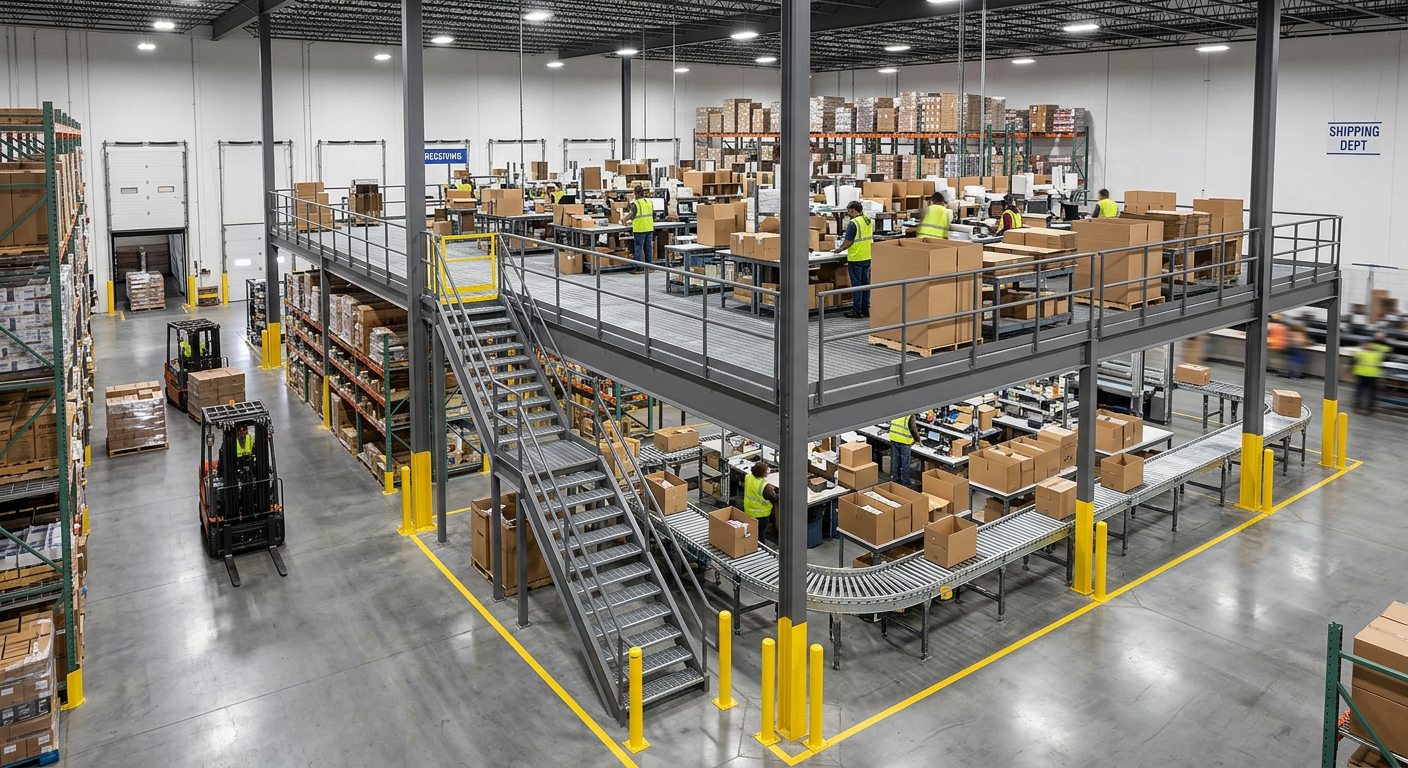
E-Commerce Warehouse Mezzanines: Scale Fast
E-commerce is the fastest-growing segment for mezzanines. Learn how fulfillment centers use mezzanines for pick/pack above, bulk storage below, and seamless scaling.
© 2025 Cogan Wire and Metal Products Ltd., all rights reserved.