


The Sustainability Case for Mezzanines: Build Up, Not Out
The Sustainability Imperative in Industrial Facilities
Sustainability is no longer optional for industrial and commercial businesses. Customers, investors, employees, and regulators are all demanding that companies reduce their environmental impact. For facility managers and operations leaders, every expansion decision is now also a sustainability decision.
When you need more space, the question is no longer just "what is the cheapest option?" but also "what is the most environmentally responsible option?"
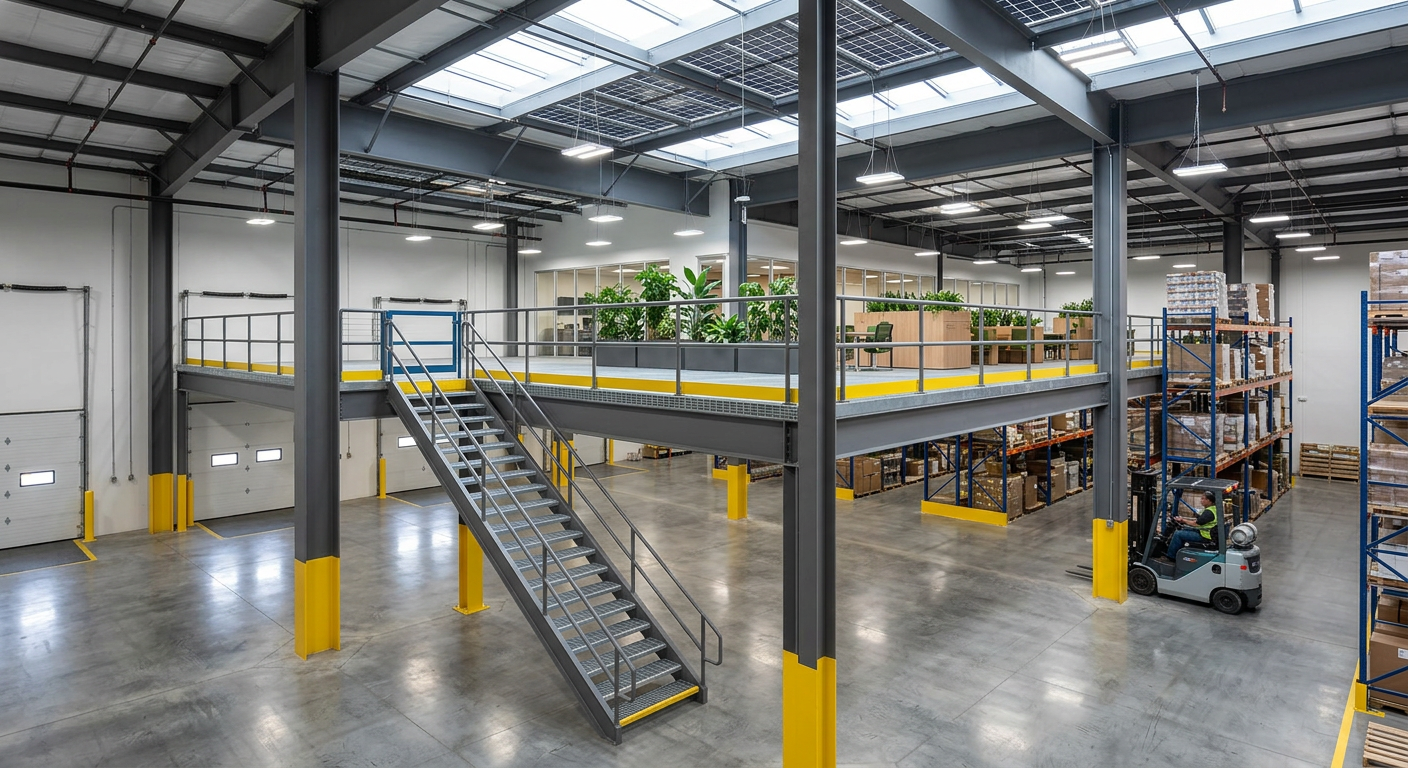
The answer, more often than you might expect, is a mezzanine. Building up within your existing footprint rather than building out with a new addition is one of the most impactful sustainability decisions a facility can make. Here is why.
Embodied Carbon: Mezzanine vs. Building Expansion
Embodied carbon refers to the total greenhouse gas emissions associated with manufacturing, transporting, and installing building materials. It is one of the most important and often overlooked environmental metrics in construction.
A mezzanine has dramatically lower embodied carbon than a building expansion because it requires a fraction of the materials:
| Material/Component | Mezzanine | Building Expansion |
|---|---|---|
| Concrete (foundation) | Anchor bolts into existing slab | New foundation, footings, slab |
| Steel | Columns, beams, decking only | Full structural frame + cladding |
| Roofing | None | Full roof system |
| Wall cladding | None | Exterior walls, insulation, vapor barrier |
| HVAC | None (uses existing building systems) | New HVAC for expanded area |
| Excavation | None | Site grading, foundation excavation |
The result: a mezzanine generates an estimated 70 to 85% less embodied carbon than a building expansion providing the same amount of usable floor area. This is because the mezzanine leverages the existing building shell, foundation, roof, and mechanical systems rather than duplicating them.
Reduced Land Use and Site Impact
A building expansion consumes additional land. This has cascading environmental impacts:
- Loss of permeable surface: New construction converts green space or gravel to impervious surface, increasing stormwater runoff
- Habitat disruption: Even in industrial areas, undeveloped land provides habitat value
- Increased heat island effect: More roof and paved area absorbs and radiates heat
- Additional infrastructure: New parking, access roads, and utilities extend the environmental footprint
A mezzanine uses zero additional land. It operates entirely within the existing building envelope, leaving the surrounding site unchanged. For facilities in urban or constrained sites, this may be the only option, but it is also the most environmentally sound one.
Energy Efficiency Benefits
Mezzanines contribute to energy efficiency in several ways:
No Additional Building Envelope to Condition
A building expansion adds roof area, wall area, and floor area that must be heated, cooled, and lit. This permanently increases the building's energy consumption. A mezzanine adds floor area within the existing conditioned space, requiring no additional heating, cooling, or weatherproofing.
Thermal Zoning Opportunities
In high-ceiling warehouses, heat rises to the ceiling where it provides no benefit. A mezzanine can create a natural thermal zone: the mezzanine level captures some of this rising heat, making it naturally warmer in winter. This is particularly beneficial when the mezzanine is used for office or personnel space.
Lighting Efficiency
Bar grating flooring, the most common mezzanine decking, allows light to pass between levels. This means overhead lighting serves both the mezzanine and the area below, reducing the total lighting energy needed compared to two separately lit spaces.
Make Your Next Expansion Sustainable
Choose a mezzanine and reduce your facility's environmental footprint while maximizing your usable space.
Get a Free QuoteRelocatability: The Circular Economy Advantage
Perhaps the most underappreciated sustainability advantage of mezzanines is their relocatability. A free-standing mezzanine is a modular, bolt-together structure that can be:
- Disassembled without destruction
- Moved to a new facility
- Reconfigured for different layouts
- Expanded with additional bays and sections
This is the circular economy in action. Unlike a building addition that becomes part of the real estate when you leave, a mezzanine travels with your business. The steel is reused, not demolished. The components are reassembled, not landfilled.
Over a 20-year business lifecycle, a single mezzanine might serve in two or three different facilities, each time avoiding the environmental cost of new construction. When the mezzanine eventually reaches end of life, steel is one of the most recyclable materials on earth, with recycling rates exceeding 90%.
Reduced Construction Waste
Construction and demolition waste is a major environmental challenge. A typical building expansion generates significant waste from excavation, formwork, packaging, offcuts, and site preparation.
A mezzanine installation generates minimal construction waste because:
- Components are prefabricated to exact dimensions in a controlled factory environment, minimizing offcuts
- Factory waste (steel offcuts, packaging) is recycled at the manufacturing facility
- On-site installation is primarily assembly of finished components, not fabrication
- No excavation, concrete formwork, or demolition waste is generated
Cogan's manufacturing process further reduces waste through optimized nesting of steel components, recycling of all steel offcuts, and minimized packaging through efficient shipping practices.
ESG Alignment and LEED Potential
For companies with ESG commitments or pursuing LEED certification, mezzanines align with multiple sustainability objectives:
ESG Reporting
- Environmental: Lower embodied carbon, reduced land use, energy efficiency, recyclability
- Social: Improved working conditions through organized, well-designed facilities; reduced community impact compared to new construction
- Governance: Responsible capital allocation, long-term asset value, compliance with building codes
LEED Credits
Choosing a mezzanine over a building expansion can contribute to LEED credits in several categories:
- Materials and Resources: Reduced material use, recyclable steel, prefabrication waste reduction
- Sustainable Sites: No additional site disturbance, reduced stormwater impact
- Energy and Atmosphere: No additional building envelope to condition, lighting efficiency
- Innovation: Demonstrating circular economy principles through relocatable design
Build Up, Not Out
Contact Cogan to discuss how a mezzanine can help your facility meet its sustainability goals while gaining the space you need.
Get Your Free QuoteFrequently Asked Questions
A mezzanine generates an estimated 70 to 85 percent less embodied carbon than a building expansion providing the same usable floor area. This is because a mezzanine leverages the existing building shell, foundation, roof, and mechanical systems rather than duplicating them. The primary material is structural steel, which has a lower carbon footprint per square foot of floor area than full building construction.
Steel is one of the most sustainable structural materials available. It is 100 percent recyclable without loss of quality, and steel recycling rates exceed 90 percent in North America. Modern steel production also increasingly uses recycled content and electric arc furnace technology, which has a significantly lower carbon footprint than traditional blast furnace production.
Yes. Choosing a mezzanine over a building expansion can contribute to LEED credits in Materials and Resources (reduced material use, recyclable steel), Sustainable Sites (no additional site disturbance), Energy and Atmosphere (no additional building envelope), and Innovation (circular economy principles). The specific credit contributions depend on the project scope and LEED version being pursued.
Related Articles
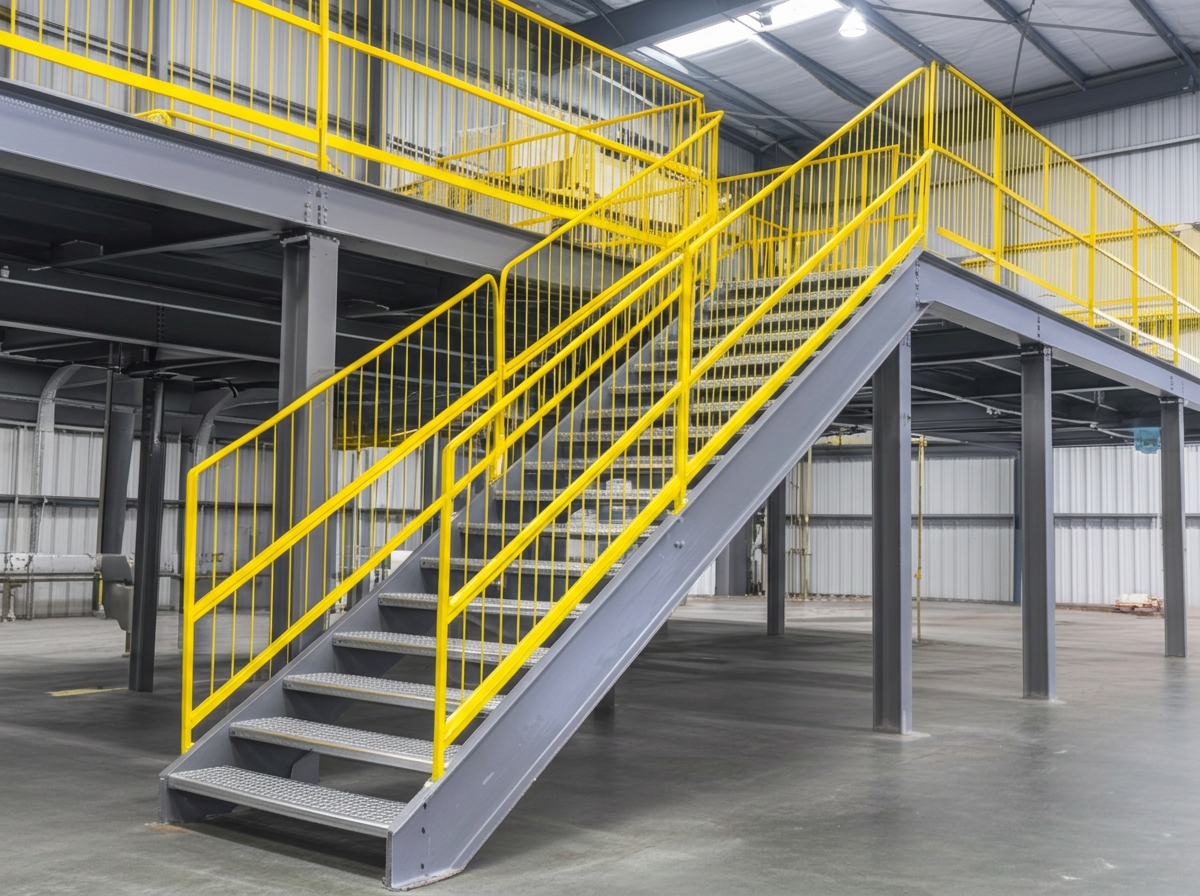
Industrial Mezzanines: A Complete Guide
Industrial mezzanines are intermediate floor systems installed between a building's floor and ceiling to create additional usable space without expanding the building's footprint. Learn about types, benefits, applications, and engineering considerations.
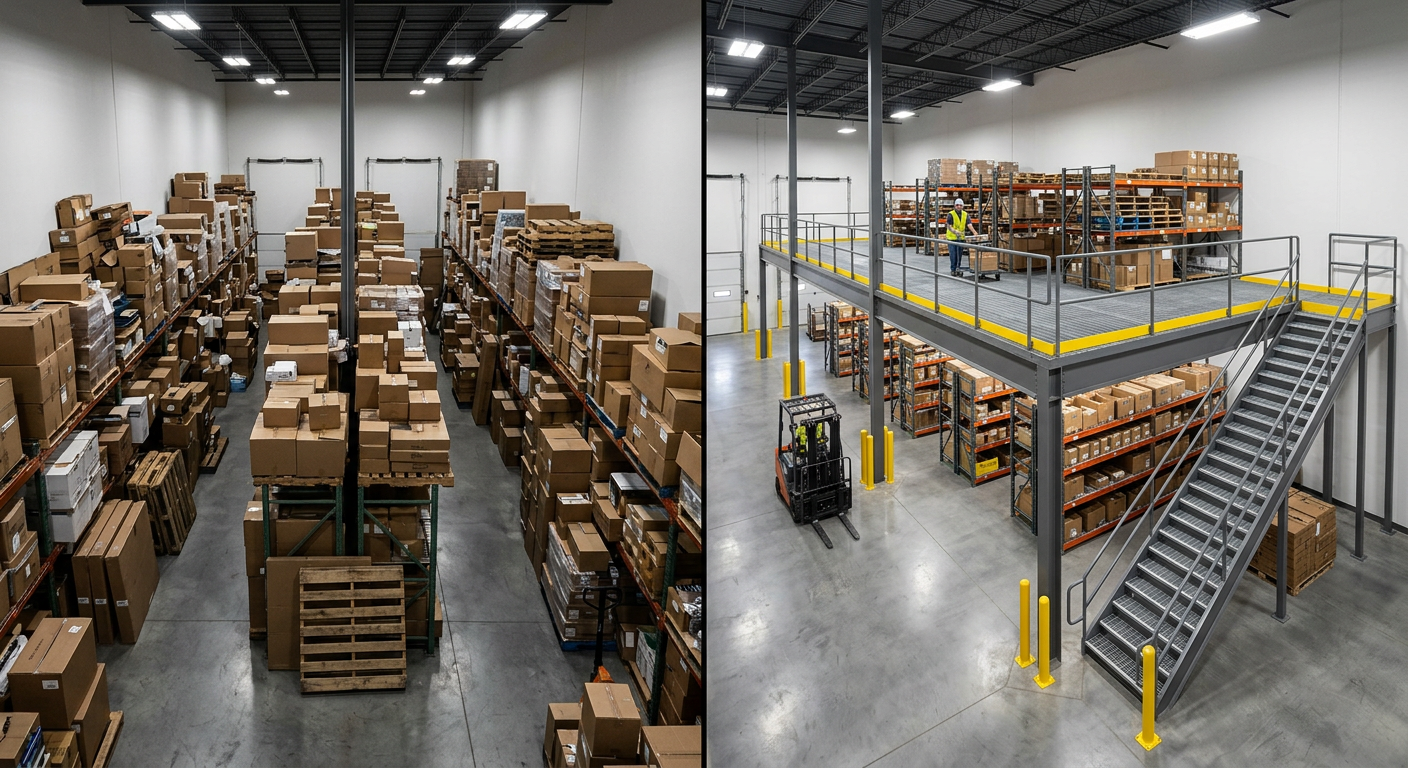
Mezzanine vs Warehouse Expansion Guide
Should you build up with a mezzanine or build out with a warehouse expansion? This decision framework compares timelines, disruption, flexibility, and total value to help you choose.
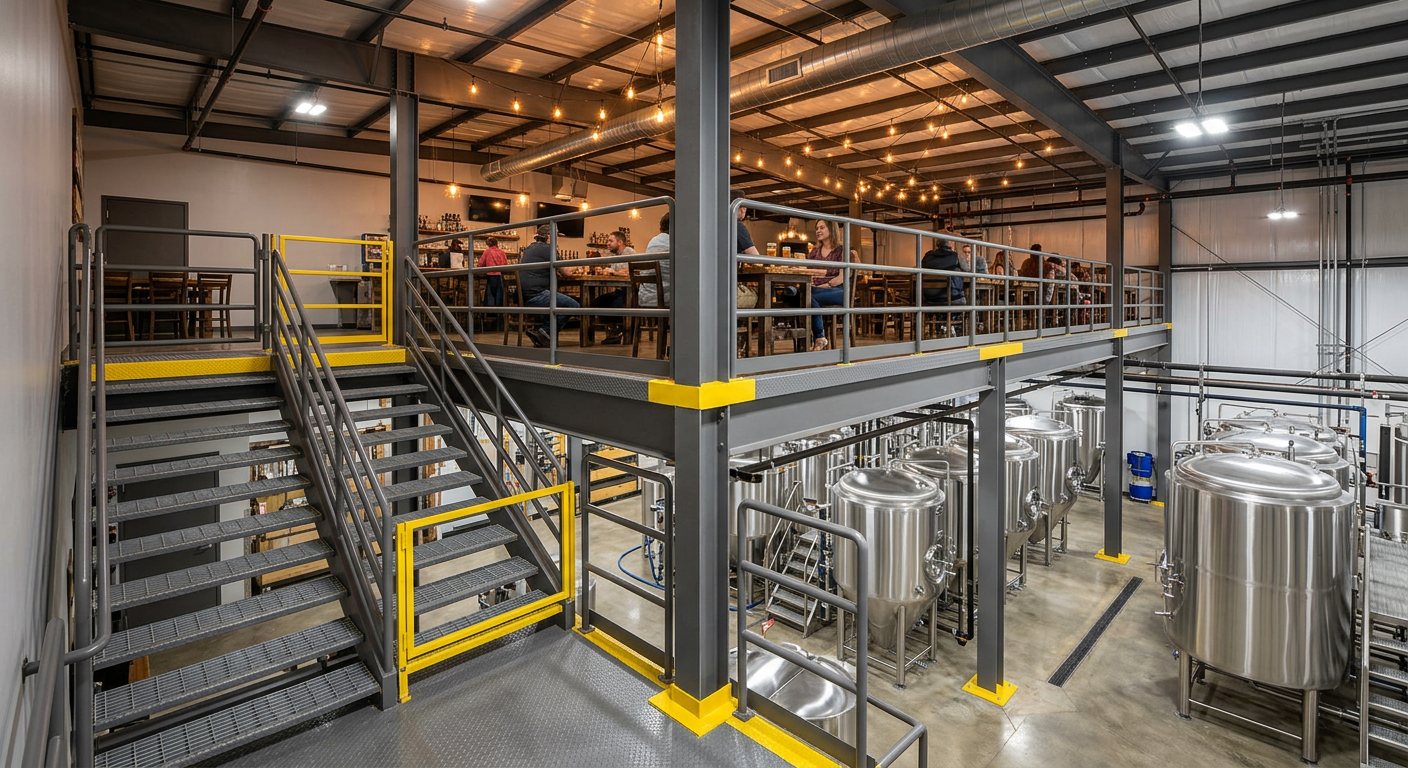
10 Creative Mezzanine Applications
Mezzanines aren't just for warehouses. Discover 10 creative applications from breweries and climbing gyms to auto dealerships and micro-fulfillment centers.
© 2025 Cogan Wire and Metal Products Ltd., all rights reserved.