



10 Creative Mezzanine Applications You Haven't Considered
Beyond Warehouses: Why Creative Industries Are Choosing Mezzanines
When people think of mezzanines, they think of warehouses. And while industrial mezzanines remain the core application, some of the most innovative mezzanine projects are happening in places you might not expect.
The reason is simple: any business with high ceilings and a need for more space can benefit from building up instead of building out. Mezzanines offer a fraction of the cost of traditional construction, install in days, and can be designed to match any aesthetic from industrial-chic to clean and modern.
Here are 10 creative applications that demonstrate the versatility of the modern mezzanine.
1. Craft Brewery and Taproom
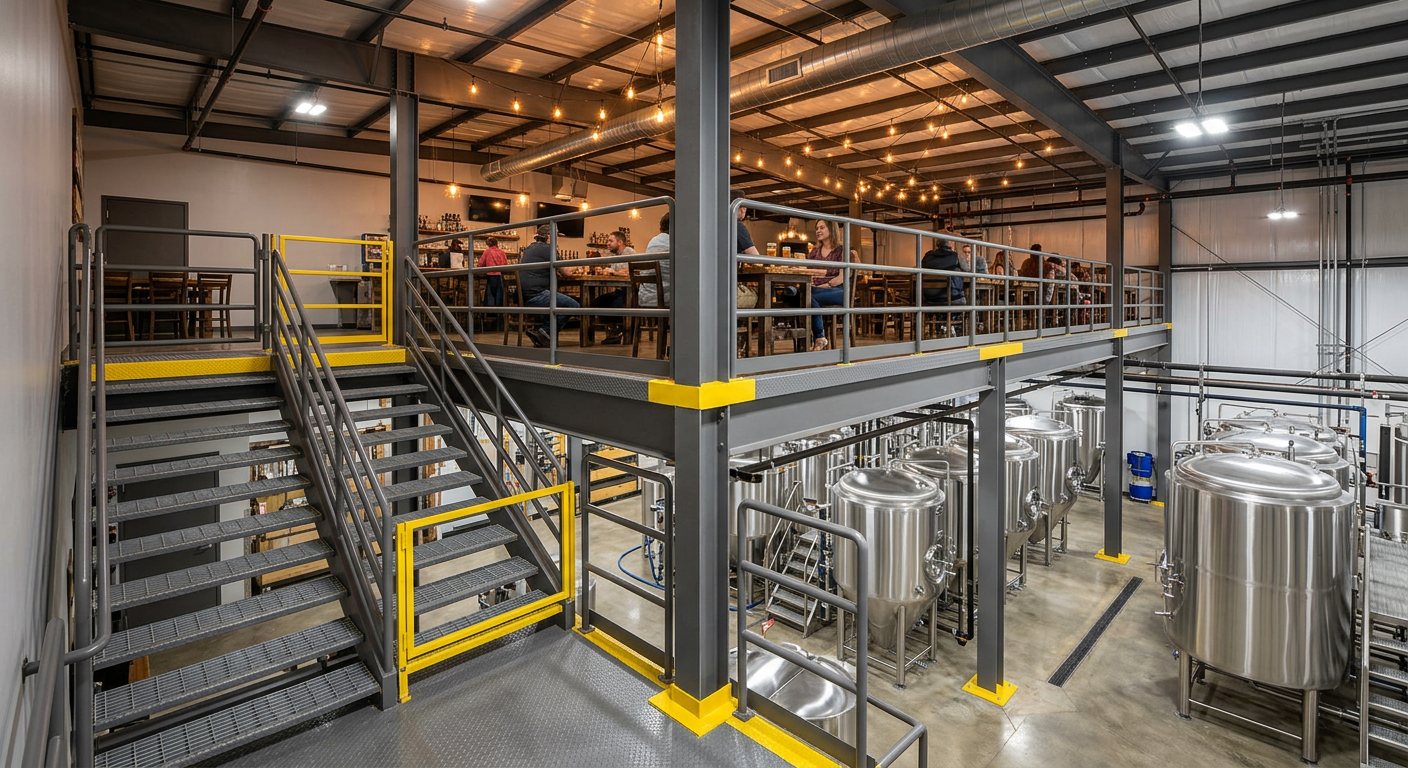
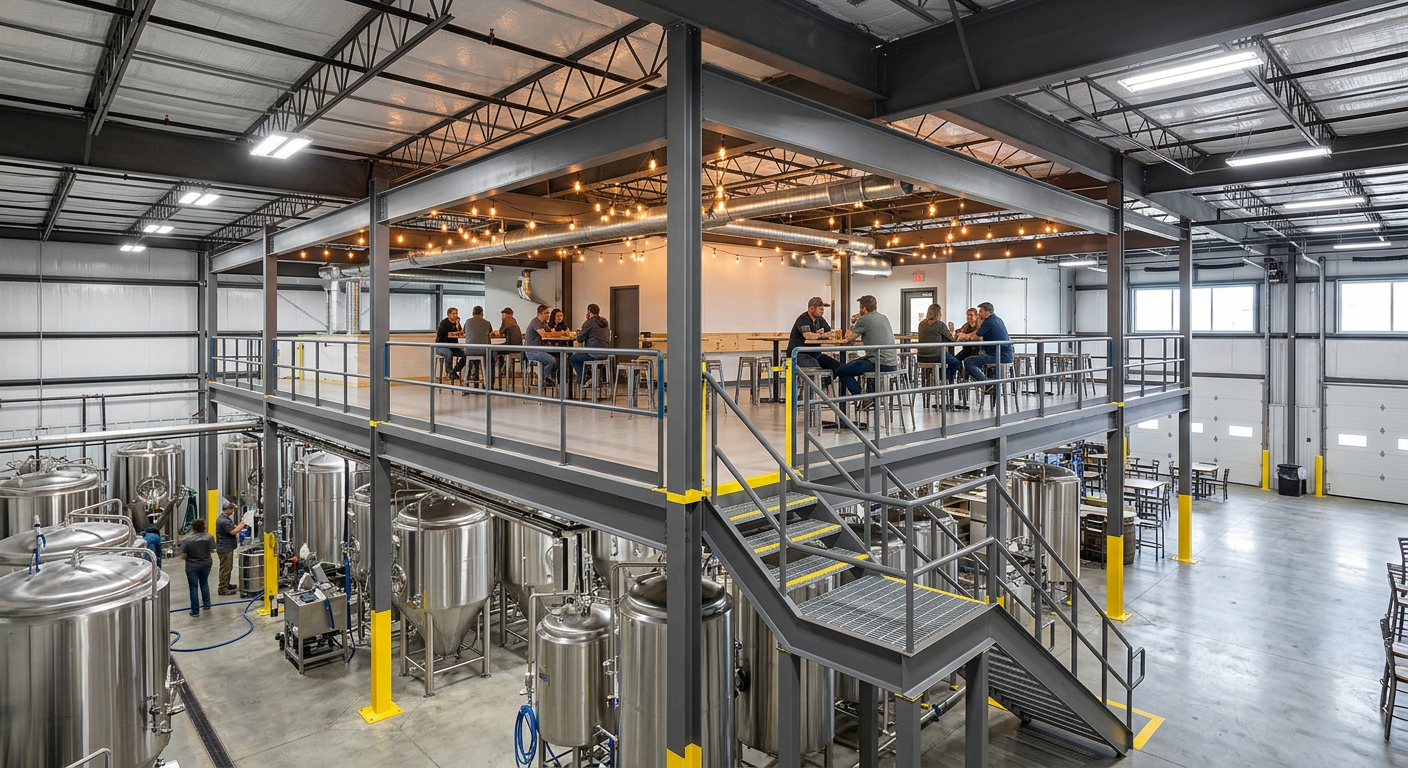
Craft breweries occupy large, high-ceiling industrial spaces, and many are running out of room as they grow. A mezzanine solves multiple problems at once:
- Elevated taproom overlooking the brewing floor, creating a unique customer experience
- Additional storage for grain, packaging materials, and merchandise
- Office and lab space above the production floor, freeing up ground-level area for more fermenters
The industrial aesthetic of a steel mezzanine fits naturally with the brewery vibe. Cogan mezzanines with bar grating or resin deck flooring and tube handrails create an authentic industrial-chic look that brewery patrons love.
2. Indoor Climbing Gym
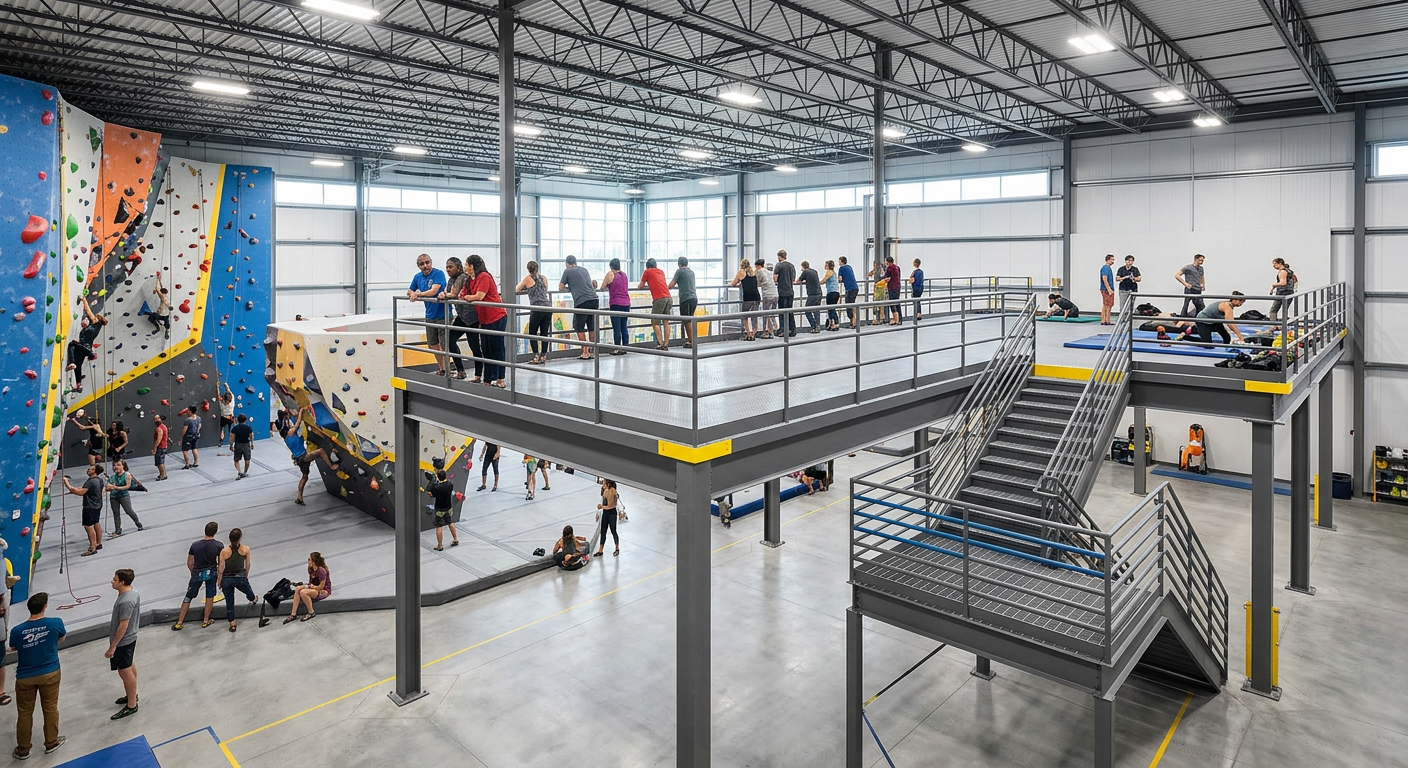
Climbing gyms need tall walls and high ceilings by definition, which means they have vertical space that is perfect for a mezzanine. Applications include:
- Spectator viewing platform at mid-height for parents, coaches, and visitors
- Warm-up and stretching area overlooking the climbing walls
- Bouldering zone on the mezzanine level with lower ceiling requirements
- Retail and check-in area elevated to free up ground-level space for more climbing routes
Diamond plate flooring provides the durability needed for athletic use, and the mezzanine structure can be engineered to support the dynamic loads from climbers and belayers.
3. Auto Dealership Parts Department
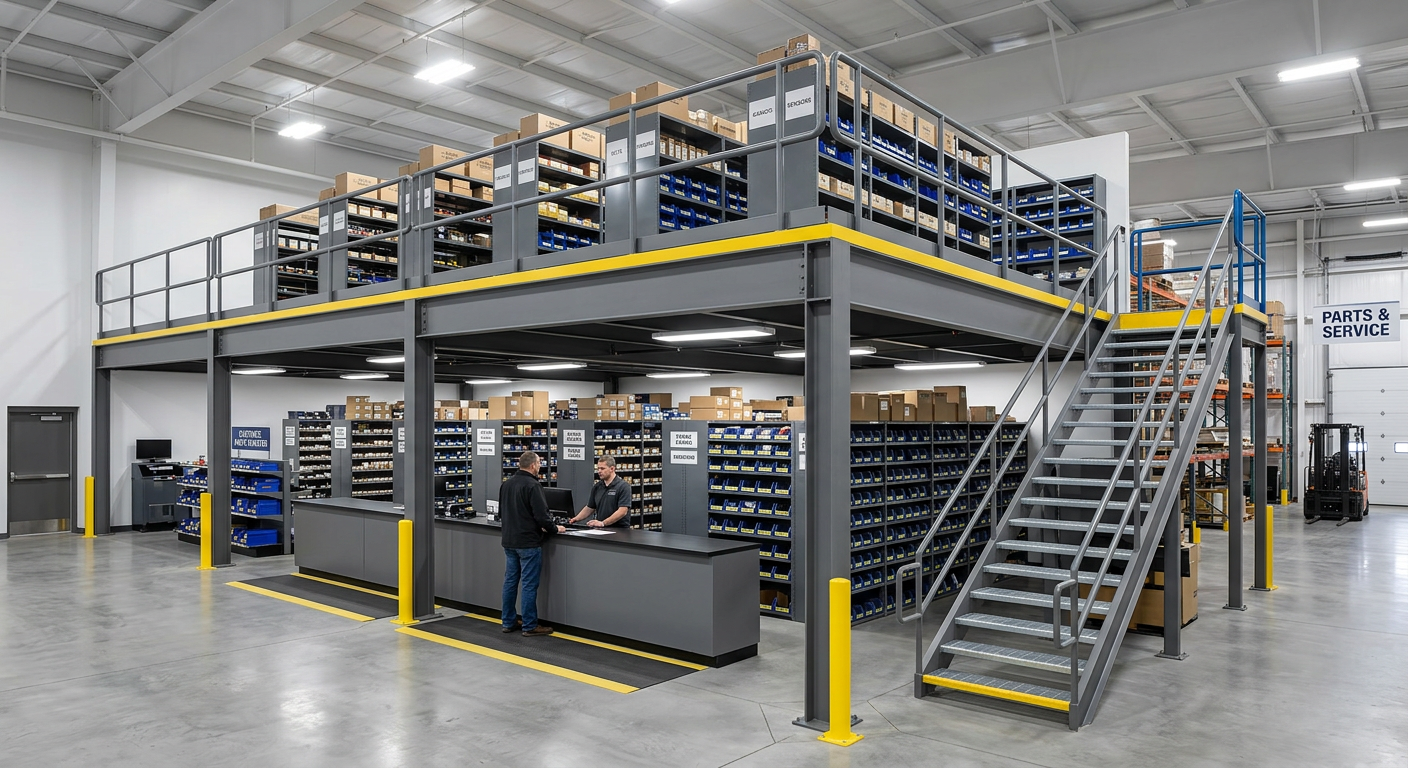
Auto dealerships and parts distributors face a constant challenge: parts inventory keeps growing, but the parts department footprint is fixed. A mezzanine solves this elegantly:
- Fast-moving parts at ground level for quick access by technicians
- Slower-moving inventory organized on the mezzanine level with clear labeling
- Parts elevator or conveyor to efficiently move items between levels
This two-level approach can double parts storage capacity without expanding the building, and the organized layout improves picking efficiency and reduces search time.
Have a Creative Mezzanine Application in Mind?
Cogan engineers custom mezzanines for any industry. Tell us about your project and we will design a solution.
Discuss Your Project4. Cannabis Growing and Processing Facility
Licensed cannabis producers need to maximize every square foot of their licensed space. Mezzanines allow them to:
- Create multi-tier growing environments within a single licensed footprint
- Separate growing, drying, and processing operations vertically
- Add office, security, and quality control space above the production floor
Bar grating flooring is particularly effective in cannabis facilities because it allows air circulation and light penetration between levels, which is critical for climate control.
5. Film and Production Studio
Film studios and production spaces use mezzanines for:
- Lighting grids and technical catwalks above the studio floor
- Control rooms and editing suites overlooking the production space
- Props, wardrobe, and equipment storage on an elevated level
- Audience seating for live productions or recordings
The ability to customize load ratings means a mezzanine can support heavy lighting rigs, camera equipment, and sound systems safely.
6. Restaurant and Event Space
Restaurants in converted industrial spaces are using mezzanines to add seating capacity and create dramatic multi-level dining experiences:
- Additional dining area with a different ambiance than the ground floor
- Private dining or event space with views over the main floor
- Bar or lounge area elevated for a premium feel
Resin deck flooring provides a smooth, cleanable surface suitable for food service, and the mezzanine can be designed with architectural finishes that complement the restaurant's design concept.
7. Co-Working Space
Co-working operators in converted warehouse and industrial buildings use mezzanines to increase their rentable square footage:
- Quiet focus areas on the mezzanine away from the busier ground floor
- Meeting rooms and phone booths on the elevated level
- Lounge and common areas overlooking the main workspace
The industrial aesthetic of an exposed steel mezzanine is a design asset in co-working spaces, where the look communicates innovation and creativity.
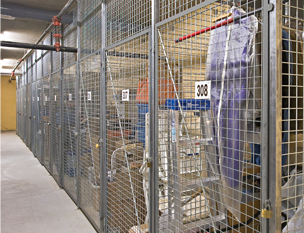
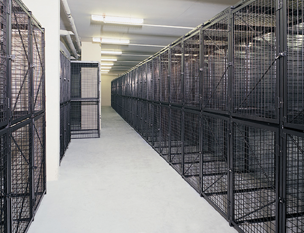
8. Self-Storage Facility
Self-storage operators can dramatically increase their unit count by adding mezzanine levels:
- Double the number of units within the same building footprint
- Wide aisles and stairways provide easy customer access to upper units
- Climate-controlled upper levels for premium storage offerings
The modular nature of mezzanines allows self-storage operators to add levels incrementally as demand grows, matching their investment to actual occupancy.
9. Indoor Playground and Entertainment
Indoor play centers, trampoline parks, and family entertainment centers use mezzanines to:
- Create multi-level play structures integrated with the mezzanine frame
- Provide parent viewing areas overlooking play zones
- Add party rooms, cafes, and arcade areas on the elevated level
These mezzanines are engineered for dynamic loads and can incorporate safety netting, padding, and custom guardrail designs appropriate for family environments.
10. Micro-Fulfillment Center
Urban micro-fulfillment centers for grocery delivery and quick commerce are using mezzanines to maximize throughput in compact spaces:
- Automated picking systems on the mezzanine level
- Order staging and dispatch at ground level for driver pickup
- Cold storage integration with temperature-zoned areas on different levels
As e-commerce mezzanine applications expand into urban locations, micro-fulfillment is becoming one of the fastest-growing segments.
Ready to Explore Your Mezzanine Options?
Whatever your industry, Cogan can engineer a mezzanine solution tailored to your unique requirements.
Get a Free QuoteFrequently Asked Questions
Absolutely. While the structural frame is steel, mezzanines can be finished with architectural cladding, glass panels, wood accents, and custom paint colors to match any design concept. Many breweries, restaurants, and co-working spaces intentionally leave the steel exposed for an industrial-chic aesthetic.
Yes. Mezzanines in public-facing environments are engineered to meet all building code requirements for occupancy, including guardrail heights, stair specifications, fire protection, and accessibility. Cogan designs mezzanines for public use with appropriate load ratings and safety features.
Most creative applications require at least 16 to 18 feet of clear ceiling height to provide comfortable clearance on both levels. Some applications like climbing gyms or entertainment centers may work with higher ceilings of 20 feet or more. Cogan engineers assess each project individually to optimize the mezzanine height for the intended use.
Related Articles
Industrial Mezzanines: A Complete Guide
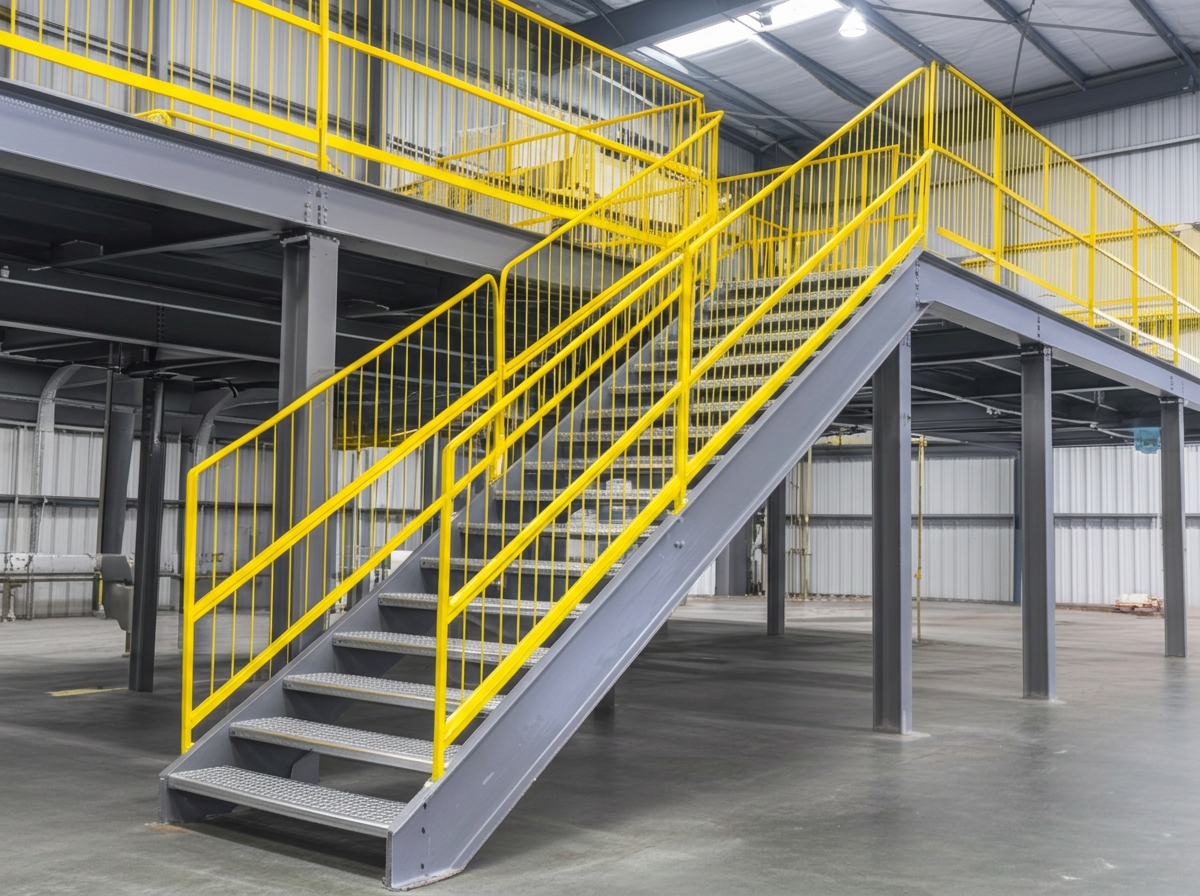
Industrial mezzanines are intermediate floor systems installed between a building's floor and ceiling to create additional usable space without expanding the building's footprint. Learn about types, benefits, applications, and engineering considerations.
Mezzanine vs Warehouse Expansion Guide
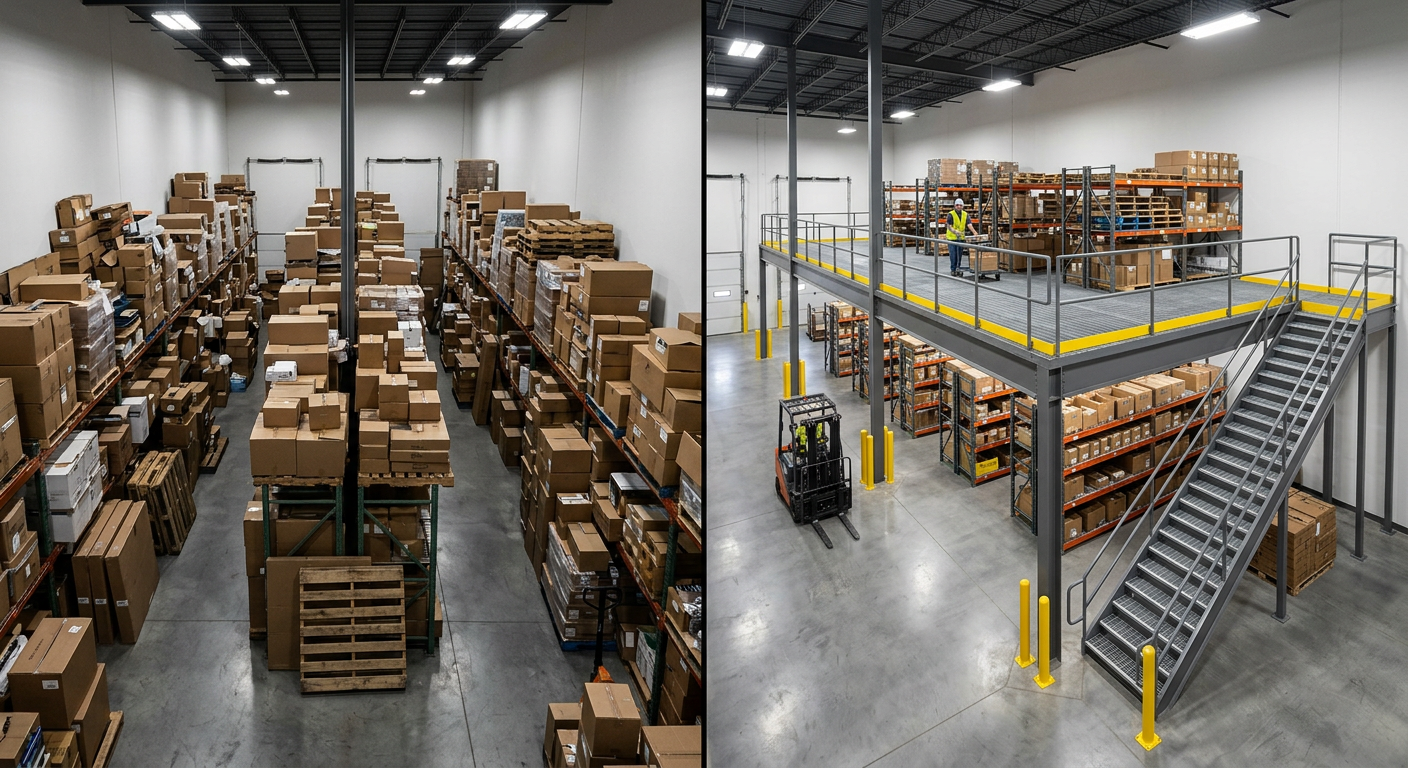
Should you build up with a mezzanine or build out with a warehouse expansion? This decision framework compares timelines, disruption, flexibility, and total value to help you choose.
E-Commerce Warehouse Mezzanines: Scale Fast
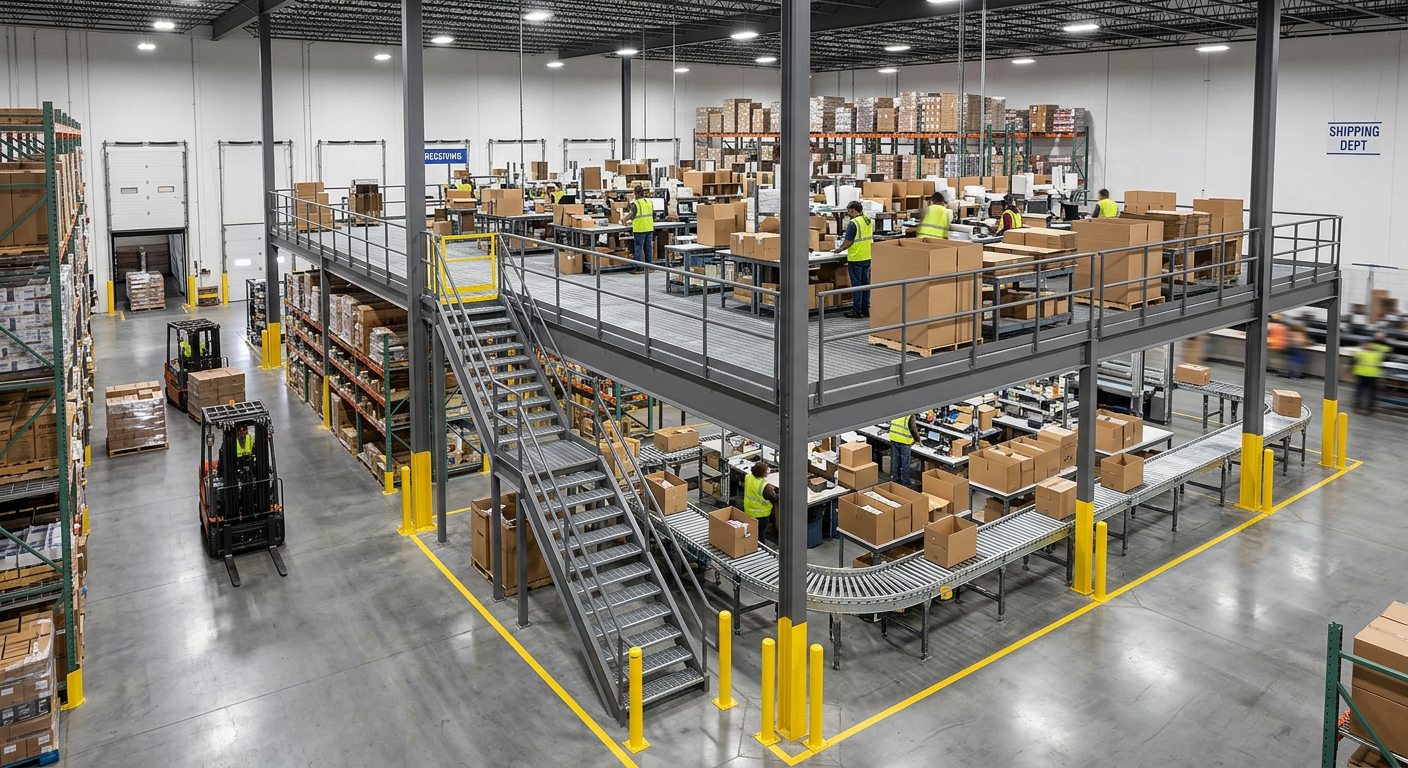
E-commerce is the fastest-growing segment for mezzanines. Learn how fulfillment centers use mezzanines for pick/pack above, bulk storage below, and seamless scaling.
© 2025 Cogan Wire and Metal Products Ltd., all rights reserved.