



How E-Commerce Warehouses Use Mezzanines to Scale Without Moving
The E-Commerce Space Problem
E-commerce is growing faster than warehouse supply. Fulfillment centers are under constant pressure to handle more SKUs, faster picking, and higher order volumes, and the answer is rarely "move to a bigger building." Moving is expensive, disruptive, and time-consuming, and the next building will eventually run out of room too.
This is why mezzanines have become the default scaling solution for e-commerce warehouses, 3PLs, and DTC brands. A mezzanine lets you double your usable floor area within your existing lease, install in days rather than months, and create purpose-built zones for different fulfillment functions.
This guide covers how leading e-commerce operations use mezzanines to scale smarter.
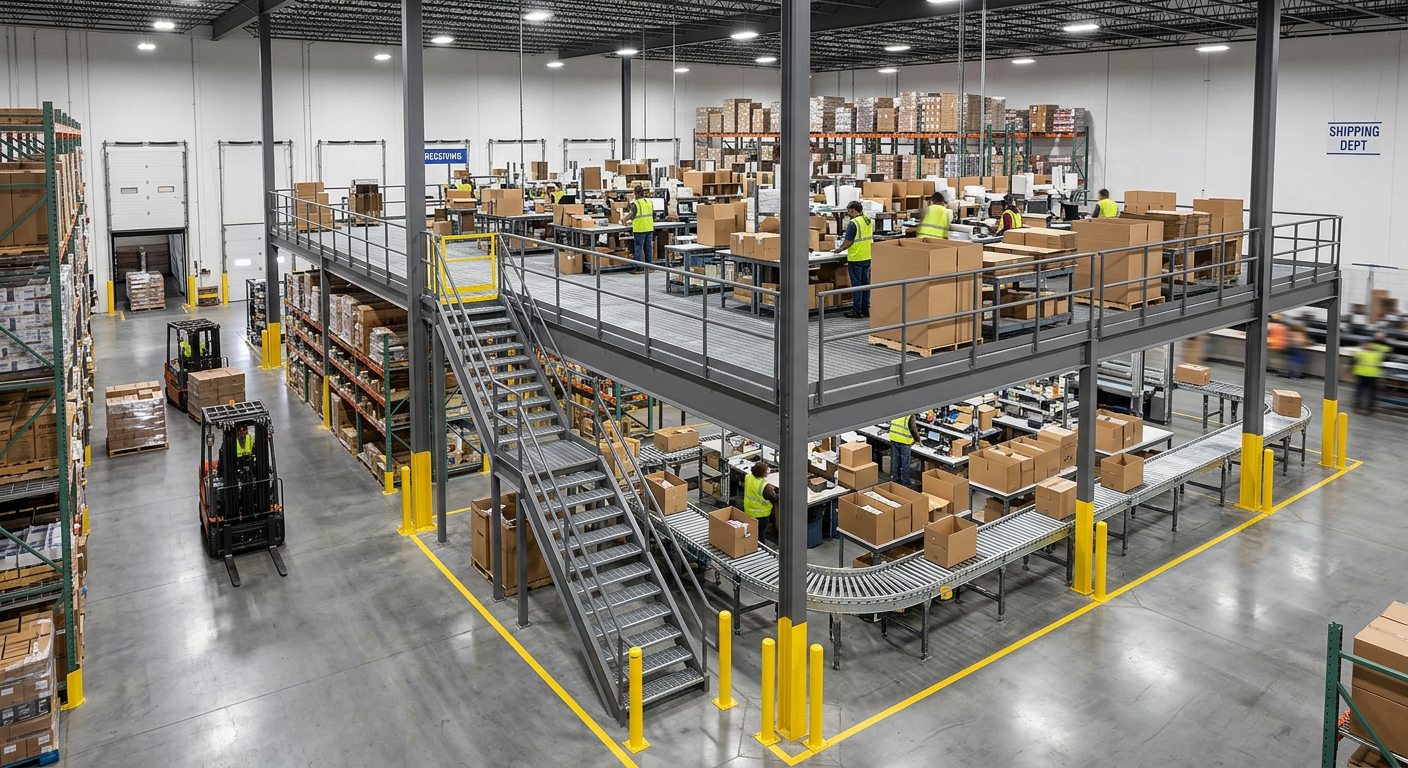
The Two-Level Fulfillment Workflow
The most effective e-commerce mezzanine layout separates operations by level:
Ground Level: Bulk Storage and Receiving
- Pallet racking for bulk inventory and case quantities
- Receiving and inbound processing near dock doors
- Shipping and dispatch with staging areas for outbound trucks
- Forklift-accessible aisles for heavy product movement
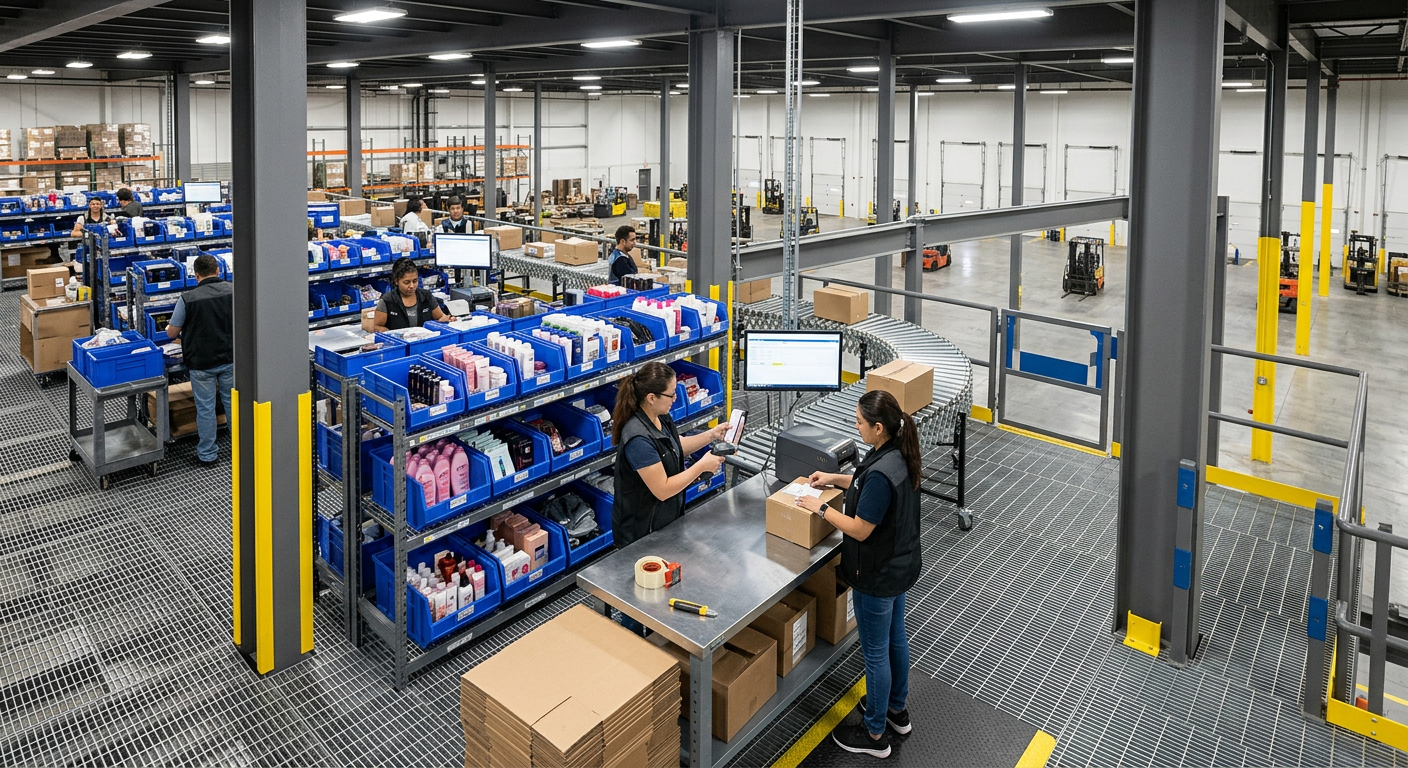
Mezzanine Level: Pick, Pack, and Ship
- Pick stations with shelving organized by velocity (fast movers closest to conveyors)
- Pack stations with ergonomic workbenches, scales, and label printers
- Small-item shelving for individual SKU picking
- Conveyor connections to move packed orders down to shipping
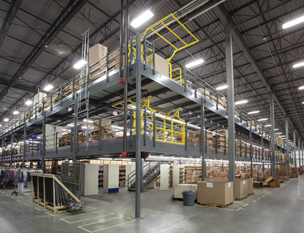
This vertical separation creates a natural workflow: product enters at dock level, gets stored in bulk on the ground floor, gets replenished to pick locations on the mezzanine, and ships out from ground-level staging. Each function has its own dedicated space without competing for the same floor area.
Seasonal Scaling Without Long-Term Leases
E-commerce businesses face dramatic seasonal peaks. Order volumes during Black Friday and the holiday season can be 3 to 5 times higher than baseline. The traditional approach of leasing overflow space is expensive and logistically complex.
Mezzanines offer a better approach to seasonal scaling:
- Install a mezzanine before peak season to add capacity within your existing space
- Modular design allows you to expand the mezzanine footprint as your business grows
- Dedicated seasonal zones on the mezzanine for temporary product lines or gift-wrap stations
- Relocatable if you move to a new facility after outgrowing the current one
The math is compelling: a mezzanine that doubles your pick-and-pack capacity costs a fraction of a short-term warehouse lease and is a permanent asset rather than an ongoing expense.
Scaling Your E-Commerce Fulfillment?
Get a custom mezzanine design optimized for your order volume, SKU count, and fulfillment workflow.
Get a Free QuoteReturns Processing on Mezzanine Level
Returns are the hidden space-eater in e-commerce. Average return rates of 20 to 30 percent for apparel and consumer goods mean a significant portion of your warehouse is consumed by returns processing. A mezzanine provides a dedicated returns zone:
- Inspection and grading stations with good lighting and work surfaces
- Repackaging and refurbishment area for items going back to sellable inventory
- Disposition sorting for items being liquidated, donated, or recycled
- Quarantine storage for items awaiting inspection
Elevating returns processing to the mezzanine level keeps it separate from outbound fulfillment, preventing cross-contamination of workflows and improving efficiency in both areas.
Conveyor and Material Handling Integration
Mezzanines in e-commerce environments are rarely standalone platforms. They integrate with material handling systems to create efficient vertical workflows:
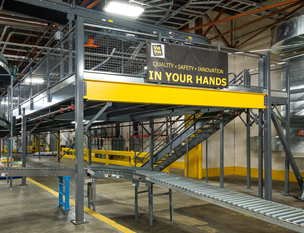
- Incline conveyors connecting mezzanine pack stations to ground-level shipping
- Spiral chutes for gravity-fed product movement from mezzanine to ground level
- Vertical lifts for replenishing mezzanine pick locations from bulk ground-level storage
- Conveyor openings engineered into the mezzanine floor with safety guarding
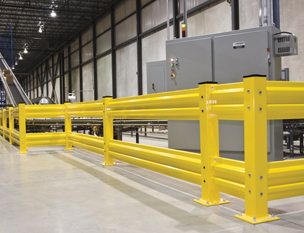
Cogan engineers mezzanines with these integrations in mind from day one, including reinforced areas around conveyor penetrations, appropriate guardrailing, and safety gates at loading points.
Multi-Client 3PL Configurations
Third-party logistics providers serve multiple clients from a single facility, and mezzanines are essential for maximizing revenue per square foot:
- Client-dedicated zones on the mezzanine with physical separation
- Shared infrastructure (stairs, conveyors, shipping) with client-specific pick areas
- Scalable allocation - expand or contract a client's mezzanine area as their volume changes
- Reconfigurable layout to onboard new clients without major construction
For 3PLs, a mezzanine is a revenue multiplier: it allows you to serve more clients and handle more volume without leasing additional warehouse space.
See the Transformation
Drag the slider to see how a mezzanine transforms a cluttered single-level fulfillment center into an organized two-level operation:
Ready to Scale Your Fulfillment?
Contact Cogan for a free consultation on mezzanine solutions for e-commerce and fulfillment operations.
Get Your Free QuoteFrequently Asked Questions
This depends on the mezzanine size and shelving configuration, but a typical e-commerce mezzanine can double your pick locations. A 5,000 square foot mezzanine with organized shelving can easily accommodate 5,000 to 15,000 additional SKU locations depending on product sizes and shelving density.
Absolutely. Mezzanines are commonly integrated with incline conveyors, spiral chutes, and vertical lifts. Cogan engineers the mezzanine with conveyor penetrations, reinforced areas around openings, and appropriate safety guarding from the initial design phase.
Yes. FBA prep services are an ideal mezzanine application. The mezzanine level provides dedicated space for labeling, poly-bagging, bundling, and inspection while ground-level space handles receiving and outbound shipping to Amazon fulfillment centers. The separation of prep and shipping workflows improves throughput and accuracy.
Most e-commerce pick-and-pack operations require a load rating of 125 to 250 PSF, depending on the product types and shelving density. Lighter consumer goods like apparel and electronics typically fall in the 125 PSF range, while heavier items or dense shelving configurations may require 250 PSF. Cogan engineers the exact load rating based on your specific product mix and layout.
Related Articles
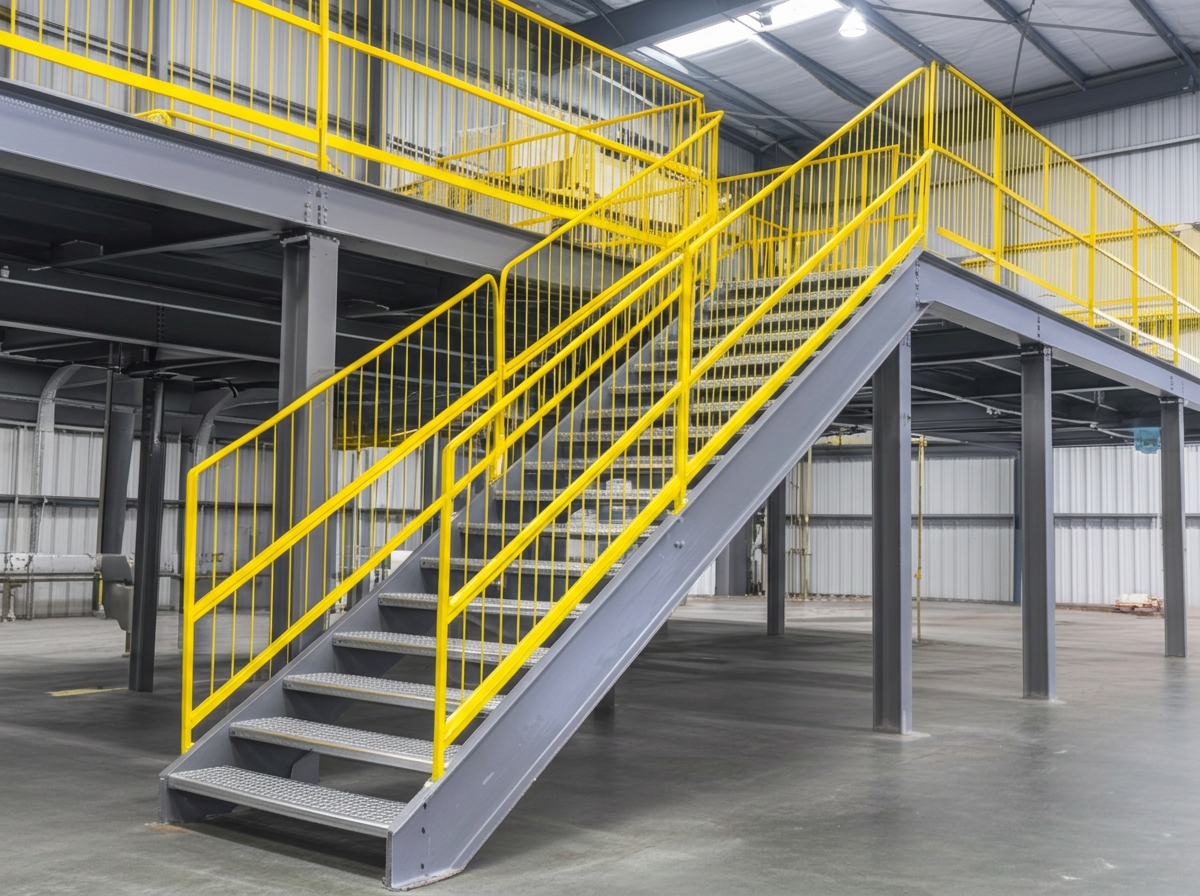
Industrial Mezzanines: A Complete Guide
Industrial mezzanines are intermediate floor systems installed between a building's floor and ceiling to create additional usable space without expanding the building's footprint. Learn about types, benefits, applications, and engineering considerations.
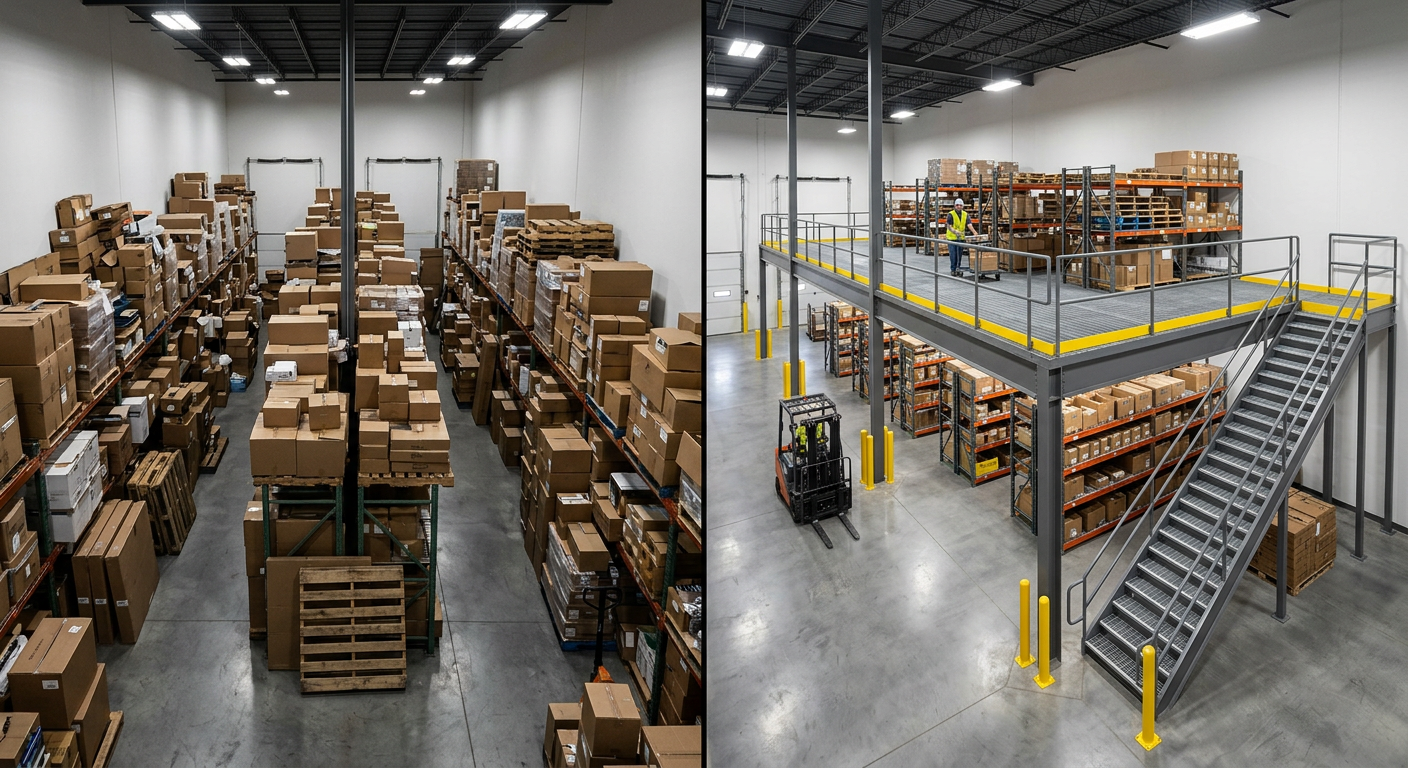
Mezzanine vs Warehouse Expansion Guide
Should you build up with a mezzanine or build out with a warehouse expansion? This decision framework compares timelines, disruption, flexibility, and total value to help you choose.
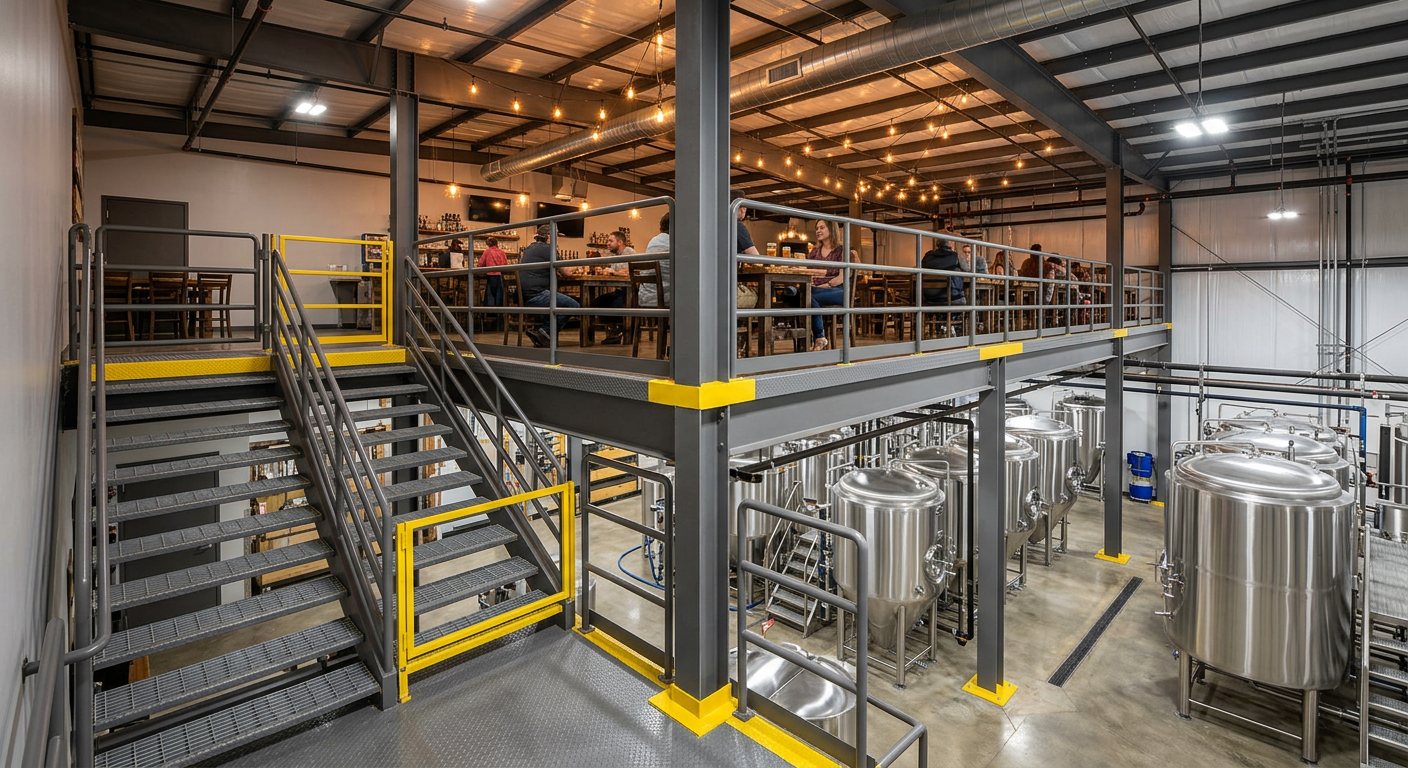
10 Creative Mezzanine Applications
Mezzanines aren't just for warehouses. Discover 10 creative applications from breweries and climbing gyms to auto dealerships and micro-fulfillment centers.
© 2025 Cogan Wire and Metal Products Ltd., all rights reserved.