



Guardrails Around Conveyors and Production Equipment
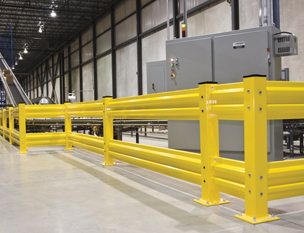
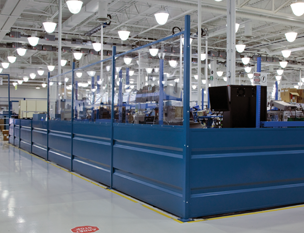
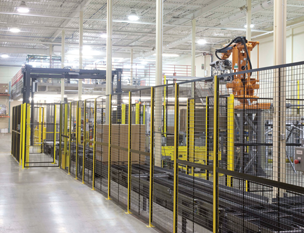
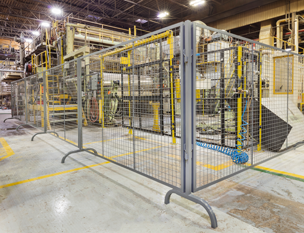
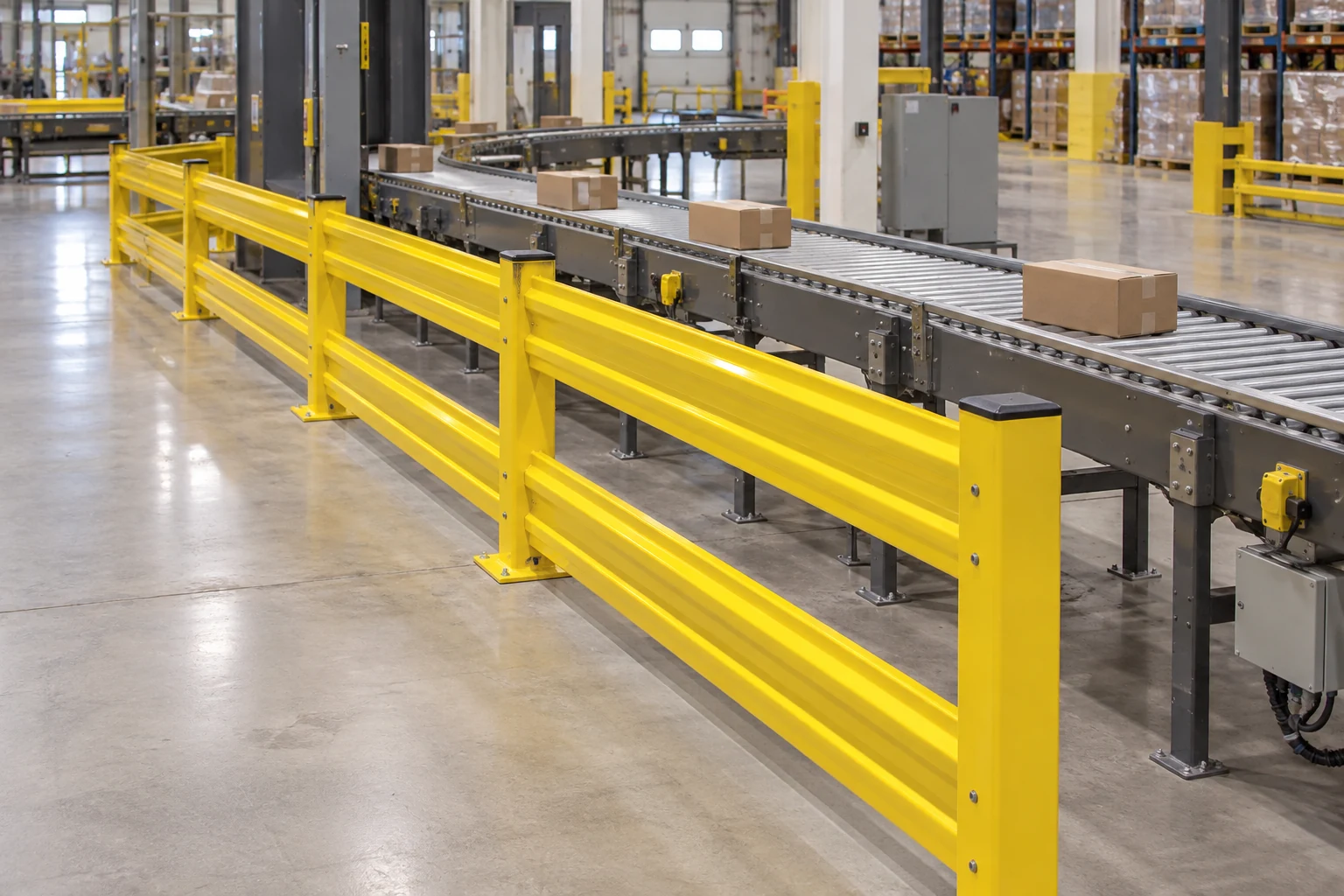
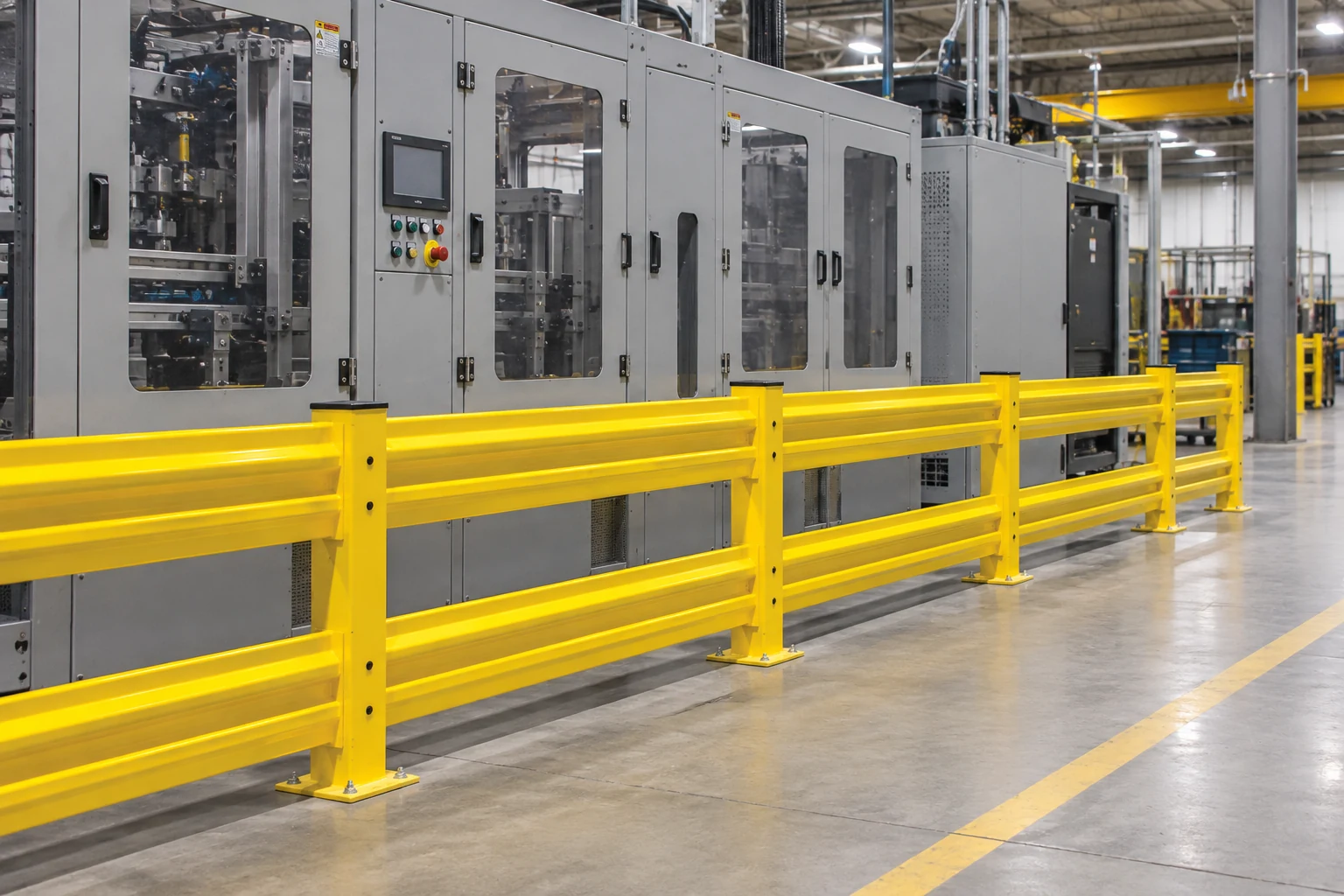
Guardrails around conveyors and production equipment should address vehicle exposure while preserving operation, inspection and service access. They do not replace the machine's own safeguarding. A useful layout treats the vehicle boundary and the machinery hazard controls as related but separate design questions.
Identify what a vehicle could reach
Walk the equipment perimeter from the direction of nearby traffic. Mark vulnerable supports, drives, controls and projecting components. Include loads that extend beyond a truck and locations where a vehicle turns or reverses. The longest conveyor edge is not necessarily the only exposed part.
Photograph each approach and add it to the measured plan. Mark temporary staging positions and the movement of material between machines. A barrier can be correctly positioned for one operation but interfere with a different transfer task performed later in the shift.
Preserve the service envelope
Maintenance access includes more than a person fitting between a rail and a machine. Doors may need to swing open, panels may need to be removed, and components may need to leave on handling equipment. Record those envelopes before selecting posts and rail runs.
Avoid proposing a universal clearance in an article or on a sketch without checking the equipment. The manufacturer, site team and relevant project professionals should resolve the required space. Consider a designed lift-out opening where infrequent service needs cannot be met by the permanent layout.
Keep machine safeguarding distinct
| Boundary | Main planning focus |
|---|---|
| Vehicle impact guardrail | Nearby vehicle exposure and asset protection |
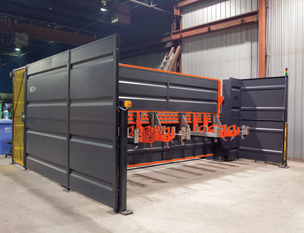
| Machine guard or enclosure | Access to the machinery hazard |
| Pedestrian route | Where people walk and cross |
| Maintenance opening | Controlled access during a defined task |
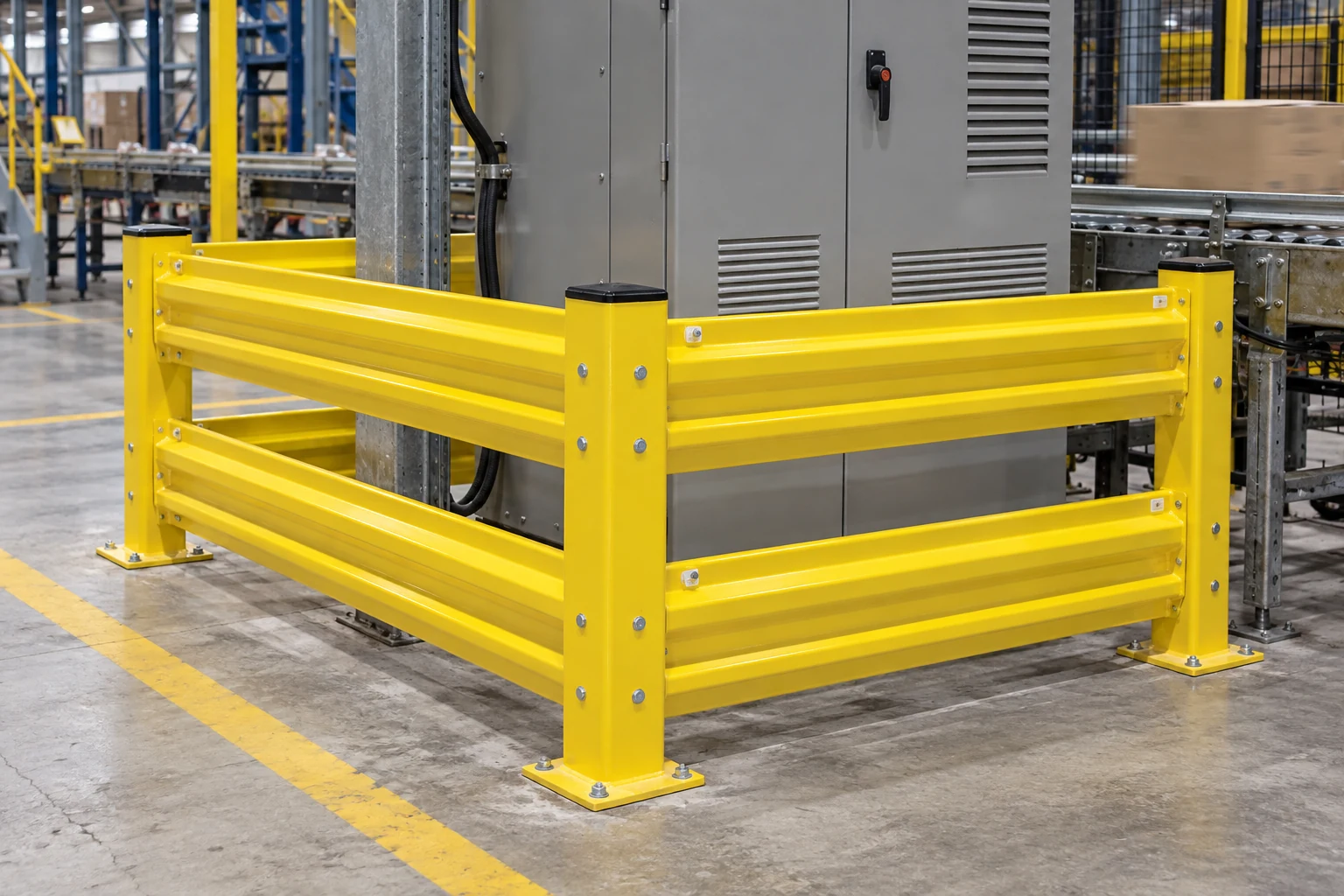
One product should not be assumed to perform all four functions. For example, a vehicle rail that leaves open space above and below it does not by itself prevent access to moving machine parts. Coordinate the systems without confusing their purposes.
Specify the installation as a system
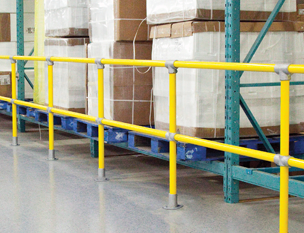
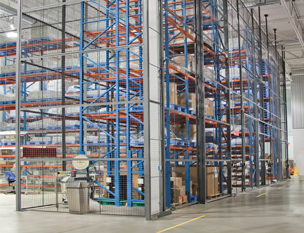
Cogan lists conveyors and manufacturing equipment among applications for its heavy-duty guardrails. Its options include single and double rails and lift-out arrangements. Selection still needs the actual layout, floor conditions and operating exposure.
Document post positions, rail configuration and access openings on the final drawing. Confirm installation requirements before drilling near equipment foundations or services. After commissioning, include the barrier in inspections and revisit the arrangement whenever the equipment or material flow changes.
Questions buyers ask
Can a guardrail replace a machine enclosure?
Not by assumption. Vehicle protection and access to machine hazards require separate assessment and may need different controls.
How far should the rail be from the conveyor?
The answer depends on the equipment's operating and service envelope, the selected barrier's requirements and site conditions. Obtain a project-specific layout.
What information helps with a quote?
Provide dimensions, vehicle approaches, conveyor or machine drawings, maintenance openings and photographs of the floor and surrounding equipment.
Product references and next step
See Cogan heavy-duty guardrails and machine guarding. Discuss the coordinated layout through Cogan's quote team.
More on Guardrails
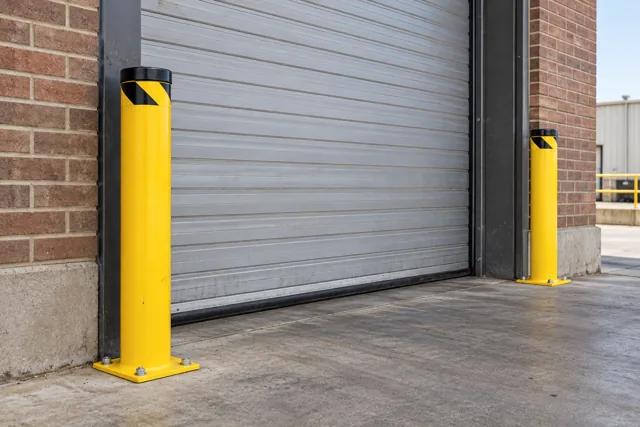
Warehouse Bollard Spacing: Measure the Opening and the Exposure
Plan warehouse bollard spacing around clear openings, vehicle and load movement, the protected asset and installation conditions.
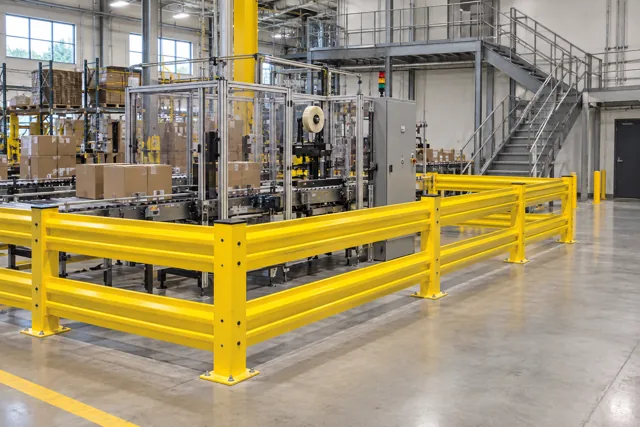
Guardrail vs Handrail: Which System Does Your Warehouse Need?
Understand warehouse impact guardrails, fall-protection guardrails and graspable handrails before selecting a protective system for your facility.
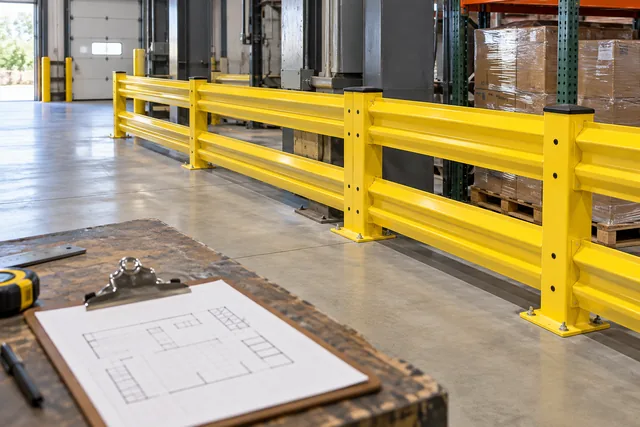
Warehouse Guardrail Cost: What a Complete Quote Should Include
Warehouse guardrail cost depends on the configured system and installation scope, not only the length of rail.
© 2025 Cogan Wire and Metal Products Ltd., all rights reserved.