







Warehouse Safety Gates: Plan Pedestrian Crossings and Swing Clearance
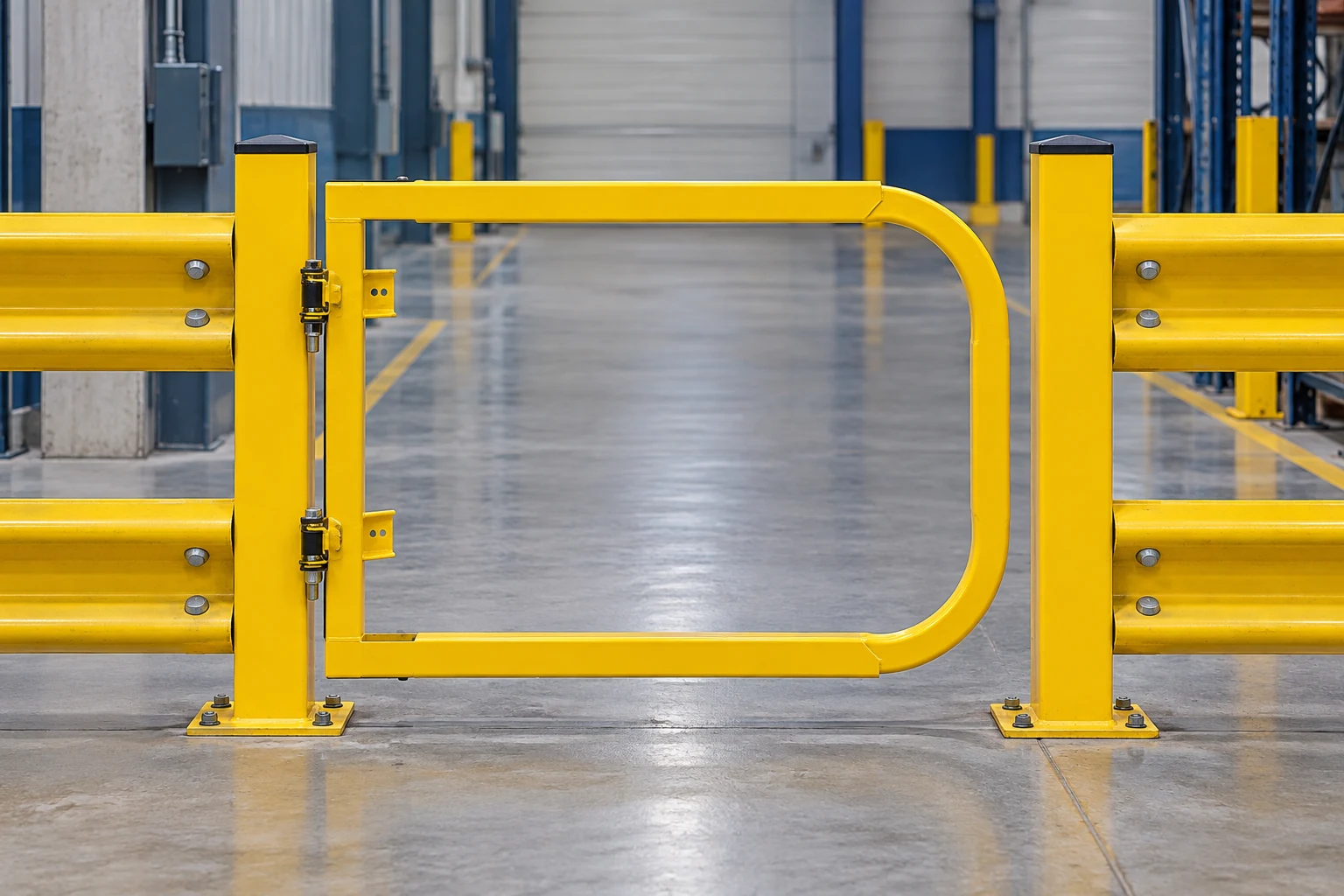
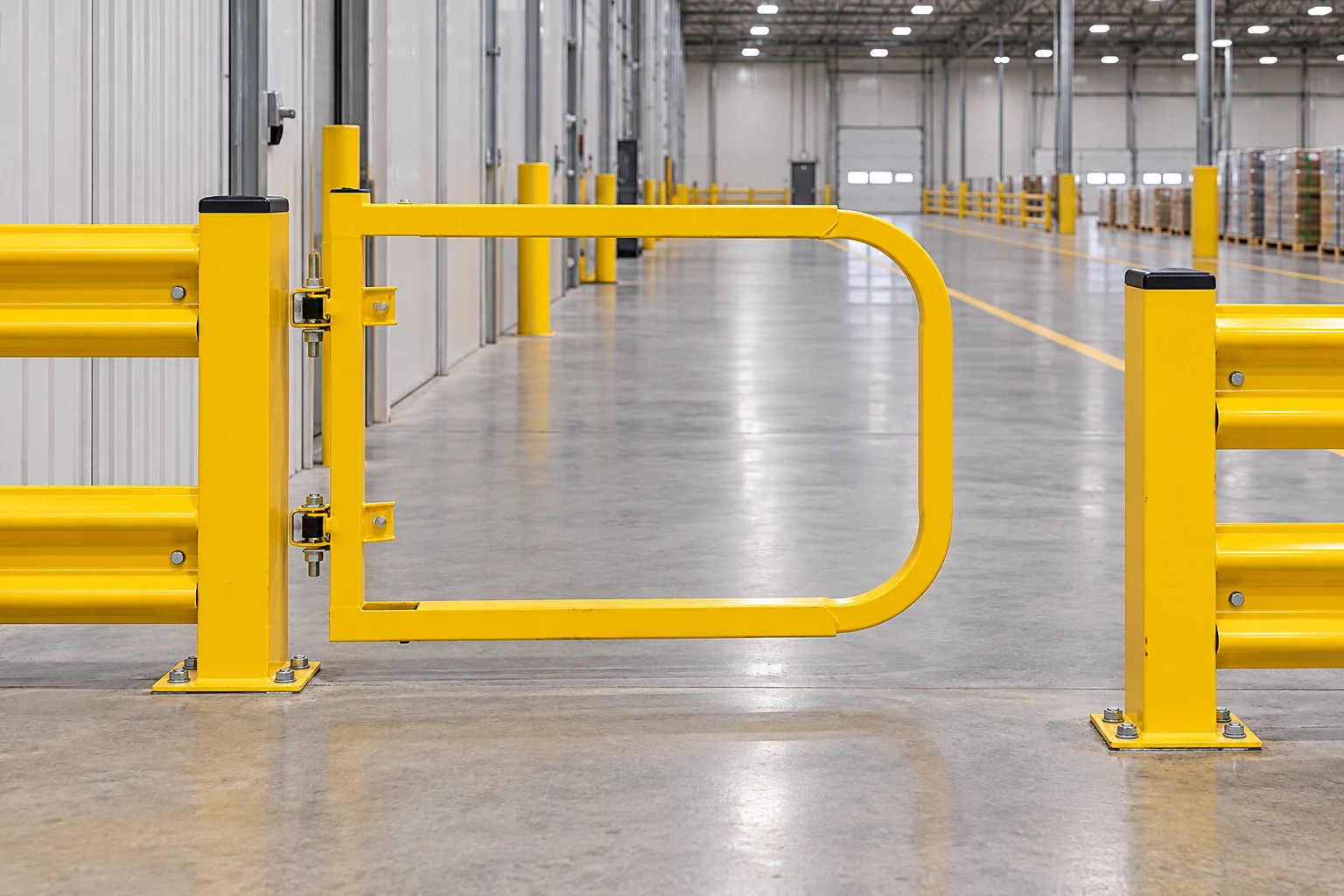
A warehouse pedestrian safety gate should connect a planned walking route to a deliberate crossing point. Check the opening, full swing path, mounting arrangement and visibility to approaching traffic before selecting the gate. A self-closing mechanism helps return the gate to its closed position; it does not establish vehicle-impact protection or decide when a person can cross.
Start with the crossing rather than the opening
Locate the destinations people actually use: workstations, break areas, offices and access to equipment. Then identify where the walking route meets a vehicle route. A gate placed only because there is a convenient gap in the barrier can send pedestrians toward a poor sightline or a busy turning area.
Review the crossing with operations and the site's safety team. Include approaching vehicles, loads that obscure sightlines, normal stopping arrangements and how the route works on every shift. The pedestrian barrier layout guide covers the wider walking route; the gate is one part of that plan.
Measure the opening and the whole swing
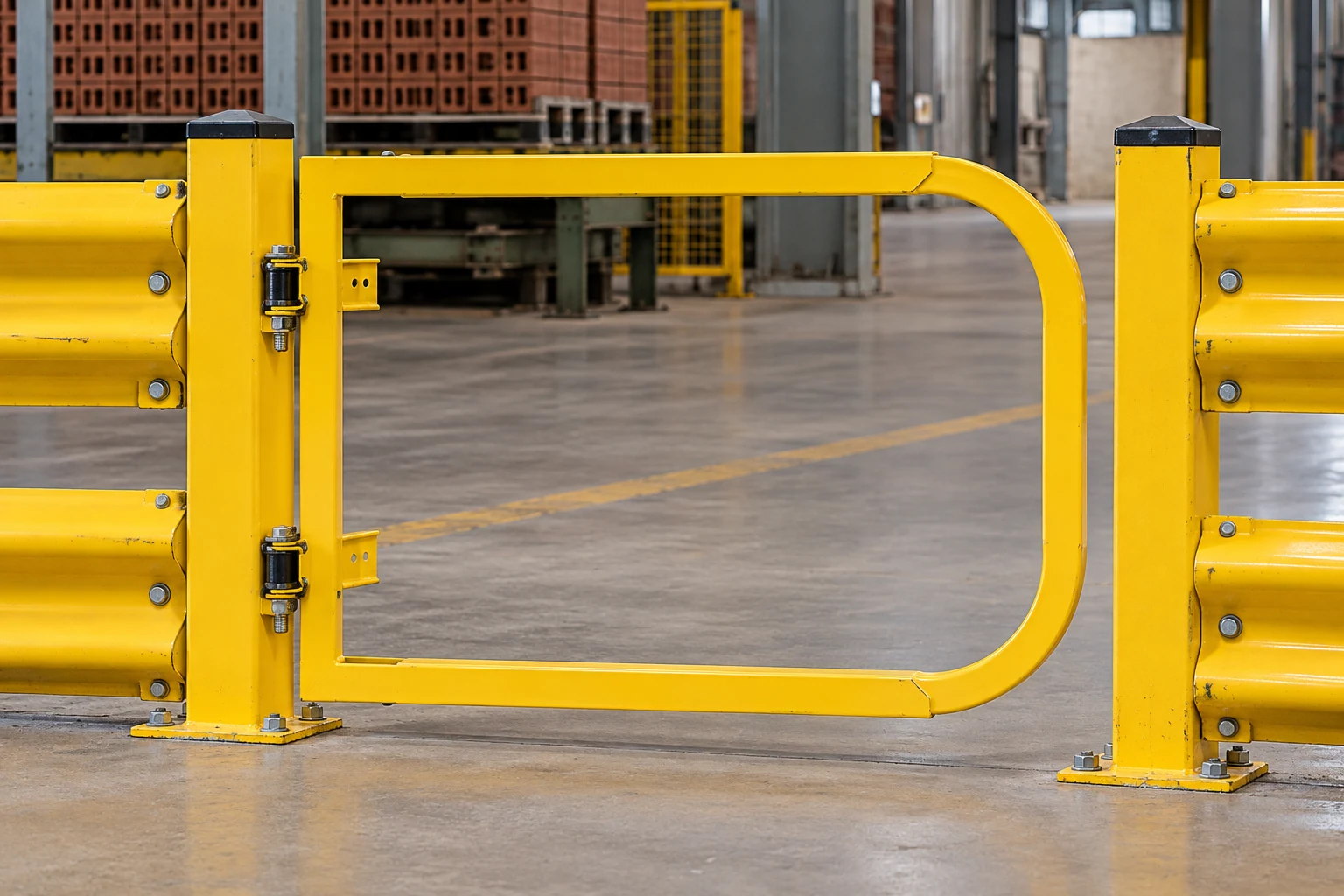
Record the usable opening between the proposed mounting points. Show the gate in its closed position and throughout its movement, including any two-way swing permitted by the selected product. Keep this sweep separate from the space occupied by a person waiting to cross.
Cogan's self-closing safety gate information describes adjustable sizes, spring hinges and mounting adapters for compatible systems. Confirm the required configuration and installation detail rather than assuming every gate fits every post.
| Review item | Include in the layout | Reason to resolve it early |
|---|---|---|
| Opening | Clear usable width and mounting points | Nominal gate size may not describe usable access |
| Swing path | Full movement and nearby obstructions | Stored goods can prevent normal operation |
| Waiting space | Place to pause outside vehicle travel | An open gate should not force someone into traffic |
| Visibility | Both approaches and likely load heights | Shelving or equipment can hide an approaching truck |
| Mounting | Post, adapter and connection details | Compatible components must be specified together |
| Routine use | Carrying tasks and frequency | Daily movement can expose a layout mismatch |
Separate access control from other protection claims
A pedestrian access gate is not automatically a vehicle barrier, machine interlock or fall-protection system for an elevated edge. Those are different applications with their own design requirements. Identify the intended function explicitly when requesting a product recommendation.
Likewise, the presence of a gate does not replace the warehouse traffic plan. Keep operating rules, signage and route controls coordinated with the physical layout. The warehouse traffic-management guide explains how barriers fit into the broader arrangement without assigning them functions that have not been specified.
Plan for ordinary behavior and service access
Check whether a person carrying a typical small item can approach and operate the gate as intended. If a task routinely requires moving large goods through the opening, determine whether a separate material-access arrangement is needed. Avoid designing a pedestrian route around an assumption that the gate will remain propped open during normal work.
Also show nearby equipment doors, service panels and temporary staging positions. A gate can operate correctly at installation and become obstructed when the adjacent area changes. Identify who is responsible for keeping its swing and approaches clear.
Define the handover and observation process
At installation handover, verify operation against the manufacturer's instructions and approved layout. Record the product, mounting configuration and any settings specified for the installation. Do not invent adjustment or spring-tension procedures from a visual inspection.
Include obstruction, damage and closing behavior in the site's observation process. If the gate no longer operates as intended, report it and manage the affected route under the site's procedure. Provide photographs of the opening, mounting points and both approaches when you request a Cogan quote for a new installation or replacement. Review the compatible guardrail system alongside the gate.
Frequently asked questions
Does a self-closing gate stop a forklift?
Do not assume that function. A pedestrian access gate's closing mechanism does not establish a vehicle-impact rating or replace an appropriately designed traffic-protection system.
What clearance should be measured around a gate?
Measure the usable opening, full swing path, waiting space and both approaches. Include nearby doors, equipment and normal staging positions.
Can the gate be mounted to any existing post?
Compatibility must be confirmed for the post, adapter, connection and gate configuration. Use the manufacturer's installation requirements for the selected system.
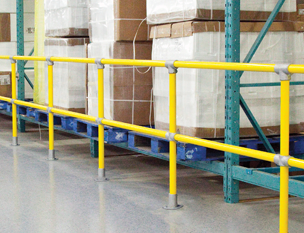
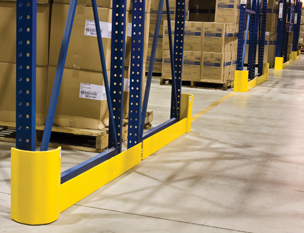
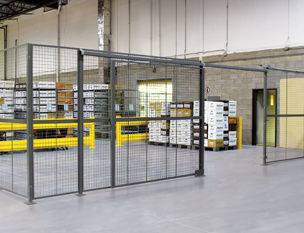
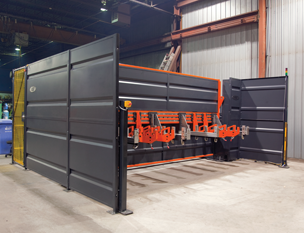
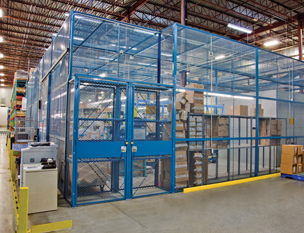
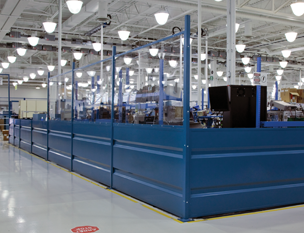
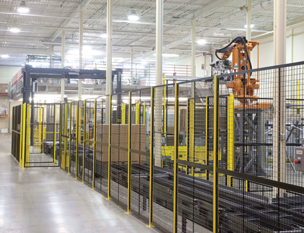
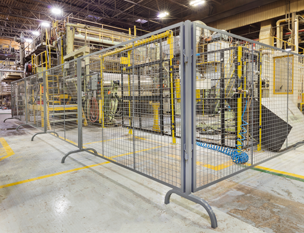
Images are conceptual product visualizations. Final configurations must follow the approved project drawings.
More on Guardrails
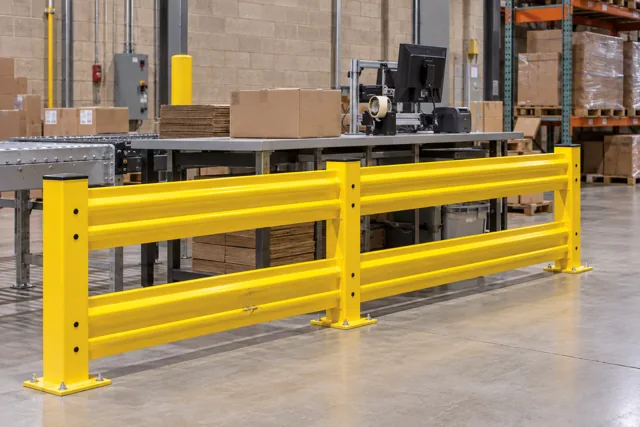
Warehouse Guardrails After an Impact: Document, Assess and Restore
Build a post-impact response for warehouse guardrails: control access, record the affected components and obtain an approved restoration plan.
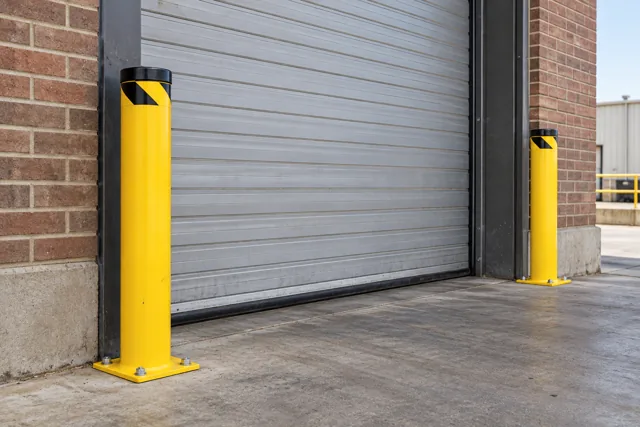
Warehouse Bollard Spacing: Measure the Opening and the Exposure
Plan warehouse bollard spacing around clear openings, vehicle and load movement, the protected asset and installation conditions.
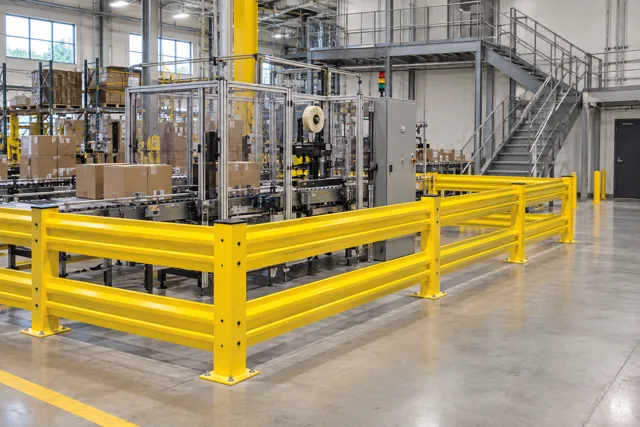
Guardrail vs Handrail: Which System Does Your Warehouse Need?
Understand warehouse impact guardrails, fall-protection guardrails and graspable handrails before selecting a protective system for your facility.
© 2025 Cogan Wire and Metal Products Ltd., all rights reserved.