



Guardrail vs Handrail: Which System Does Your Warehouse Need?
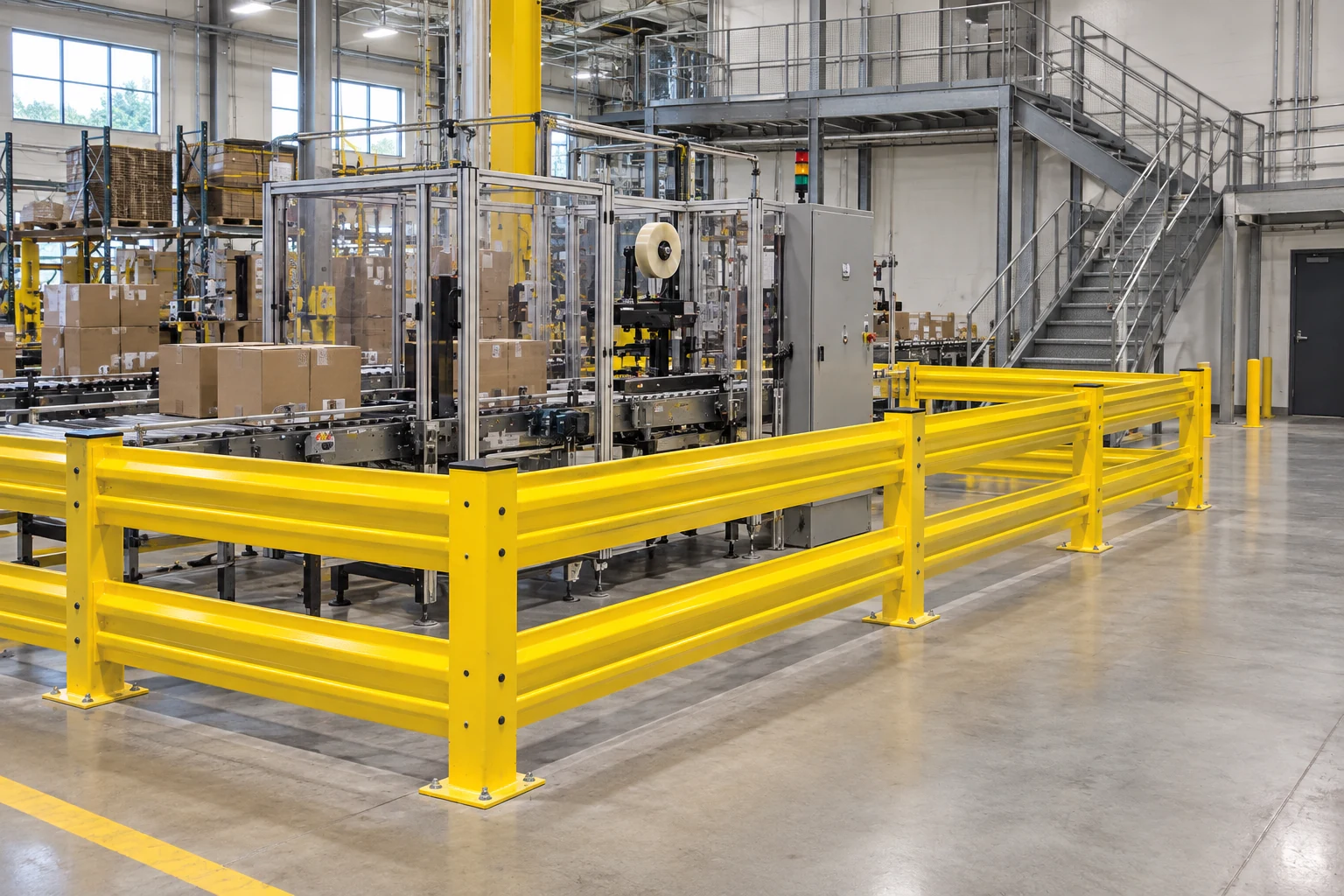
A handrail provides a graspable support for a person. A fall-protection guardrail forms a protective boundary at an exposed edge. A warehouse impact guardrail is selected to help protect people, equipment or areas from vehicle contact under specified conditions. These functions are different even when a product name includes the same word: rail.
Before comparing profiles, heights or prices, identify the hazard the system must address. A yellow rail beside a machine and a rail at the edge of a mezzanine may look related from a distance, but appearance does not establish interchangeable performance.
Separate three functions in the project brief
Use a drawing to identify where people need graspable support, where an elevated edge requires protection and where vehicles could contact equipment or occupied areas. Some projects contain all three situations. Give each location its own requirement rather than ordering one generic rail for the whole facility.
| System | Primary planning purpose | Information to establish |
|---|---|---|
| Handrail | Graspable support along a route such as stairs | Route, mounting, graspability and applicable criteria |
| Fall-protection guardrail | Protective boundary at an exposed edge | Edge condition, openings, geometry and required performance |
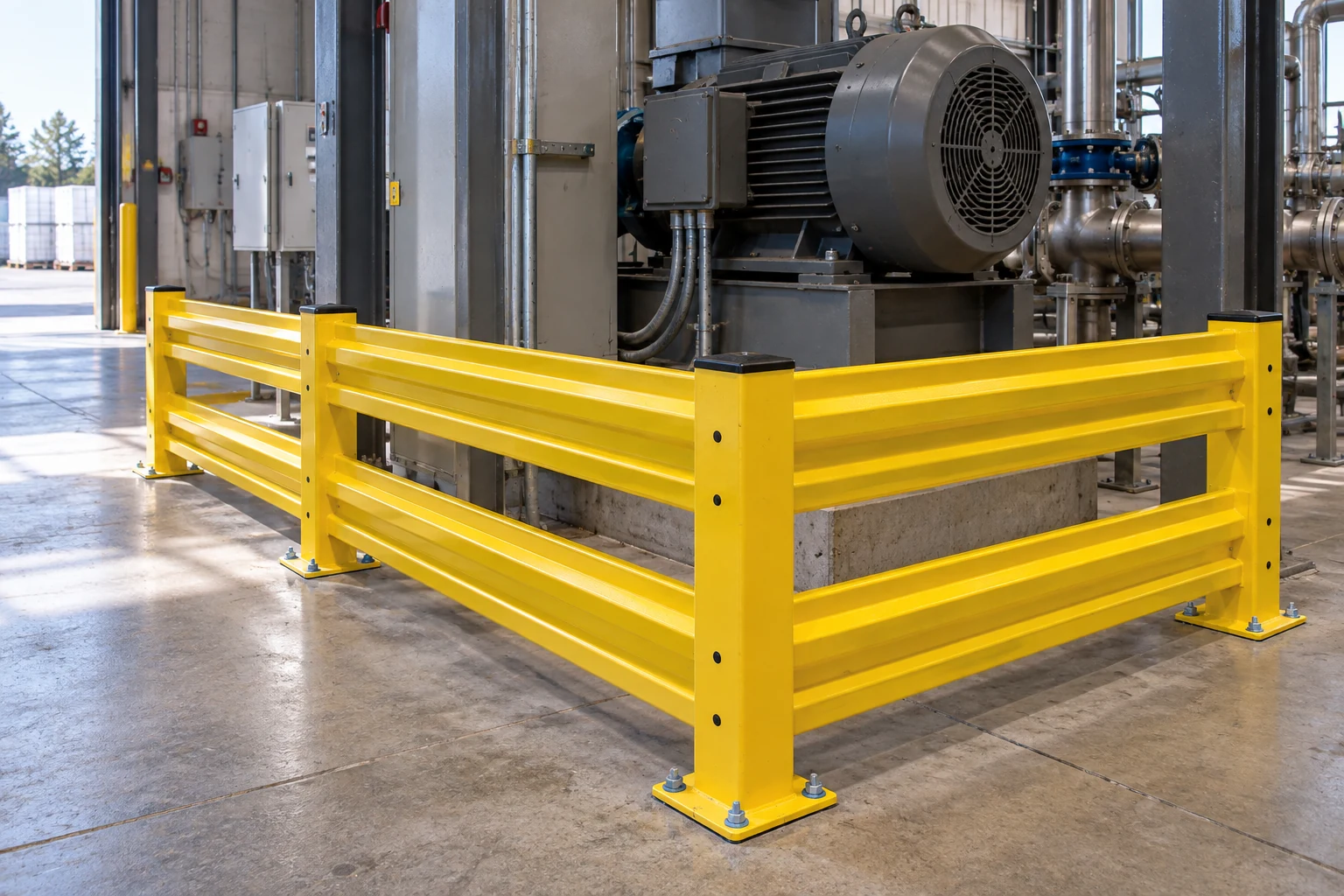
| Industrial impact guardrail | Protection against a defined vehicle-contact exposure | Traffic, vehicle/load characteristics, layout and tested configuration |
For US general industry, OSHA addresses fall-protection systems and handrail/stair-rail criteria in 29 CFR 1910.29. That does not make the same criteria a vehicle-impact rating. In Canada, assess the applicable jurisdiction and project requirements rather than assuming a US rule applies unchanged.
Describe the vehicle exposure before choosing impact rails
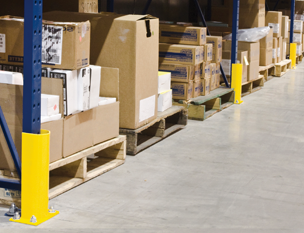
Record vehicle types, traffic direction, turning movements and load overhang. Identify the asset or occupied area being protected and the space available around it. The purpose is to give the supplier a realistic description of the exposure, not to estimate performance from rail thickness alone.
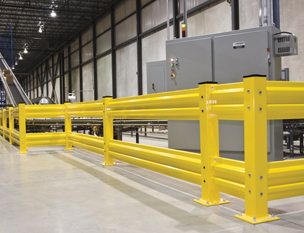
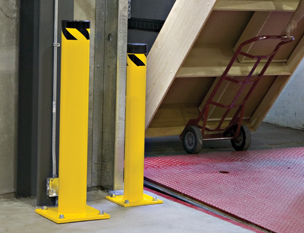
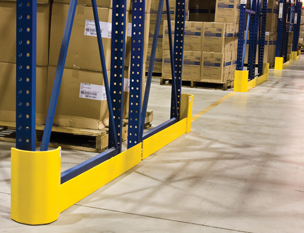
Ask what configuration an impact claim covers, including posts, rails, connections, anchors and supporting conditions. Changes to those elements can matter. Cogan's heavy-duty guardrails are one product family to discuss for industrial impact protection; select the complete arrangement for the actual site.
Treat an elevated edge as a separate design condition
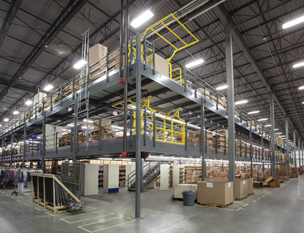
Where a platform or stair is involved, describe the walking surface and exposed edges explicitly. Include access openings, material-transfer locations and connections to stairs or landings. Do not assume that a floor-mounted impact barrier can be moved to a mezzanine edge and perform the required fall-protection function.
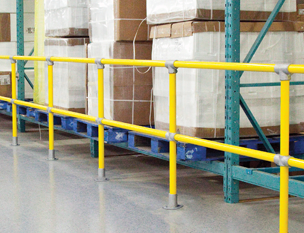
Similarly, a handrail should not be used as evidence that a stair or platform has every protective element it needs. The designer must address the complete arrangement. CCOHS's guardrail overview explains the fall-prevention role and emphasizes checking applicable requirements.
Coordinate boundaries with the way people work
A protective boundary still needs appropriate access. Review where workers enter, where equipment is serviced and how materials move through the area. Position crossings and openings deliberately. A rail that obstructs the intended task can encourage improvised access, while an uncontrolled gap can undermine the boundary's purpose.
For ground-level routes, consider pedestrian barriers as part of the traffic-management discussion. Route separation, impact protection and fall protection remain distinct requirements; naming a route a walkway does not determine which system is suitable.
Compare quotations by function and complete scope
Identify the required function at every location on the plan. Ask each supplier to describe the proposed system, installation conditions, documented performance and limitations. Compare access arrangements and supporting conditions as well as material quantities.
Avoid using color, rail count or a familiar product label as the acceptance criterion. A clear brief should explain the problem being addressed and the evidence needed for the proposed solution. For a facility with several rail applications, send Cogan the marked-up plan so the discussion begins with those differences.
Frequently asked questions
Is a warehouse impact guardrail the same as a fall-protection guardrail?
No. The systems address different exposures. Suitability must be established for the intended function and installation; a vehicle-impact claim does not automatically establish fall-protection compliance.
Can the top of any guardrail serve as a handrail?
No. A graspable handrail has its own functional and applicable design requirements. A combined arrangement must be specifically evaluated rather than assumed suitable because it has a top rail.
What should I tell a supplier when asking for guardrails?
Describe the hazard, location, vehicle or pedestrian movements, available space, access openings and supporting conditions. State explicitly if elevated-edge protection or graspable support is involved.
Sources and further planning
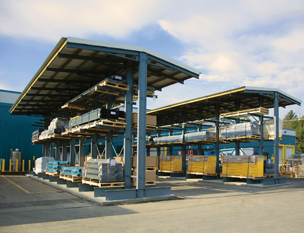
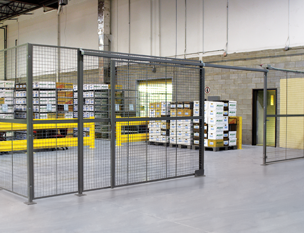
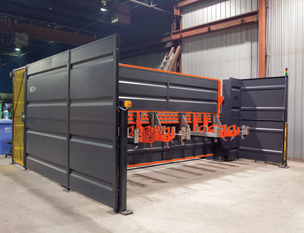
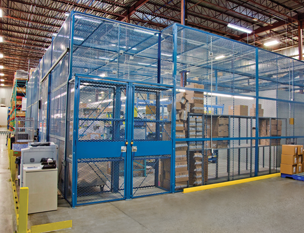
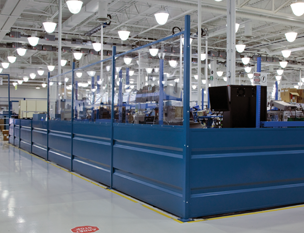
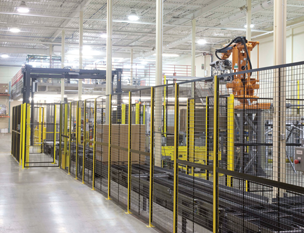
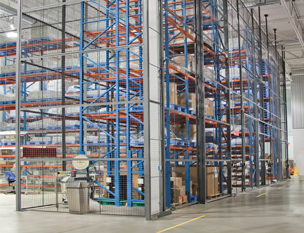
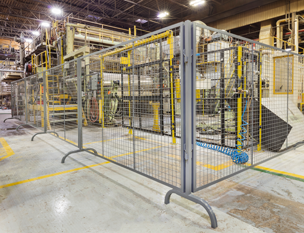
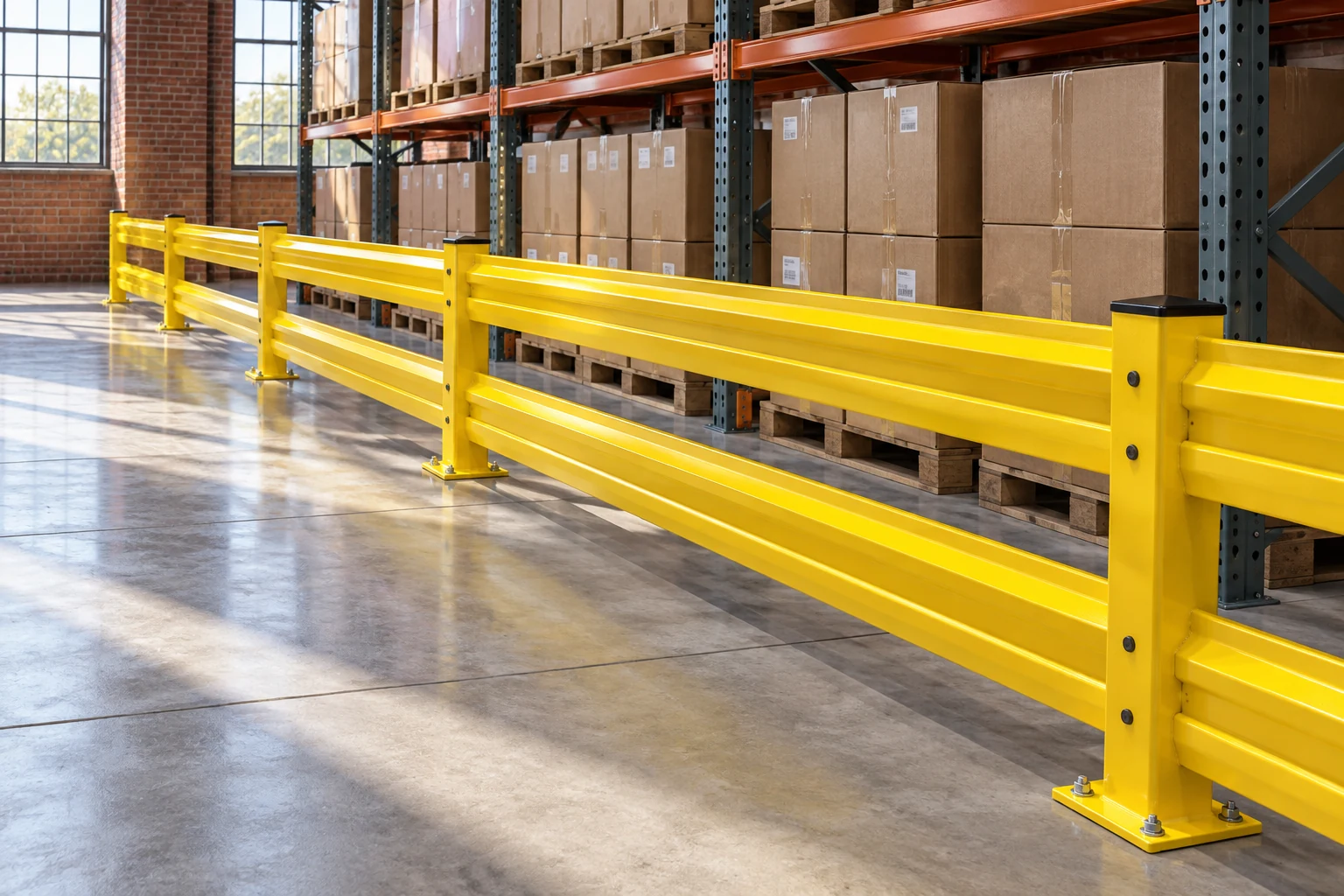
Images are conceptual product visualizations. Final configurations must follow the approved project drawings.
More on Guardrails
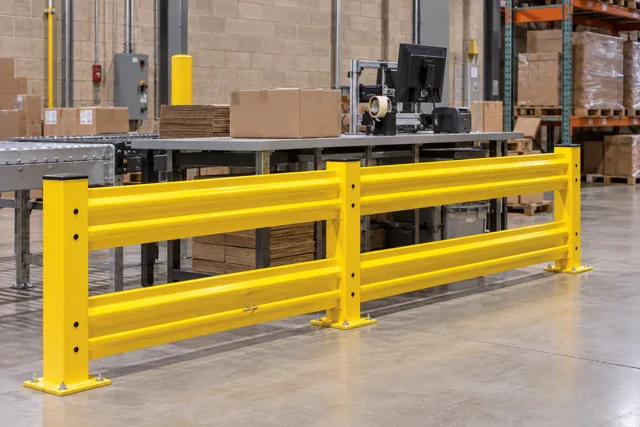
Warehouse Guardrails After an Impact: Document, Assess and Restore
Build a post-impact response for warehouse guardrails: control access, record the affected components and obtain an approved restoration plan.
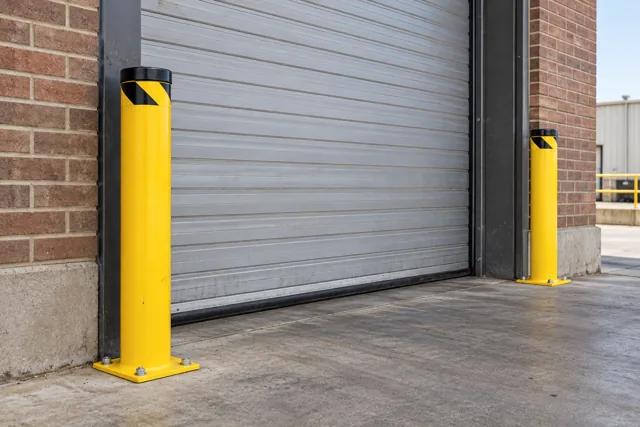
Warehouse Bollard Spacing: Measure the Opening and the Exposure
Plan warehouse bollard spacing around clear openings, vehicle and load movement, the protected asset and installation conditions.
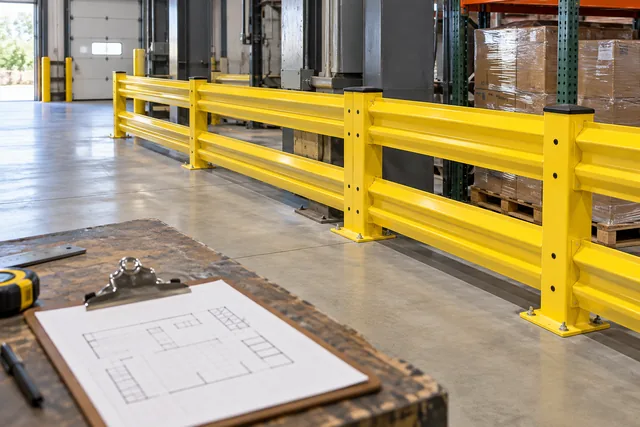
Warehouse Guardrail Cost: What a Complete Quote Should Include
Warehouse guardrail cost depends on the configured system and installation scope, not only the length of rail.
© 2025 Cogan Wire and Metal Products Ltd., all rights reserved.