



Warehouse Guardrails After an Impact: Document, Assess and Restore
After a warehouse guardrail is struck, control the affected area, document the contact and have the complete installation assessed before restoring normal operation. A straight-looking rail does not establish that its posts, connections, anchors or supporting concrete are unchanged. The response should follow the site's incident procedure and the manufacturer's instructions for the installed system.
Make the area usable only under a controlled plan
The first operational question is what the barrier was protecting and whether that protection can still be relied on. Notify the responsible supervisor and keep vehicles or people away from the affected exposure as the site's procedure requires. If an asset, structure or load was also contacted, include it in the incident response.
Temporary arrangements need a defined owner and scope. Redirecting a forklift route may move traffic into another aisle; placing cones may communicate a restriction without providing the protection of the original barrier. Document the temporary traffic arrangement and communicate it to every affected shift. Do not leave an informal workaround in place while waiting for a replacement quote.
Record the event before evidence disappears
Collect the location, date, system identification and available information about the vehicle, load and contact direction. Distinguish what was observed from what is estimated. If impact speed is unknown, record it as unknown rather than selecting a number that appears to fit a published rating.
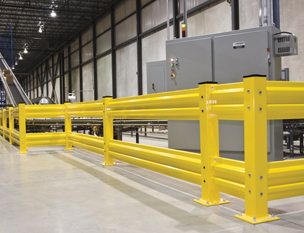
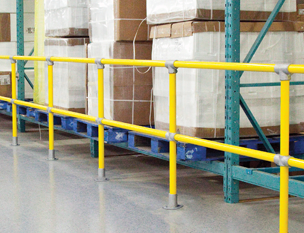
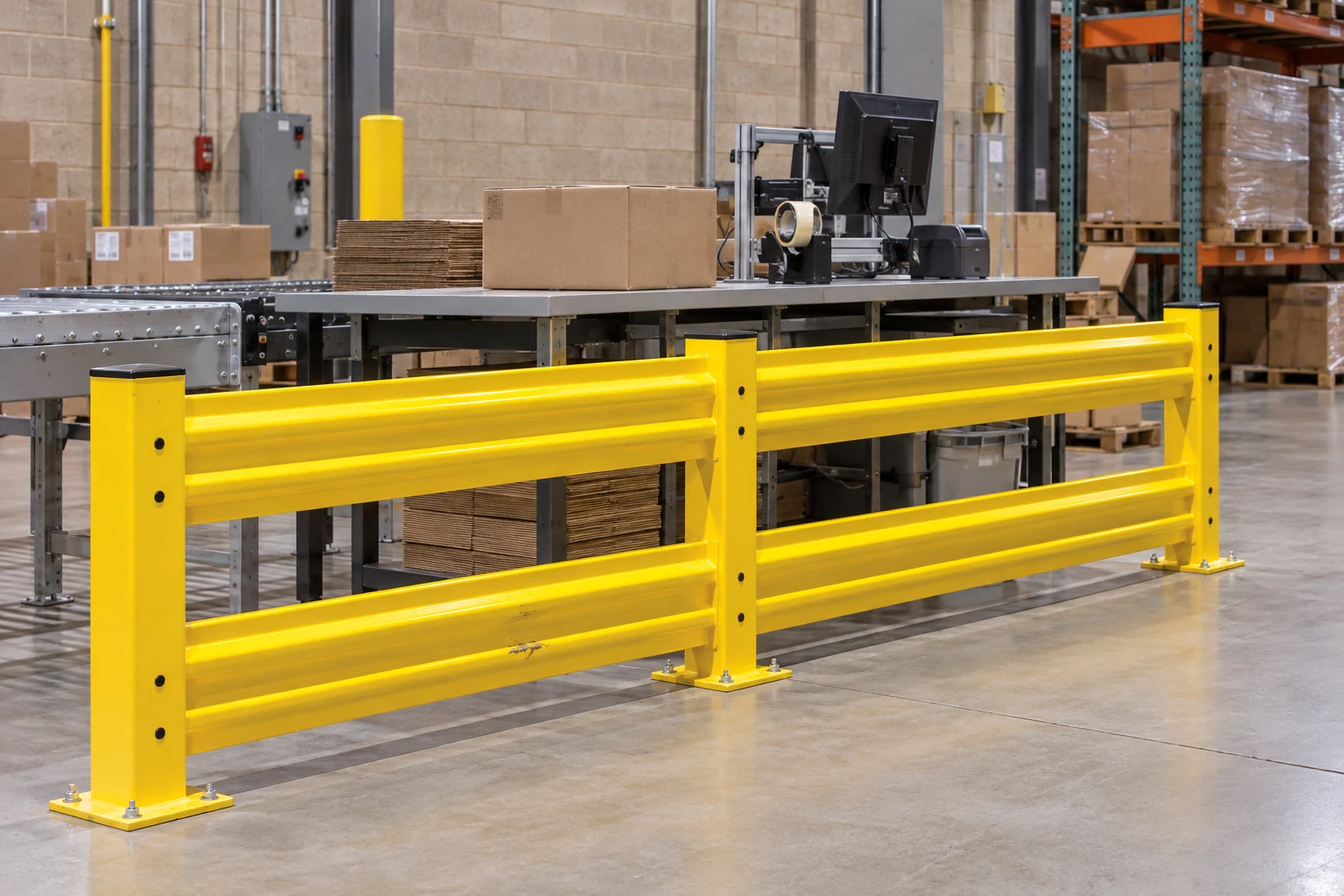
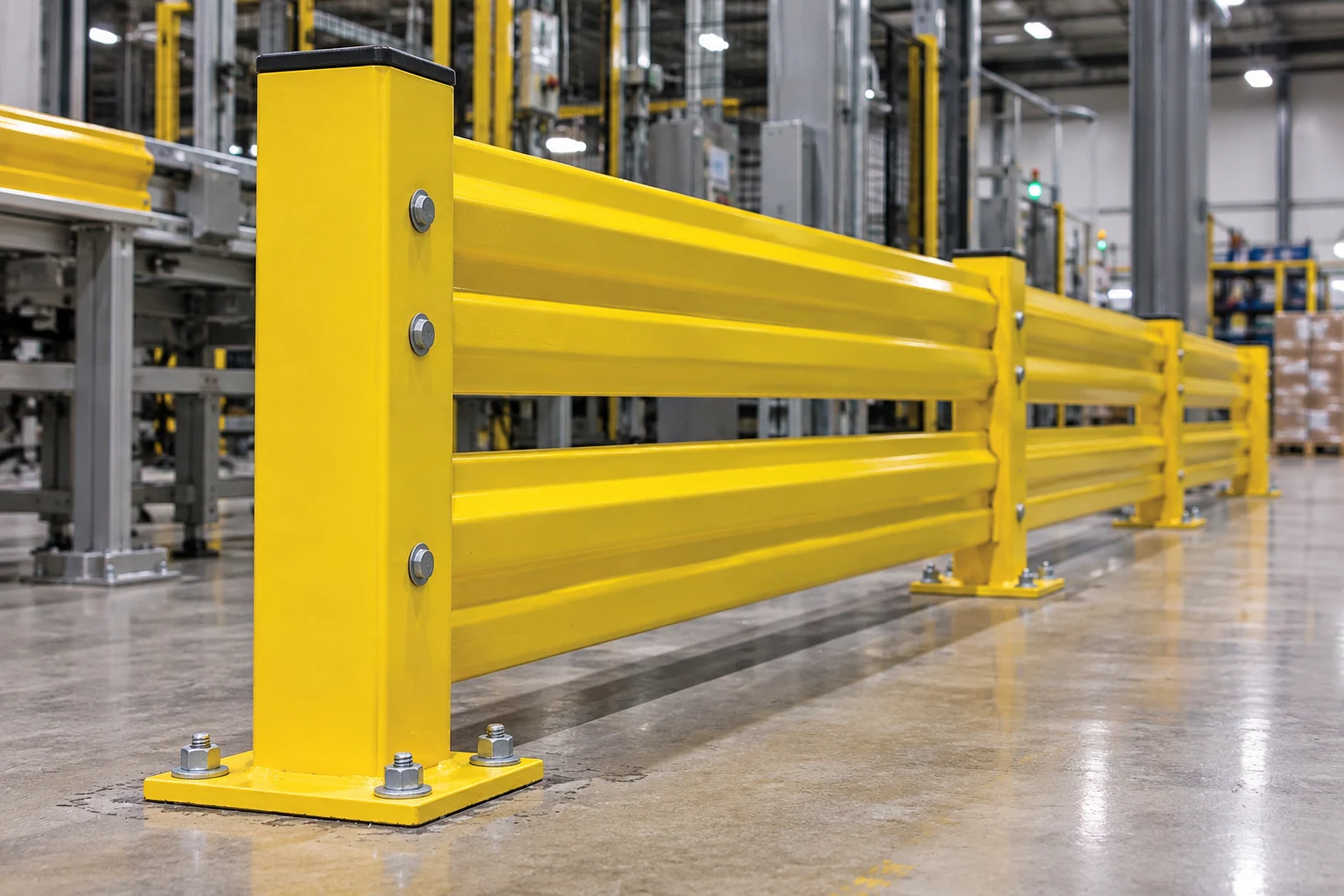
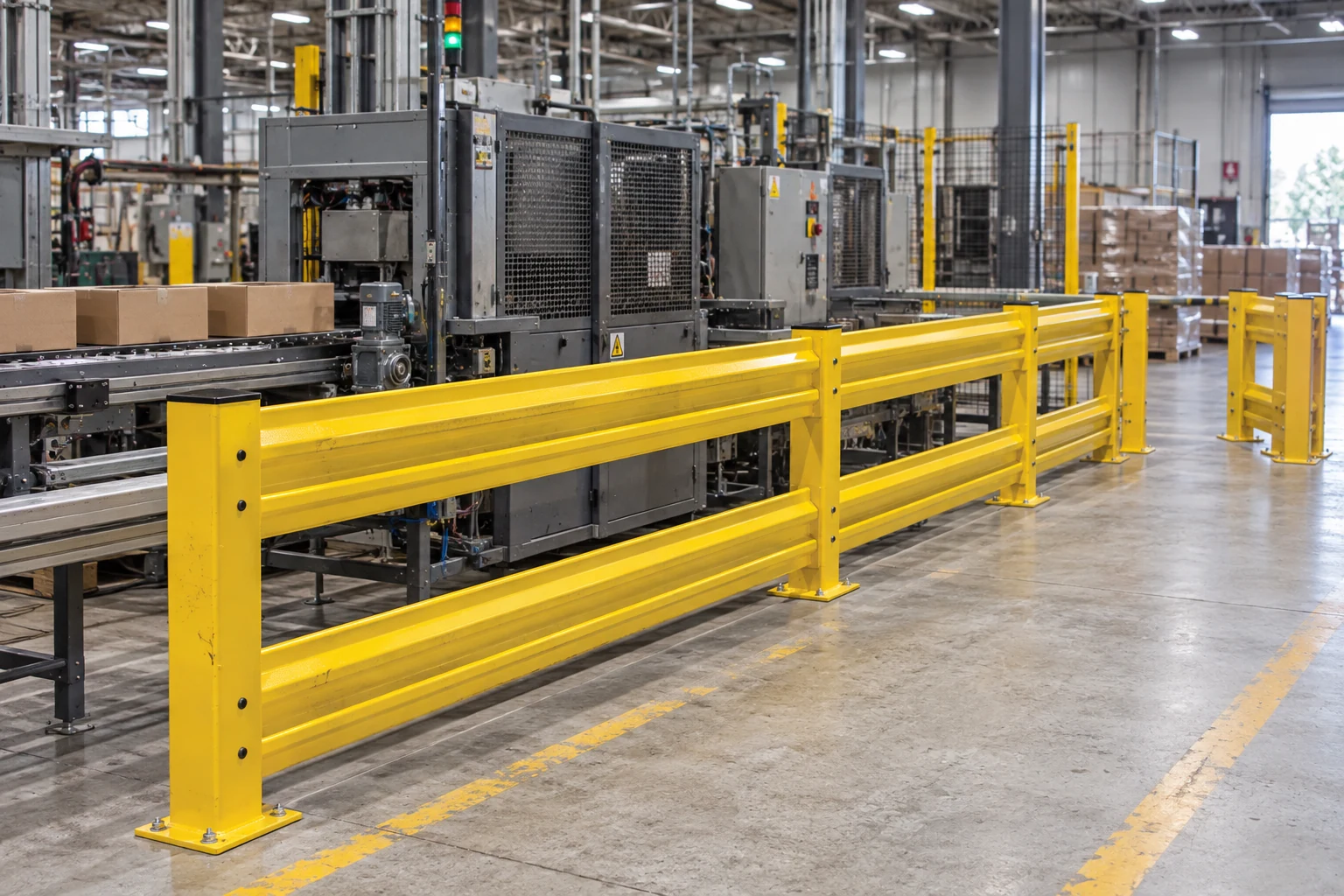
Photograph the full barrier run, the contact area and the connections on both sides where they can be observed safely. Include the protected equipment and the surrounding floor. Cogan's heavy-duty guardrail system uses separate rails and posts; identify the installed components rather than ordering from the rail's visible length alone.
| Item to document | Useful observation | Follow-up question |
|---|---|---|
| Rail | Location of bending, tearing or paint contact | Which rail and connection were involved? |
| Post | Visible lean, distortion or contact marks | Was force transmitted into adjoining rails? |
| Connections | Missing hardware or visible movement | What does the manufacturer's assessment require? |
| Base and floor | Movement, cracking or damaged concrete | Does the anchor or slab need separate review? |
| Protected area | Contact with equipment or displaced goods | What additional assessment is necessary? |
Assess the installed system as a whole
A published impact claim applies under specified conditions. It should not be used as a post-incident pass/fail test based only on the vehicle's nominal weight. The guide to forklift-barrier impact ratings explains why the tested arrangement and impact conditions matter.
Ask the manufacturer or qualified project professional to define the assessment and restoration scope. That may involve more than the visibly damaged component. Preserve original product identifiers, drawings and installation records so the reviewer can establish what was installed and whether any earlier modifications affect the decision.
Avoid straightening, welding, drilling or changing hardware without an approved procedure. Likewise, do not prescribe anchor tightening from memory: the required response depends on the anchor system, installation and condition. This article provides an information checklist, not a field repair method or a certification that a struck barrier is fit for use.
Order the restoration with a clear scope
A useful request includes the incident record, component identification, dimensions, site photographs and the requested operating date. Ask the supplier to distinguish replacement parts, fastening requirements, any floor work and installation responsibilities. Confirm how the area will remain controlled while the work is completed.
Before reopening, close the assessment findings and record who accepted the restoration under the site's process. Update the drawings or asset record if the approved configuration changed. Keep the incident photographs with the completed work record so future teams do not mistake an unresolved observation for an accepted condition.
Use the incident to improve the traffic plan
Review whether the contact involved a tight turn, pallet overhang, blocked sightline, route change or equipment access. Those observations can inform a layout review without assuming that more rail alone solves the cause. Check the warehouse traffic-management guide alongside the incident findings.
For Cogan systems, request assistance or a project quote with the installation and incident details. A complete description helps the team identify the appropriate next review rather than guess from a close-up photograph of yellow steel.
Frequently asked questions
Can a guardrail stay in service if the paint is only scratched?
A paint mark alone cannot establish the condition of the full installation. Follow the site's incident process and obtain the assessment appropriate to the contact and installed system.
Is replacing the bent rail always enough?
Not necessarily. The posts, connections, anchors, concrete and protected asset may also require review. The restoration scope should follow that assessment.
What information helps with a replacement request?
Provide the product identification, location, dimensions, incident observations and photographs of the full run, damaged area, connections and floor. Mark uncertain details as unknown.
Images are conceptual product visualizations. Final configurations must follow the approved project drawings.
More on Guardrails
Warehouse Bollard Spacing: Measure the Opening and the Exposure
Plan warehouse bollard spacing around clear openings, vehicle and load movement, the protected asset and installation conditions.
Guardrail vs Handrail: Which System Does Your Warehouse Need?
Understand warehouse impact guardrails, fall-protection guardrails and graspable handrails before selecting a protective system for your facility.
Warehouse Guardrail Cost: What a Complete Quote Should Include
Warehouse guardrail cost depends on the configured system and installation scope, not only the length of rail.
© 2025 Cogan Wire and Metal Products Ltd., all rights reserved.