



Forklift Barriers: How to Read an Impact-Rating Claim
A forklift barrier rating describes performance under specified conditions. It should be read with the tested configuration, vehicle mass, speed, impact direction and installation requirements. A headline number alone cannot establish whether a barrier suits a particular warehouse exposure.
Ask what the rating actually describes
A product description may state a vehicle weight and speed, but that is not a universal promise for every collision. Obtain the supporting report and confirm which rail, post, span and anchoring arrangement it describes. Ask how the documented configuration relates to the one proposed for your site.
The load being carried matters when evaluating site exposure. Record the relevant operating conditions and discuss them with the designer rather than selecting a system from truck model names alone. Vehicles can approach a barrier in different ways, and projecting loads can create contact conditions unlike the example shown in a test.
Keep product claims attached to their conditions
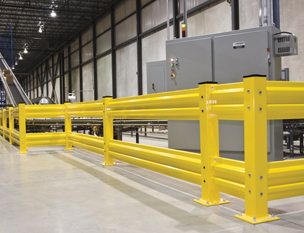
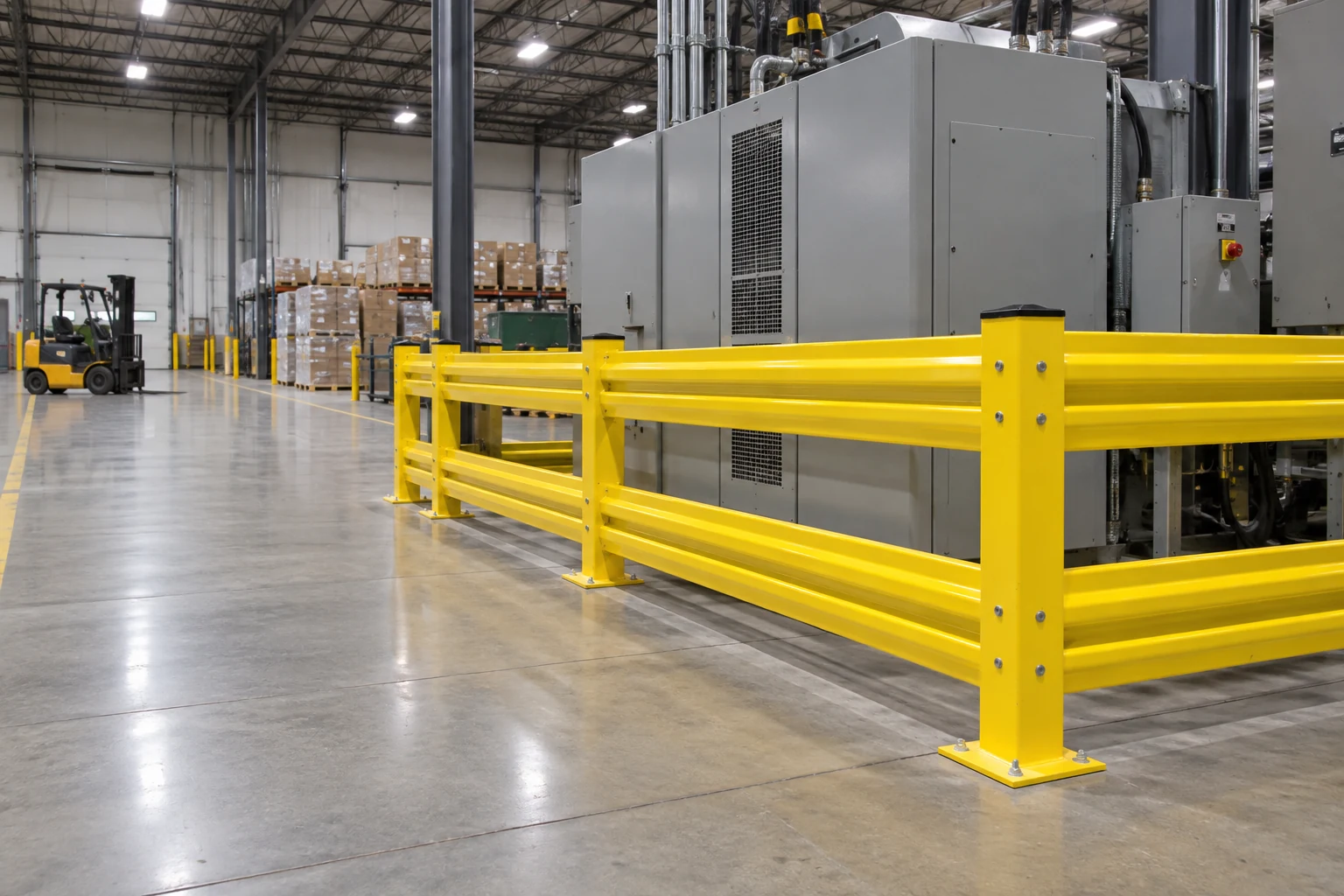
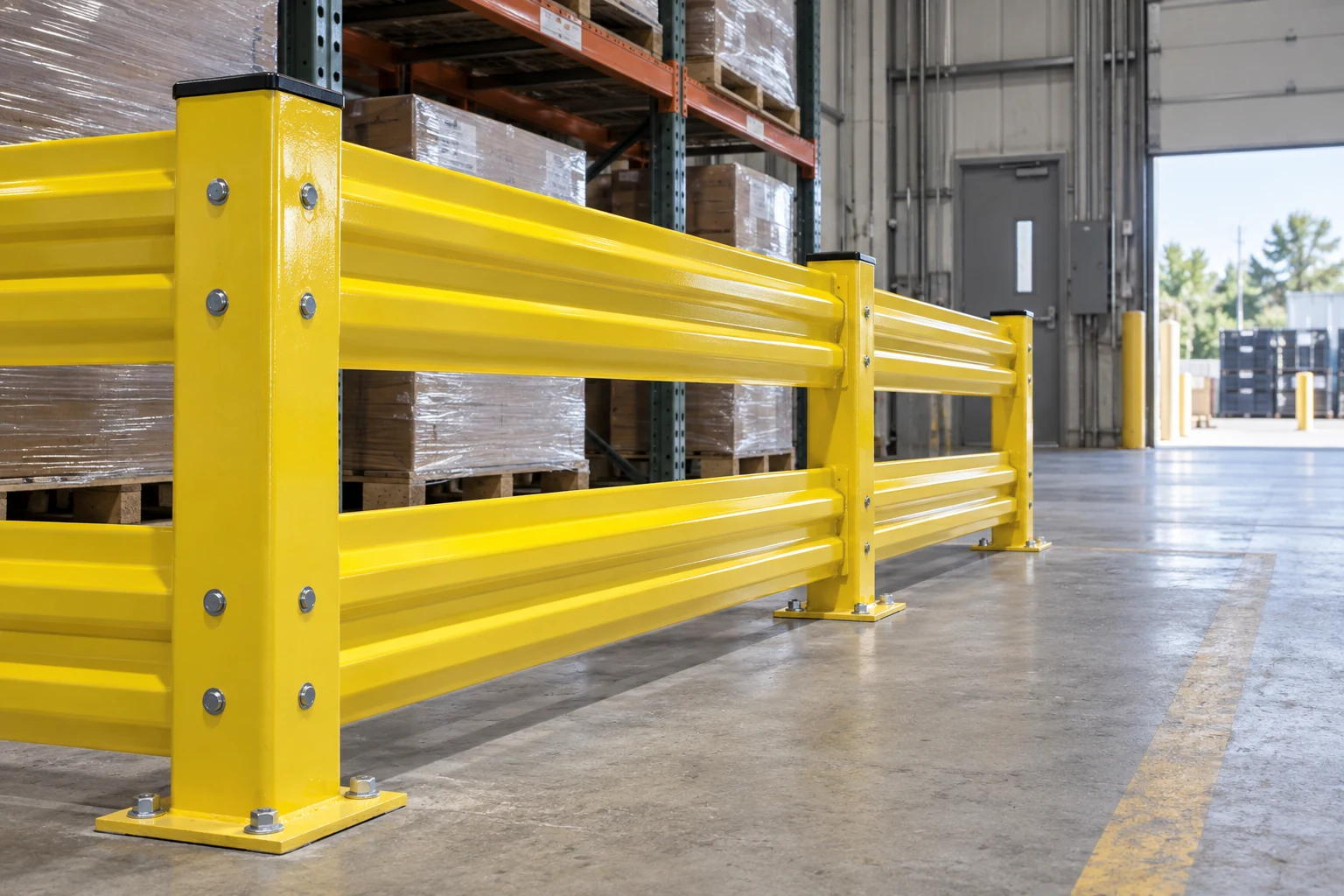
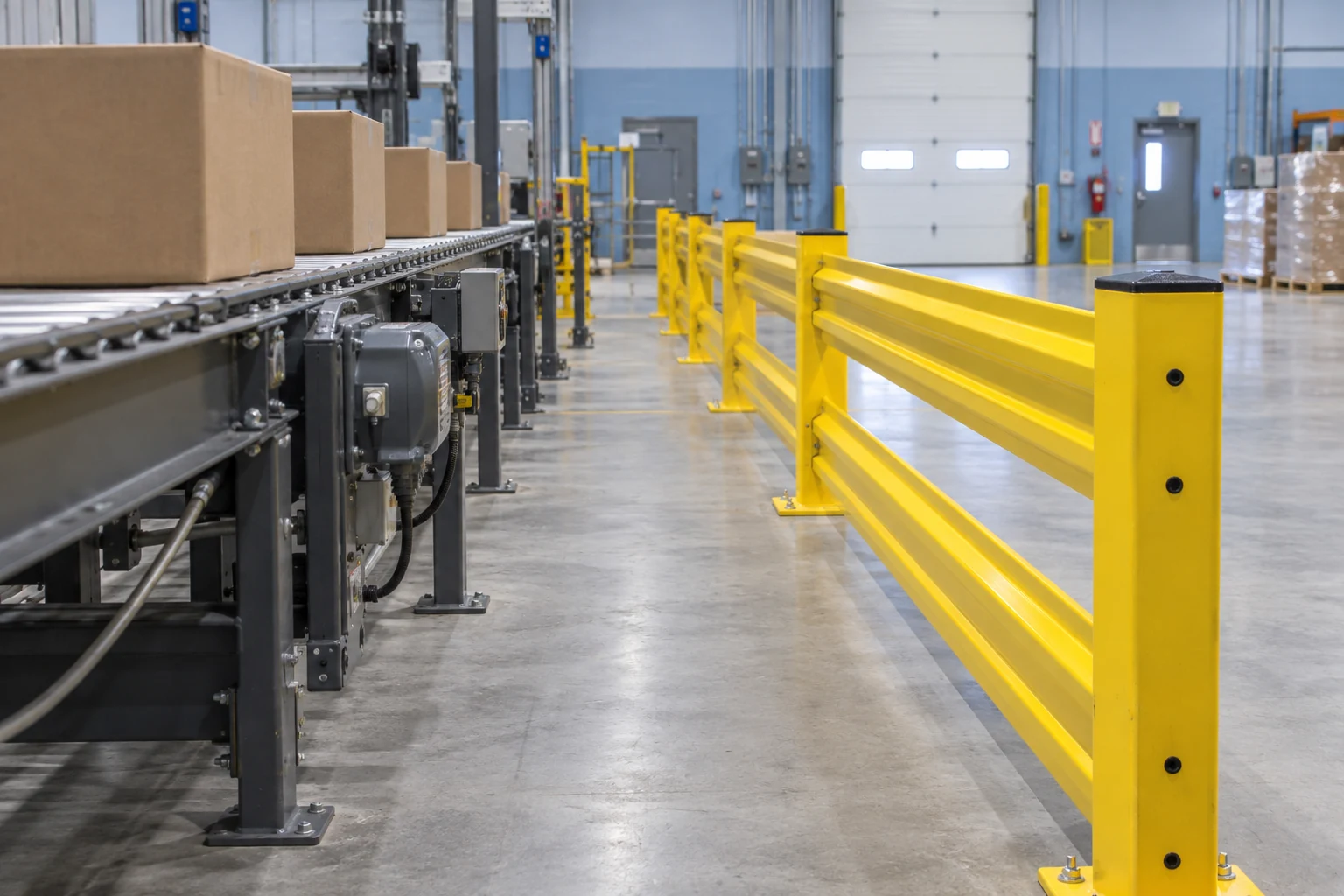
Cogan's heavy-duty guardrail page states that properly installed barriers are engineered for a 10,000-lb impact at 4 mph. That is a Cogan product statement with an installation condition. It should not be extended to bollards, pedestrian rails, different configurations or higher speeds without supporting documentation.
The same page links to a crash-test demonstration and report. Those references are more useful to a buyer than an isolated number copied into a comparison chart. Request the current document and discuss any differences between the documented assembly and your proposed layout.
Compare more than the headline
| Information to request | Why it affects selection |
|---|---|
| Test or design basis | Establishes what the performance statement means |
| Rail and post configuration | Identifies the assembly being evaluated |
| Anchor and slab requirements | Defines the support conditions |
| Movement during impact | Helps assess clearance to protected assets |
| Inspection and replacement guidance | Supports a response after an incident |
This comparison is useful across different materials. Avoid declaring one material universally safer without comparable performance evidence and a defined application.
Translate the report into a site decision
Show the supplier the protected equipment, available clearance, traffic directions and floor condition. Discuss the space that must remain behind the barrier and how openings or corners affect the layout. Have the project team resolve departures from the manufacturer's documented installation.
After an impact, do not infer that the system is fit for continued service because it still stands. Follow site procedures, restrict exposure where necessary, and have the affected assembly and support conditions assessed. Visible rails are only part of the installed system.
Questions buyers ask
Does a rating guarantee that equipment cannot be damaged?
No. A rating has defined conditions, and actual incidents can differ. Selection, clearance, installation and operating controls all matter.
Can a barrier be selected by vehicle weight alone?
No. Speed, configuration, approach and site conditions also affect the exposure being addressed.
Where should I find the supporting information?
Start with the manufacturer's current product documents and test report, then confirm the proposed configuration with the supplier or project engineer.
Product references and next step
Review the performance statement and linked report on Cogan's heavy-duty guardrail page. Include your operating conditions in a configuration enquiry.
More on Guardrails
Warehouse Bollard Spacing: Measure the Opening and the Exposure
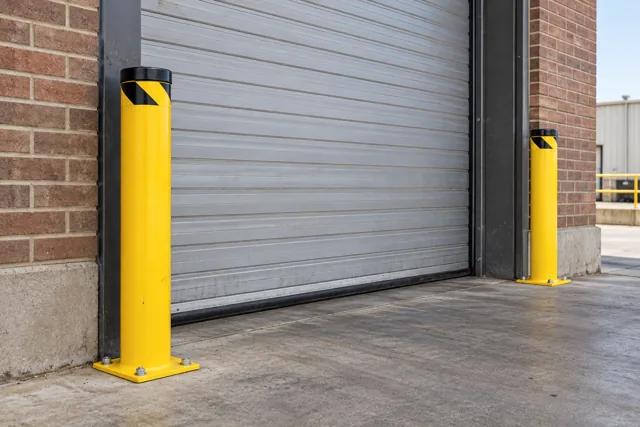
Plan warehouse bollard spacing around clear openings, vehicle and load movement, the protected asset and installation conditions.
Guardrail vs Handrail: Which System Does Your Warehouse Need?
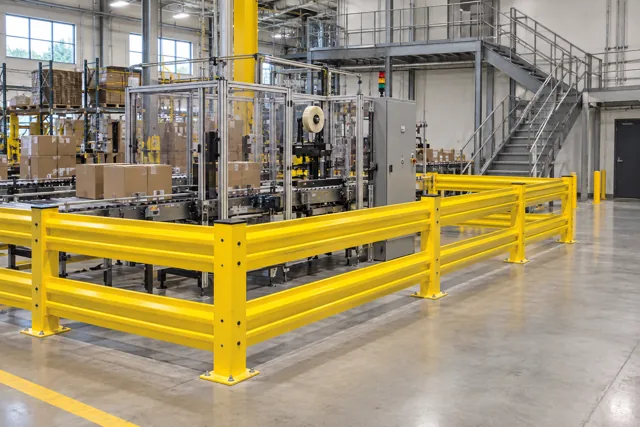
Understand warehouse impact guardrails, fall-protection guardrails and graspable handrails before selecting a protective system for your facility.
Warehouse Guardrail Cost: What a Complete Quote Should Include
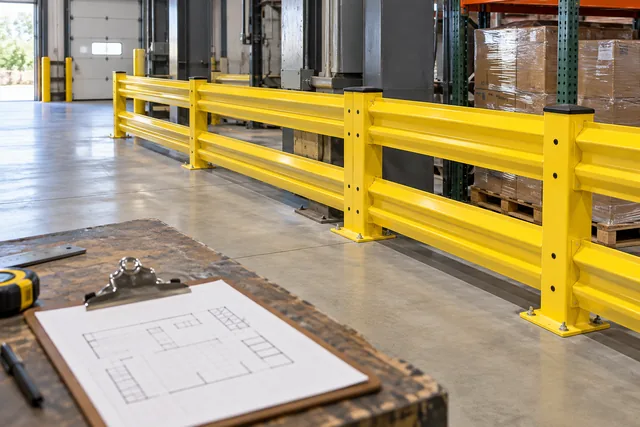
Warehouse guardrail cost depends on the configured system and installation scope, not only the length of rail.
© 2025 Cogan Wire and Metal Products Ltd., all rights reserved.