





Warehouse Traffic Management: Where Barriers Fit in the Plan
Warehouse traffic management combines routes, operating practices and physical layout. Barriers can help define boundaries and protect selected areas, but they should be placed as part of that wider plan. Start with the movement of vehicles, loads and people, then decide where a physical boundary will improve the arrangement.
Observe a complete operating cycle
Receiving, replenishment, picking and dispatch can use the same space differently. Record those activities at representative busy times. Identify locations where waiting pallets, parked trucks or pedestrians change the usable route. An empty-floor drawing cannot show all of these interactions.
Ask operators where they need to reverse, where sightlines are poor and where loads extend into adjacent space. Ask pedestrians where the intended route is inconvenient or frequently blocked. These observations help identify the conflicts that a new layout must resolve.
Give each boundary a purpose
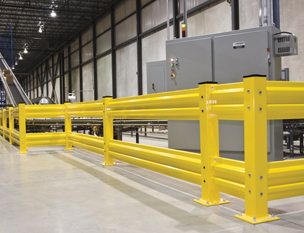
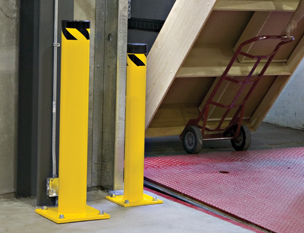
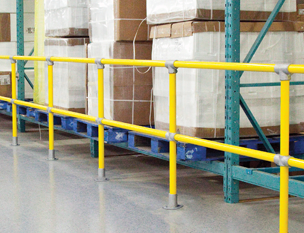
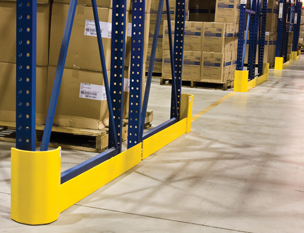
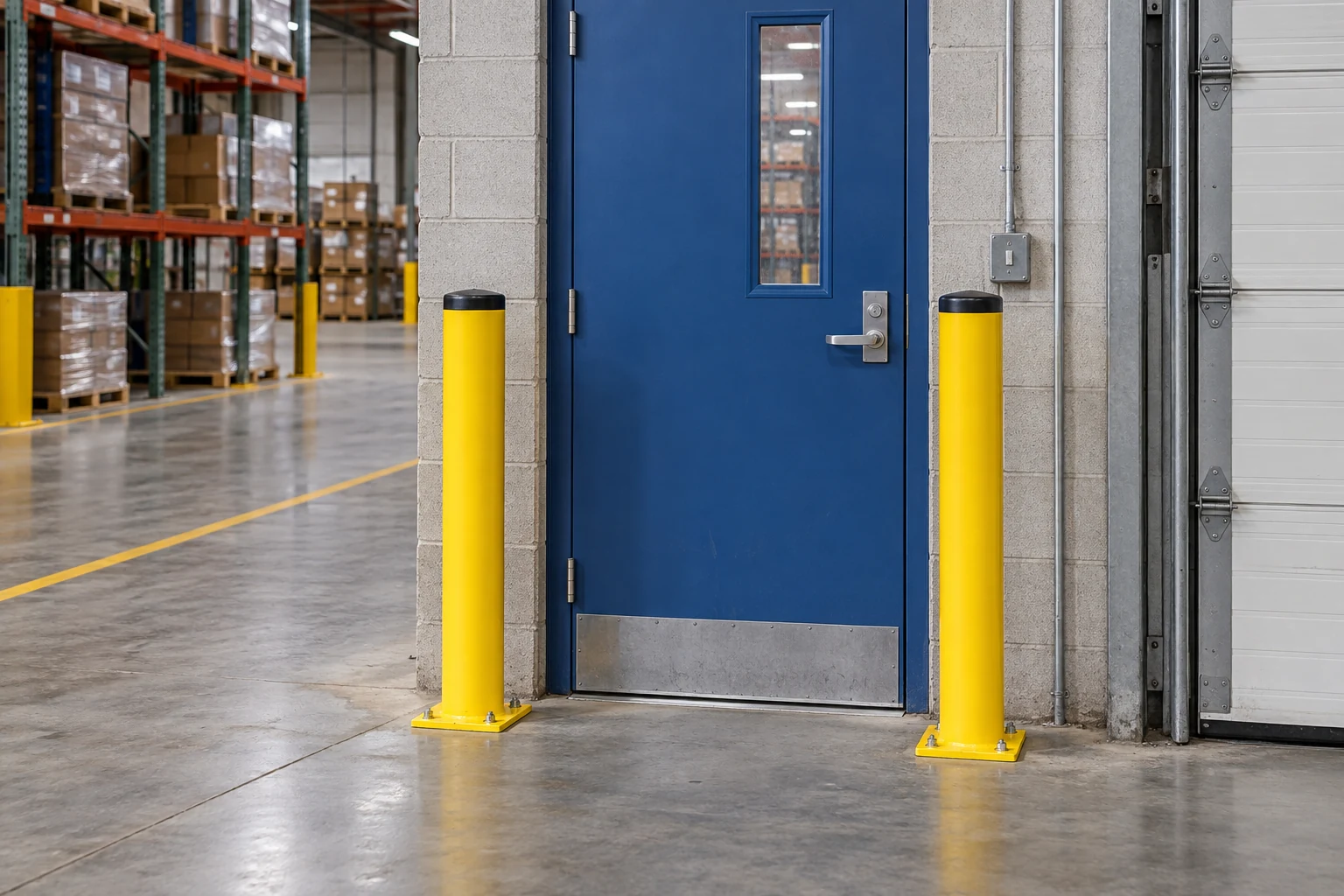
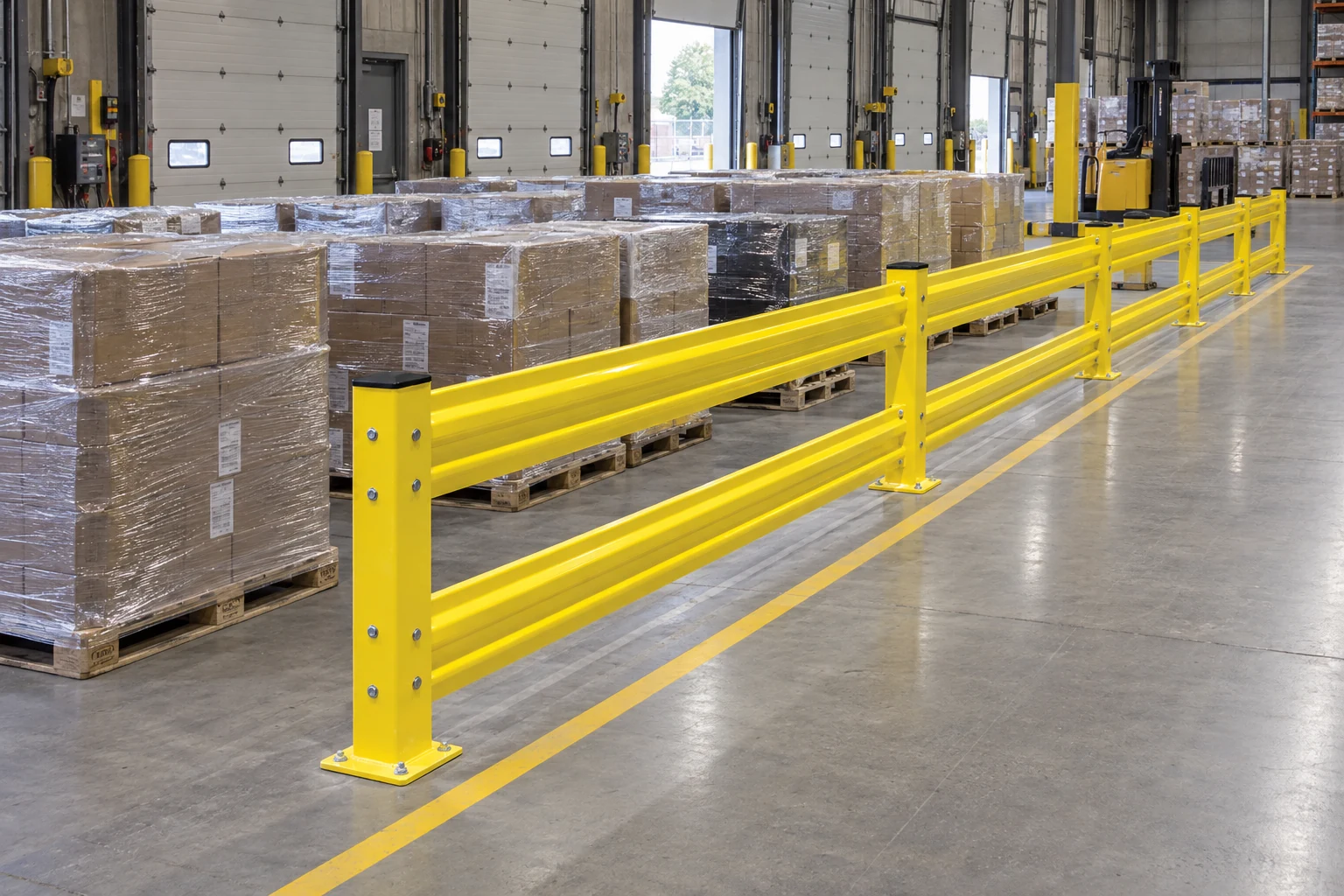
A guardrail beside machinery, a bollard at a door and a pedestrian rail along a walkway are different decisions. Label the intended purpose on the drawing. That makes it easier to select a product against the actual exposure instead of installing one barrier style everywhere.
At intersections, consider the approaches from both directions. A boundary that channels people toward a crossing can be useful only if the crossing itself remains visible and usable. Keep normal staging and parking out of the areas needed to understand the route.
Record the decisions at conflict points
| Location | Information needed |
|---|---|
| Receiving door | Largest load, approach and waiting space |
| Aisle intersection | Sightlines, turning paths and pedestrian movement |
| Production entry | Vehicle exposure and required staff access |
| Office doorway | Where a person arrives relative to traffic |
Use the table as a survey aid, not as a substitute for a site-specific safety assessment. Route controls, training, signage and appropriate vehicle operation remain important alongside physical products.
Review changes after installation
Assign responsibility for keeping routes clear and reporting damage. A new storage position or handling method can change the exposure near an installed barrier. Review the plan when operations change, rather than assuming a permanent product creates a permanent solution.
Evaluate whether the layout is working in practice. Look for repeated obstructions, informal openings and damaged ends. These observations can reveal a mismatch between the intended route and daily work. Correct the cause with the site team before simply adding another rail.
Questions buyers ask
Should barrier selection come before the traffic plan?
Usually the route and exposure information should come first. It provides the basis for choosing suitable products and configurations.
Does a barrier eliminate the need for operating controls?
No. Physical boundaries are one part of the traffic arrangement, alongside the site's operating practices and other controls.
Can the same layout be copied between facilities?
Use it only as a starting reference. Differences in vehicles, loads, destinations and floor conditions need to be assessed at each site.
Product references and next step
Compare Cogan guardrail products, pedestrian barriers, and the warehouse safety barrier guide. Submit a marked traffic plan with your enquiry.
More on Guardrails
Warehouse Bollard Spacing: Measure the Opening and the Exposure
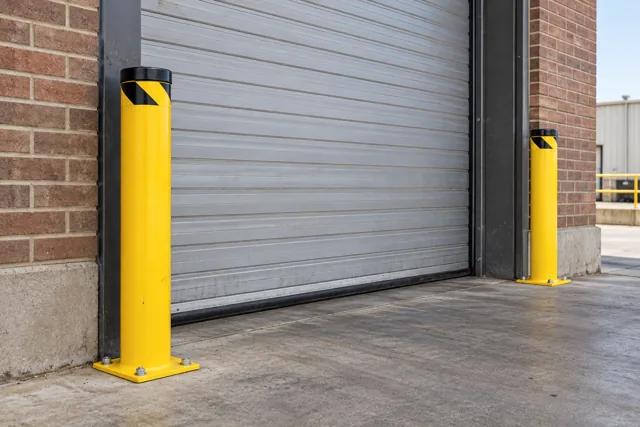
Plan warehouse bollard spacing around clear openings, vehicle and load movement, the protected asset and installation conditions.
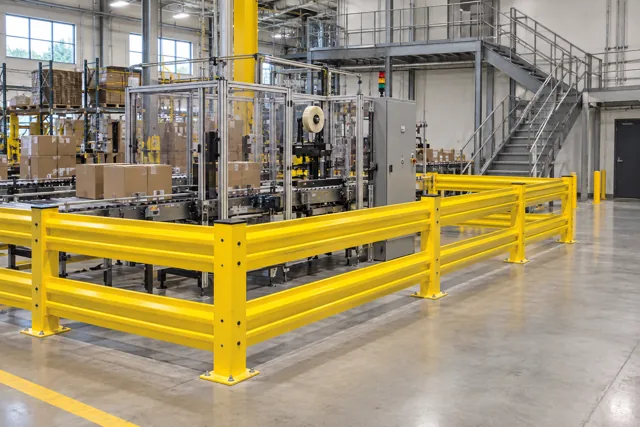
Guardrail vs Handrail: Which System Does Your Warehouse Need?
Understand warehouse impact guardrails, fall-protection guardrails and graspable handrails before selecting a protective system for your facility.
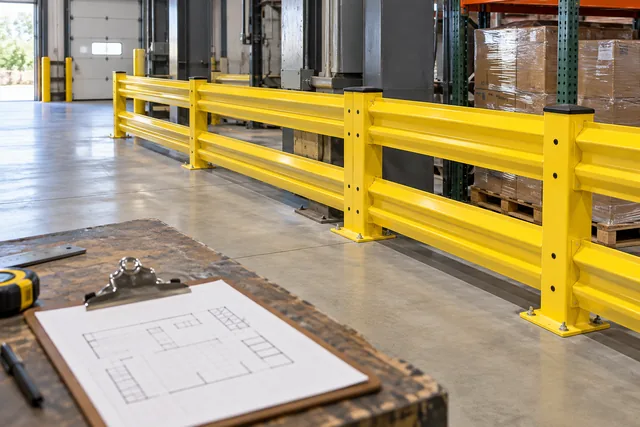
Warehouse Guardrail Cost: What a Complete Quote Should Include
Warehouse guardrail cost depends on the configured system and installation scope, not only the length of rail.
© 2025 Cogan Wire and Metal Products Ltd., all rights reserved.