


Pallet Rack Backing: Plan Mesh Coverage and Load Clearance
Pallet rack backing should be selected around the material being stored, the area exposed behind the rack and the mounting arrangement the rack can support. Define the required coverage and clearance before choosing mesh panels or another backing system. Backing does not replace stable loads, correct pallet placement or rack inspection.
The rear of a rack may face a walking route, a workstation or another storage area. Those surroundings explain why a boundary is being considered. A plan that shows only the rack elevation leaves out the people, equipment and operating tasks on the other side.
Identify what could reach the area behind the rack
Describe the stored units, packaging and smaller items that could separate from a load. Record the levels in use and the relationship between the load and the rear of the rack. The system should address the actual exposure rather than a generic image of a palletized carton.
Keep claims specific. A panel that helps contain particular stored materials should not automatically be described as capable of arresting any falling pallet or resisting a forklift impact. Ask for the documented function and limitations of the proposed arrangement.
Coordinate panel coverage with the stored material
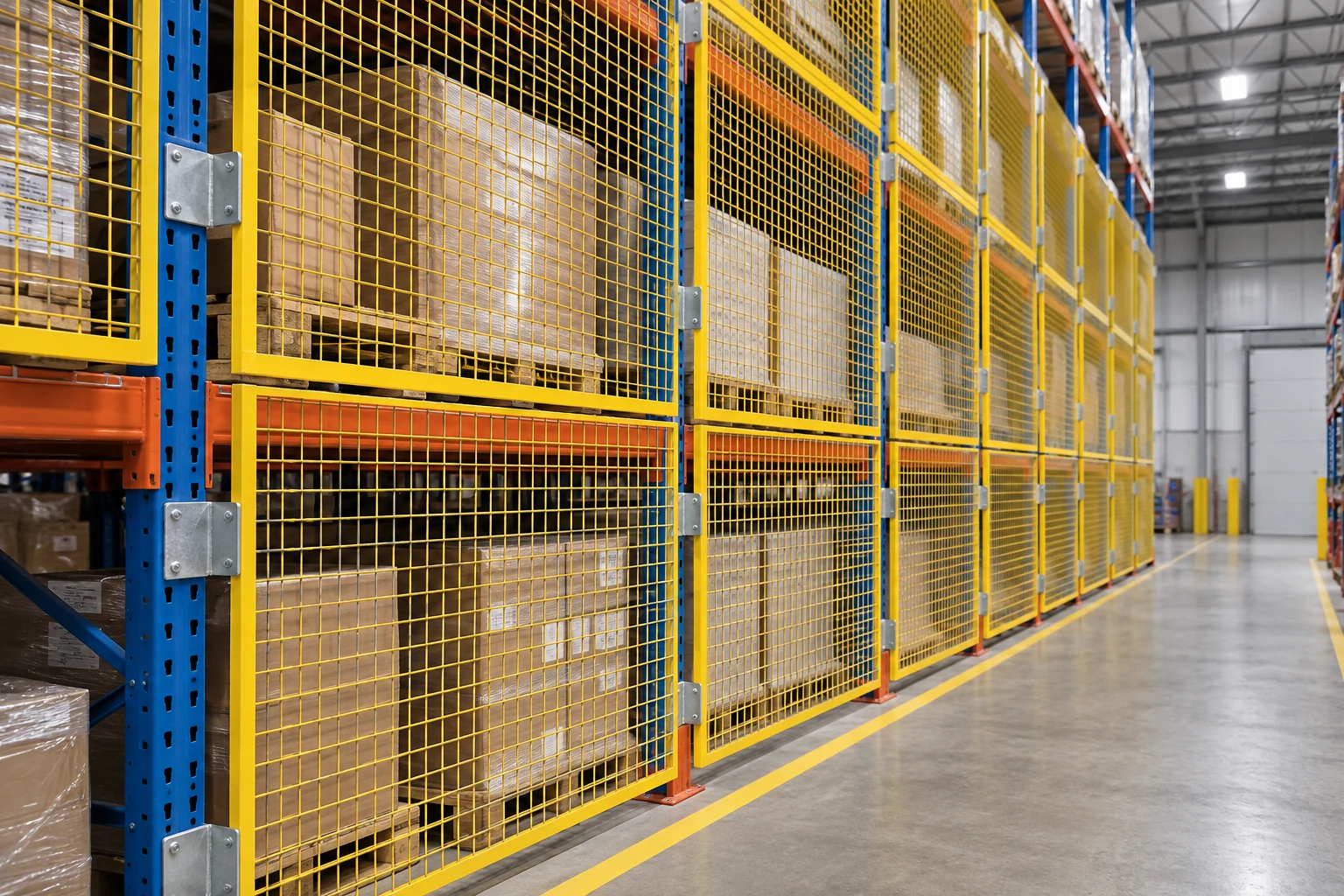
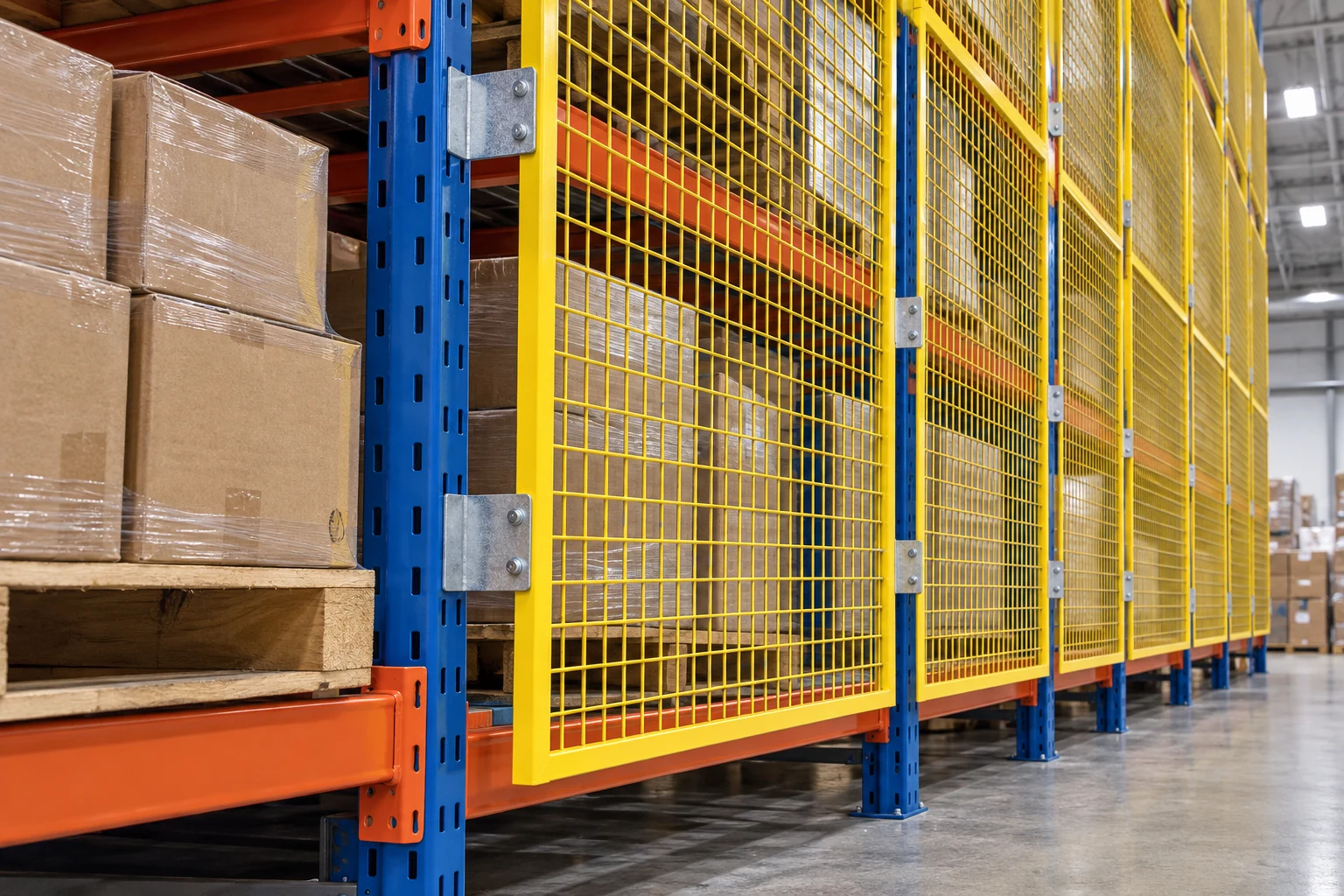
Show the required width and height of the protected area, including any changes in storage level. Review panel openings, joints and interfaces against the material to be addressed. A mesh opening that is suitable for one item size may not serve the same purpose for much smaller loose parts.
Look at the boundary as a complete assembly. Gaps at adjoining panels or around rack components may matter even when the main panel has the desired mesh. Do not solve an unreviewed gap by adding improvised wire, boards or fasteners.
| Selection input | Question to resolve |
|---|---|
| Stored material and packaging | What could separate from or project beyond the normal load? |
| Area behind the rack | Who or what is exposed at each location? |
| Panel coverage and openings | Does the complete boundary suit the intended containment function? |
| Load and panel clearance | Can normal placement occur without pushing material into the backing? |
| Rack and mounting details | Which approved supports and connections are required? |
Preserve appropriate clearance behind the loads
The backing position and the intended pallet position must be coordinated. Provide the rack dimensions and maximum normal load depth, including packaging or overhang. Review the proposed stand-off arrangement with the supplier instead of assuming a panel can be mounted flush wherever it fits.
Coordinate any required building or fire-protection clearances with the responsible professionals. A mesh panel's open appearance does not establish that every layout around it is acceptable. Keep the storage plan, backing arrangement and building interfaces in the same review.
Compare complete systems rather than materials alone
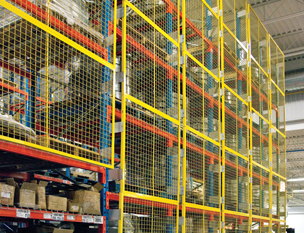
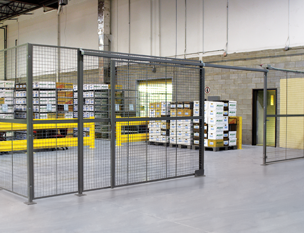
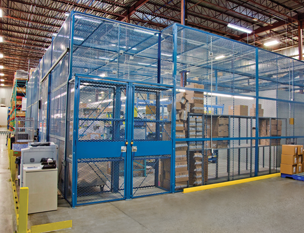
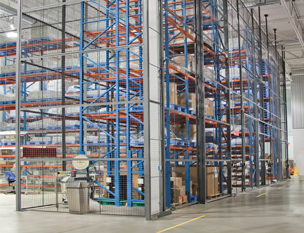
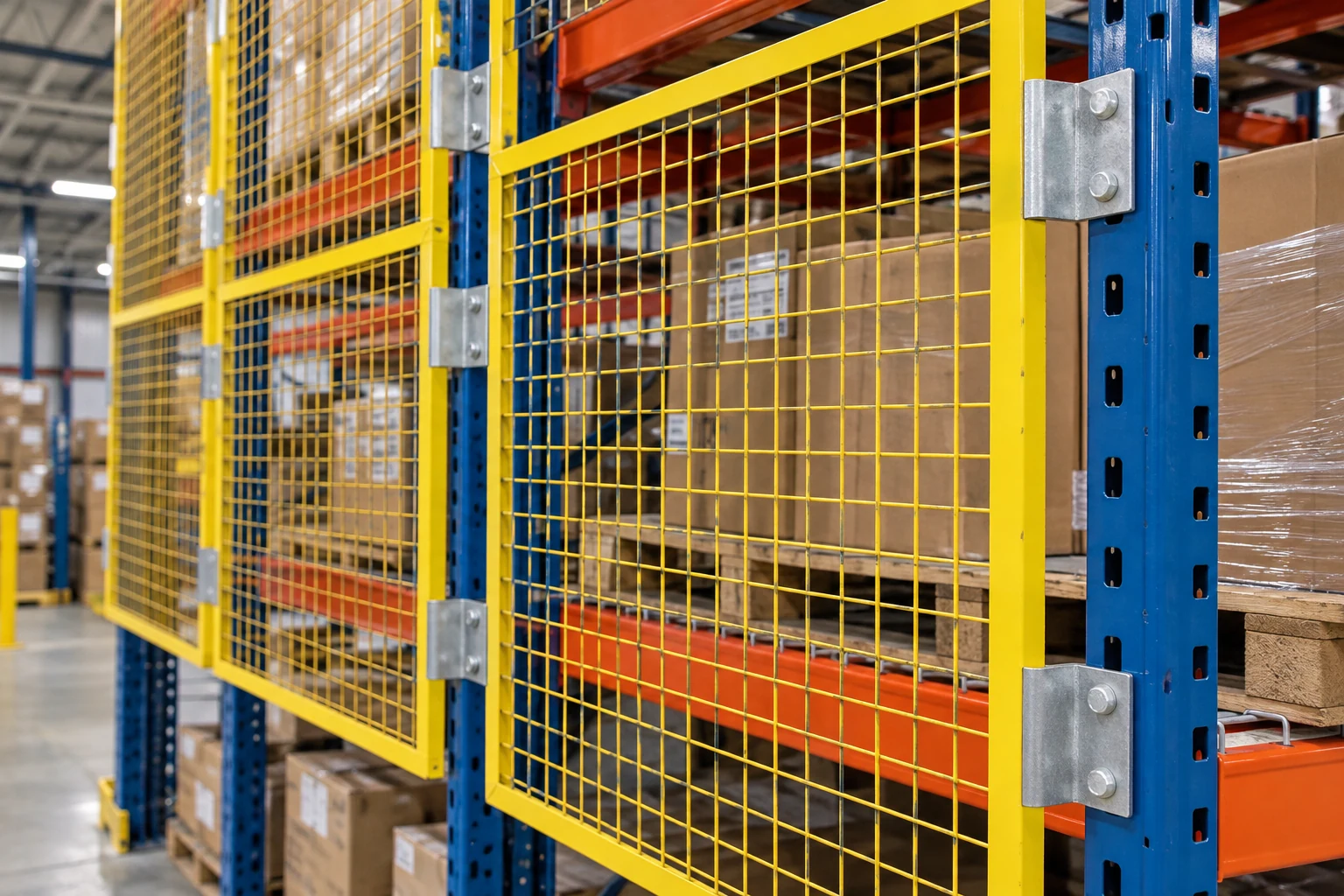
Cogan wire-mesh rack guards use rigid framed panels as part of a specified mounting arrangement. Other backing systems, including netting, have their own attachment, clearance, inspection and performance requirements. Neither material name alone establishes equivalence between two proposals.
Ask each supplier which loads or exposure the complete system is intended to address, what supports it needs and what inspection or replacement instructions apply. Do not infer that a nominal mesh size or a strong-looking panel makes an otherwise unspecified installation suitable.
Include installation and ongoing observation
Identify the rack and provide its available records before the mounting arrangement is selected. Installation should follow the approved configuration and instructions. Avoid drilling, welding or otherwise modifying rack members simply to attach a panel without the appropriate review.
After installation, include the backing and its connections in the site's observation and reporting process. Report damage, loose or missing components and changes in load placement. Keep materials from being deliberately pushed against the backing as an improvised stop unless that use is specifically part of the approved system.
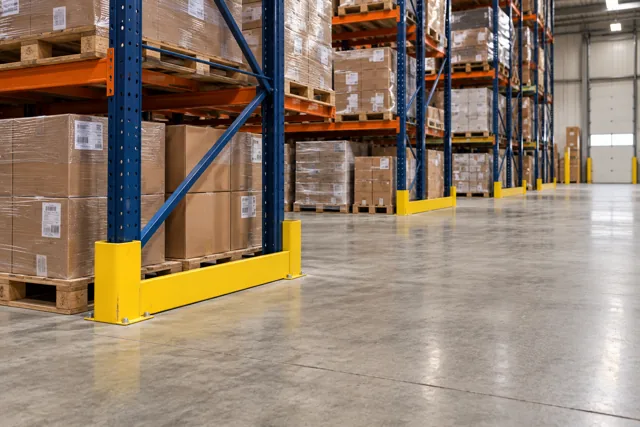
Prepare a rack elevation, photographs, stored-load details and a plan of the area behind the rack for a Cogan quote request. For protection at a vehicle-facing row end, consult the separate rack-end protection article; that is a different location and function.
Frequently asked questions
Does rack backing make an unstable pallet load safe?
No. Stable loads and appropriate placement remain necessary. The backing system must be selected for its documented function and should not be assumed to catch any possible falling load.
Can mesh panels be attached to any rack without review?
No. Rack identity, mounting details, supporting conditions and the proposed coverage must be assessed for the complete arrangement.
Is rack backing the same as a rack-end impact protector?
No. Rack backing addresses a boundary behind stored material. A rack-end protector addresses a different exposure near the end of a rack row. Select each for the actual intended function.
Sources and further planning
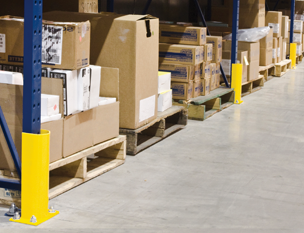
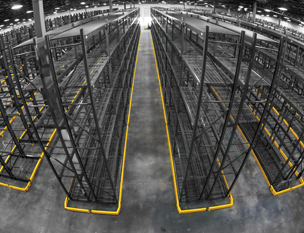
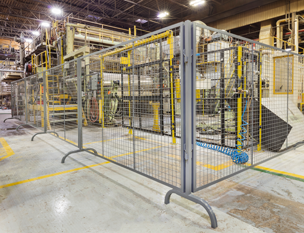
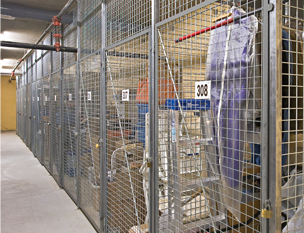
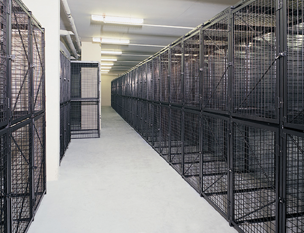
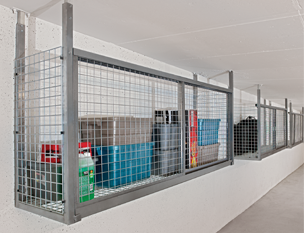
Images are conceptual product visualizations. Final configurations must follow the approved project drawings.
More on Rack Protection
© 2025 Cogan Wire and Metal Products Ltd., all rights reserved.