



Pallet Rack Column Protectors: Check Fit, Footprint and Fork Clearance
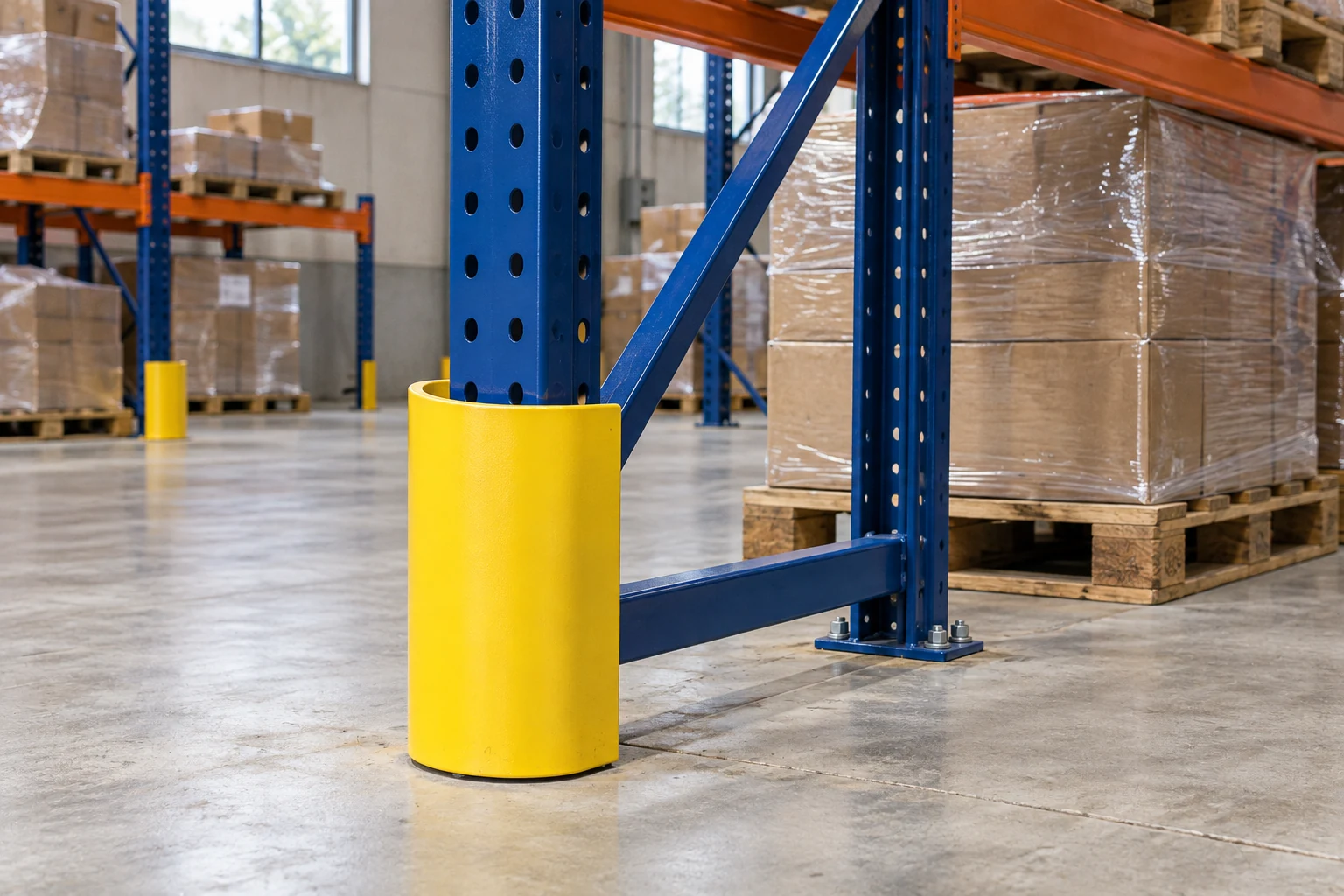
Pallet rack column protectors should fit the upright and its surroundings without creating a new obstruction for handling equipment. Measure the post, baseplate, anchors, low bracing and available aisle space, then check the proposed protector against the truck and load movement. Selecting only by protector height leaves important fit questions unanswered.
Identify the contact exposure at each upright
Walk the rack area with the people responsible for operations and maintenance. Record where trucks turn, where pallets are placed and where forks or loads approach the lower rack structure. An upright at a cross-aisle end may have a different exposure from one along a straight picking aisle.
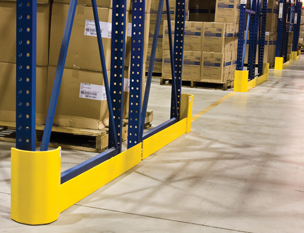
Separate the protection objectives. An individual column protector addresses a localized part of the rack, while an end-of-aisle barrier covers a longer boundary. Mesh rack backing addresses a different issue at the back of stored loads. The rack end-protector guide and rack-backing guide help keep those applications distinct.
Measure the full base assembly
Photograph the upright from the front and side with a clear scale reference where safe. Include the baseplate and the lowest brace. Record dimensions at the actual installation point; a nominal upright size does not show every projection or obstruction near the floor.
Mark existing anchors, floor joints, nearby damage and any installation restrictions on the survey. The installer needs the site conditions and the manufacturer's requirements before deciding where new anchoring can be placed. Do not relocate rack anchors or drill a rack member to make a protector fit without an approved design.
| Survey item | What to record | Fit issue it can reveal |
|---|---|---|
| Upright | Width, depth and profile | Protector opening may not suit the post |
| Baseplate and anchors | Footprint and projections | Hardware can conflict near the floor |
| Lowest bracing | Position and connection details | Wrap-around parts may need different clearance |
| Protector | Proposed outline and height | Installed footprint changes usable space |
| Truck and load | Turning and placement movement | Forks, tires or pallets may approach the protector |
| Slab conditions | Joints, defects and restrictions | Anchoring requires project-specific review |
Compare internal fit with external footprint
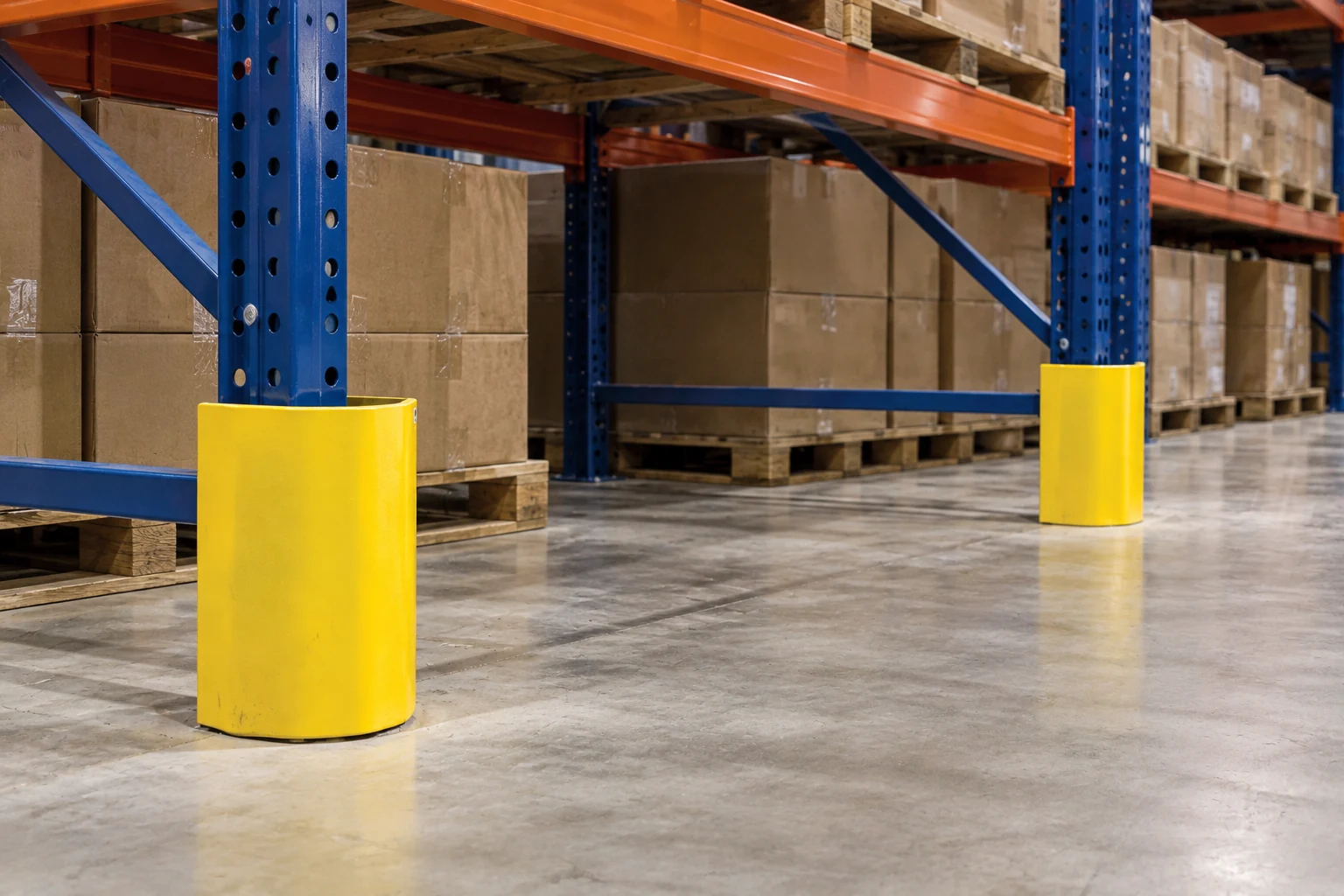
The space inside a protector and the space it occupies in the aisle answer different questions. Internal fit concerns the upright and base assembly. External footprint concerns surrounding traffic and handling clearance. Check both on a scaled plan and against the actual equipment information.
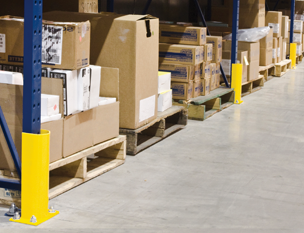
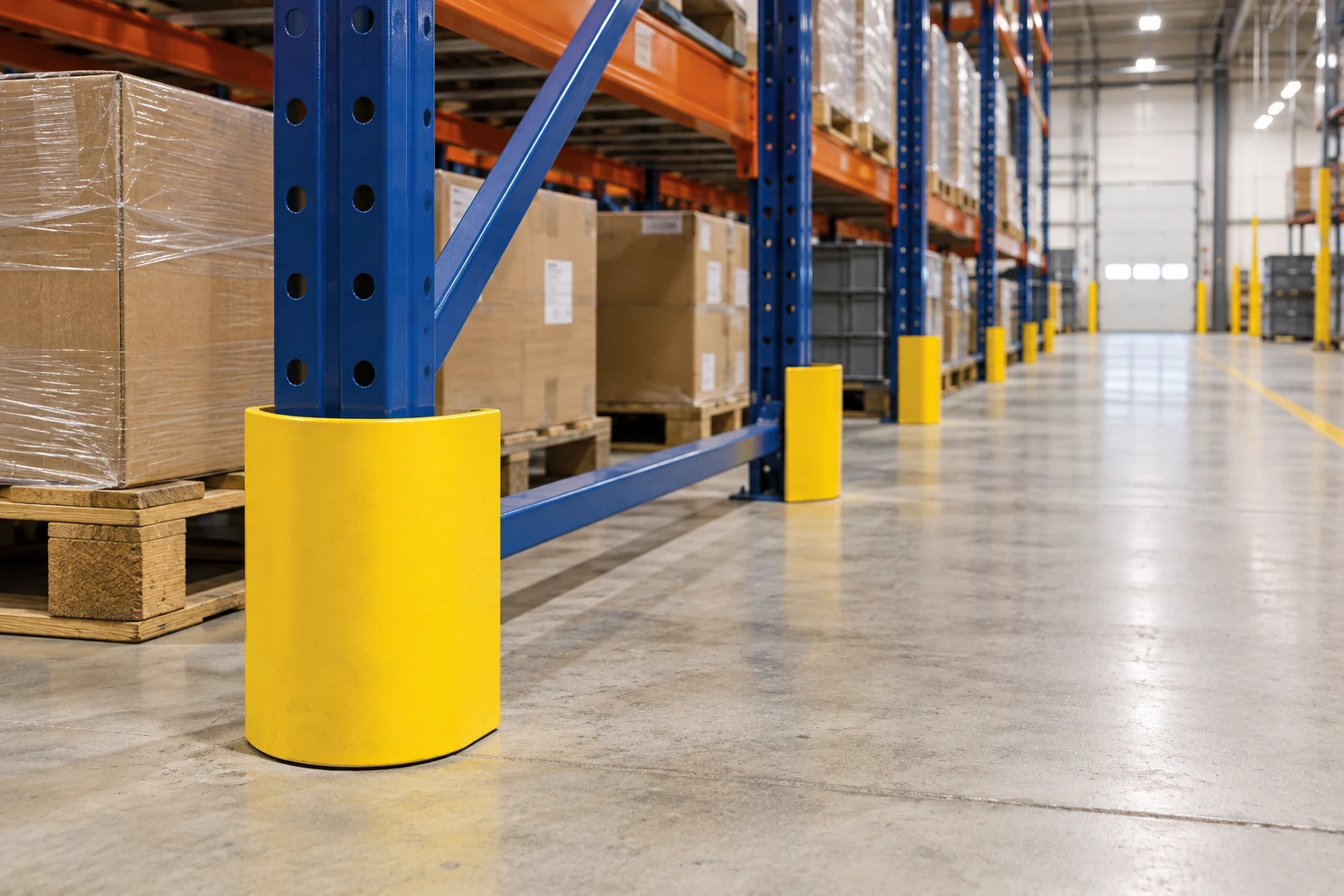
Cogan's rack post protector range includes standard and larger crescent configurations, with different heights and custom sizing options. Those choices provide a starting point for selection, but the correct configuration still depends on the surveyed rack and floor conditions.
Do not assume that the closest fit is always the best fit. Ask for the required installation clearance and mounting arrangement for the proposed component. Likewise, a taller protector is not automatically appropriate if it interferes with the lowest beam, bracing or a pallet-placement operation.
Check clearance through the whole movement
Look beyond a parked truck's width. A turn, a change in steering angle or a loaded pallet entering a bay can bring a different part of the equipment or load close to the upright. Use the handling-equipment manufacturer's information and the site's operating review to evaluate the movement.
Mark the proposed protector outlines without creating a trip or traffic hazard and review them in the layout process. Do not test suitability by deliberately contacting a protector with a truck. A product photo or an aisle-width number alone cannot confirm the complete operating envelope.
If existing damage is present, arrange assessment of the rack itself before installation. Covering a damaged upright with a new guard does not restore the rack or establish its capacity. Keep the rack-condition finding and the protector installation as separate items in the work record.
Make the quote and installation scope explicit
Provide the supplier with the measured base details, marked plan, photographs, equipment information and intended locations. Identify whether the request is for individual posts, an entire rack end or a combination. Ask what anchoring and site work are included, and who resolves conflicts with existing hardware.
After installation, retain the component details and approved layout with the rack records. Include the protectors in the site's observation and incident-reporting process so damage or movement is escalated. Review Cogan rack protection and request a quote using the completed survey rather than a count of uprights alone.
Frequently asked questions
Are rack column protectors and rack end guards the same?
No. A column protector addresses an individual upright, while an end guard covers a longer exposed rack boundary. Some layouts need both, selected for their respective exposures.
Can a protector be selected from the upright width alone?
No. Include the post depth, baseplate, anchors, low bracing, floor conditions and surrounding handling clearance in the selection review.
Does installing a protector repair a damaged rack post?
No. Existing rack damage requires its own assessment and approved response. A protector should not conceal an unresolved structural condition.
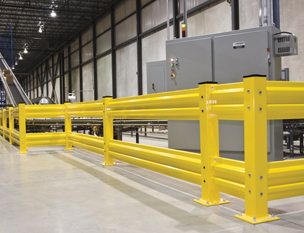
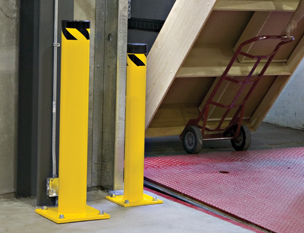
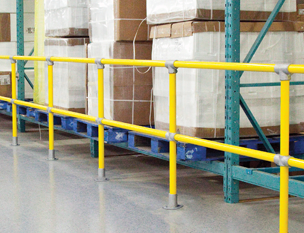
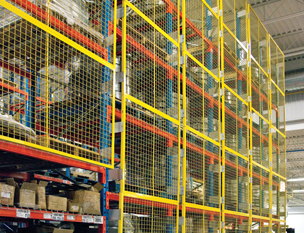
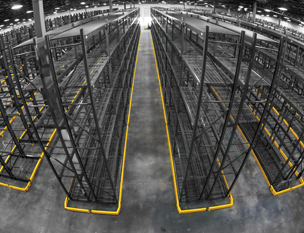
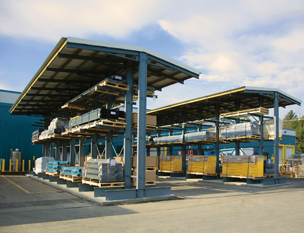
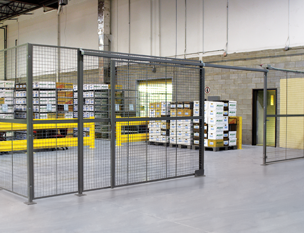
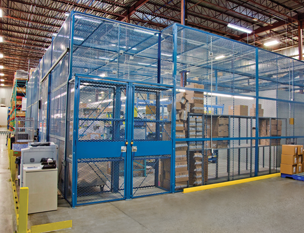
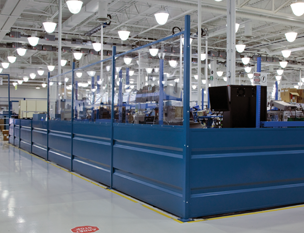
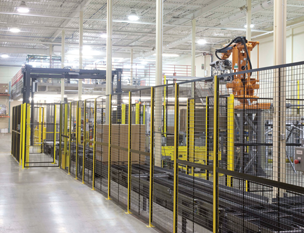
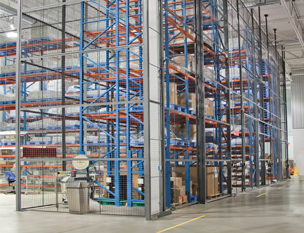
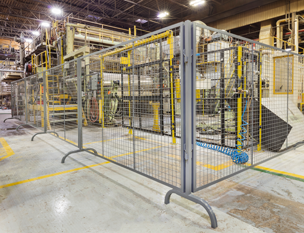
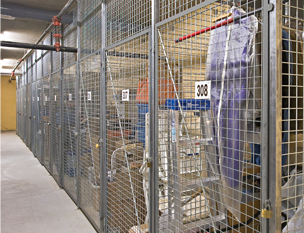
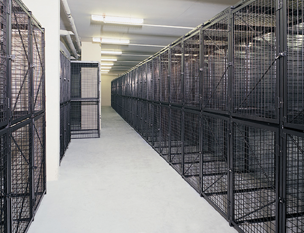
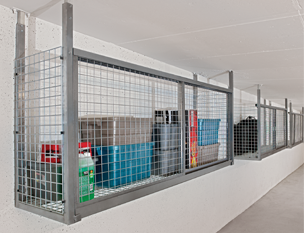
Images are conceptual product visualizations. Final configurations must follow the approved project drawings.
More on Rack Protection
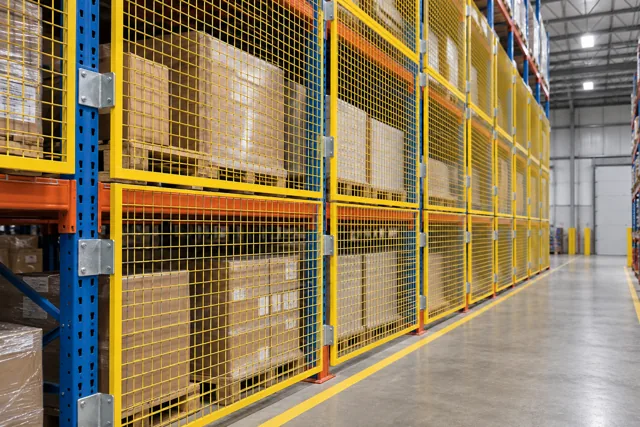
Pallet Rack Backing: Plan Mesh Coverage and Load Clearance
Plan pallet rack backing around stored materials, exposed areas, panel coverage, stand-off clearance and the rack mounting arrangement.
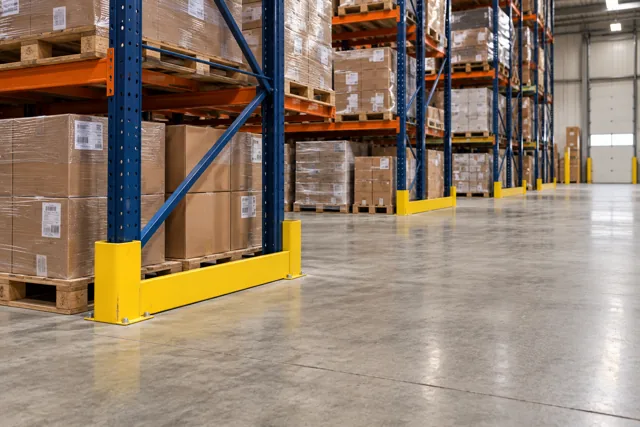
Pallet Rack End Protectors: Plan the Cross-Aisle Before Ordering
Choose rack-end protection around upright exposure, turning movements and picking access. Compare row-end guards, post protectors and rack-back guards.
© 2025 Cogan Wire and Metal Products Ltd., all rights reserved.