



Relocating Wire-Mesh Partitions: What Can Be Reused?
Before relocating a wire-mesh partition enclosure, identify its components, assess their condition and prepare a new layout for the receiving location. Reuse depends on whether the panels, posts, gates and hardware can form a suitable approved arrangement at the new site. A bolted system should not be treated as a collection of universally interchangeable parts.
Relocation planning is most useful before the existing enclosure is taken apart. The original layout can explain why particular posts, connections or gate supports were supplied. Losing that information can turn an apparently simple move into a search for missing or incompatible components.
Create an inventory of the existing system
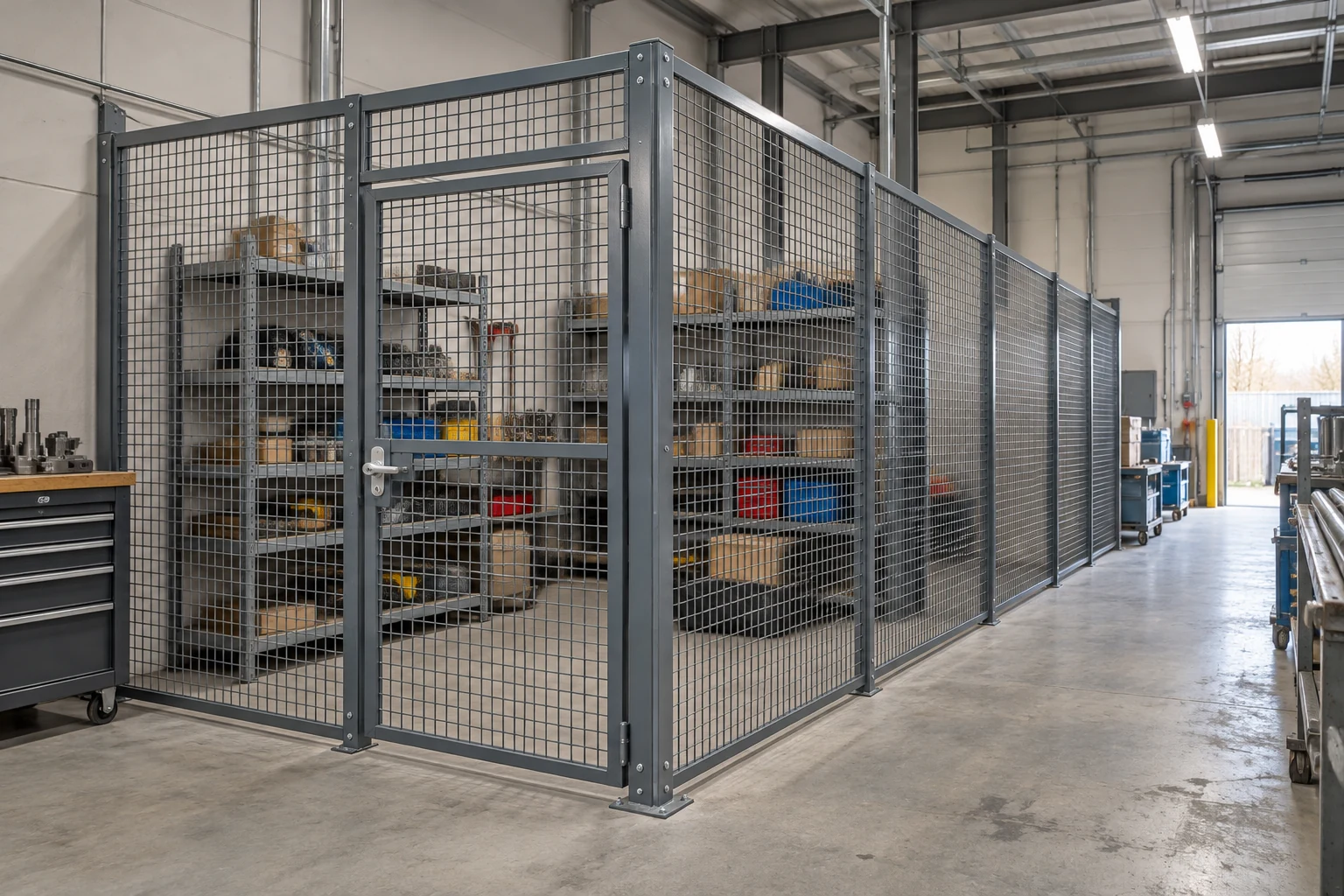
Find the original drawings and available product identification. Record panel sizes, post types, gate arrangements, roof sections where present and the hardware that joins them. Photograph the assembled enclosure from several positions and label components using a method that can be related back to the plan.
Identify any alterations, missing pieces or visible deterioration. Keep unknown components separate in the inventory rather than assuming they belong to the same product family. Matching paint color and mesh appearance are not proof that two assemblies have compatible connections or support requirements.
Survey the new location as a new installation
Measure the proposed footprint, available height and nearby obstructions. Identify doors, equipment, services and routes that must remain accessible. Record supporting floor conditions and the installation information needed by the supplier or project professionals.
The old enclosure may have relied on a building wall, a specific post arrangement or a particular gate-support location. A new three-sided or freestanding layout can change those relationships. Provide both the old and proposed plans when asking which components can be reused.
| Item to review | Why it matters during a move |
|---|---|
| Product identification | Establishes which components and instructions apply |
| Panel and post schedule | Shows what is available and what the new layout requires |
| Gate travel and support | Determines whether the existing access system fits the new location |
| Roof or wall interfaces | Identifies supports that may no longer exist after the move |
| Floor and anchoring conditions | Requires review for the receiving installation |
| Component condition | Helps distinguish reusable pieces from items needing replacement |
Give gates and openings their own review
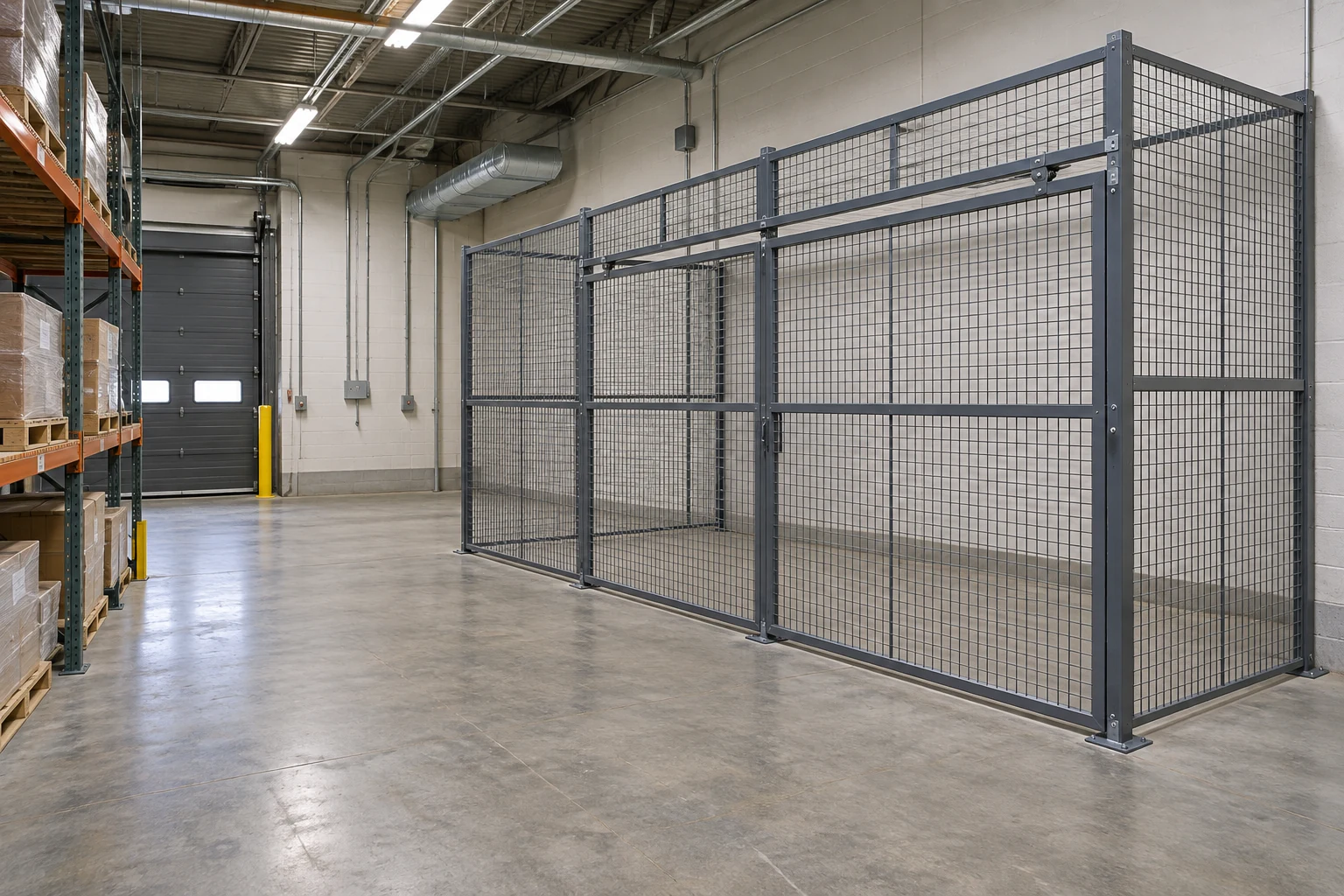
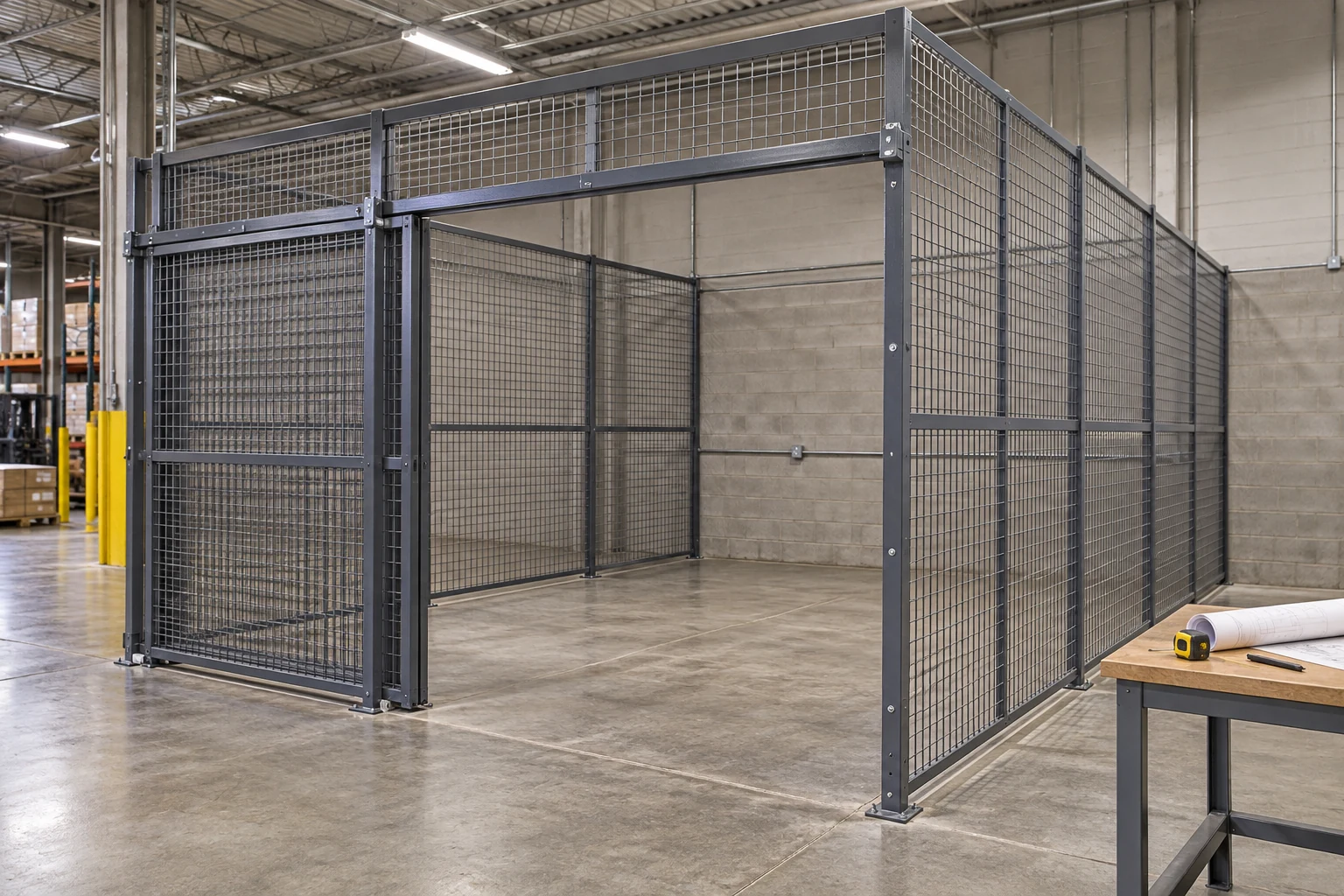
A gate is more than a gap between panels. Its clear opening, travel, supports and operating space must fit the new task. A sliding arrangement may need clear space beside the opening, while a swing gate needs a suitable operating area. Neither should be forced into a new position solely to reuse its existing width.
Compare the new receiving and retrieval movements with the old ones. Our wire-mesh cage access article describes how carts, loads and access procedures influence the opening. A move can be an opportunity to correct an awkward operating arrangement rather than reproduce it.
Confirm the reuse and installation scope
Ask the supplier to identify reusable components, required replacements and any additions needed for the revised configuration. Establish how anchors and other installation consumables will be specified; do not assume old anchoring hardware is reusable in a different floor.
Plan disassembly, handling and installation with the responsible personnel using the applicable instructions. Keep unstable partial assemblies, stored materials and unplanned access out of the work sequence. This article provides project-planning inputs, not a universal dismantling procedure.
Verify the finished arrangement before returning it to use
Review the completed enclosure against the agreed layout and installation documentation. Check that the gate operates as intended, the required access remains available and the supplied components are accounted for. Record the final arrangement so the next modification begins with reliable information.
For frequent temporary changes, discuss whether a purpose-built mobile partition is better suited to the task. It should not be assumed to provide the same function as every fixed enclosure. Send your original records and new plan to Cogan for a partition project review.
Frequently asked questions
Can every panel in an existing cage be reused?
Not necessarily. Reuse depends on product identification, condition, compatibility and the support and layout requirements of the new installation.
Can an existing gate be moved to any side of the enclosure?
Its opening, travel and support requirements must be checked at the new location. A gate that worked in the old layout may need a different arrangement or additional components.
Is a mobile partition the same as a relocated fixed enclosure?
No. They are different arrangements for different operating needs. Select the system for the required boundary, stability, access and security function.
Sources and further planning
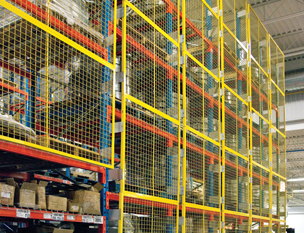
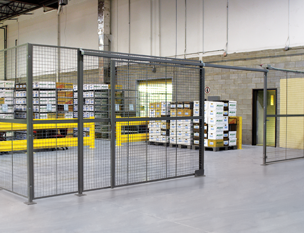
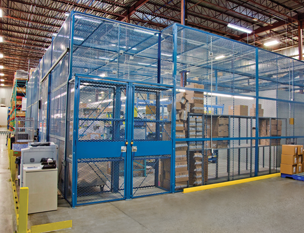
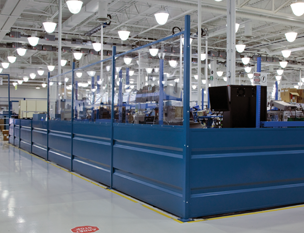
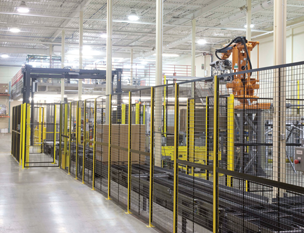
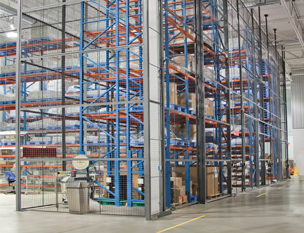
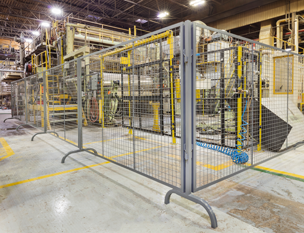
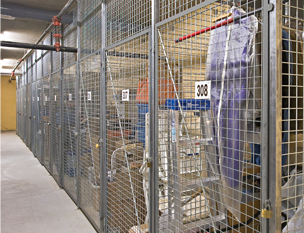
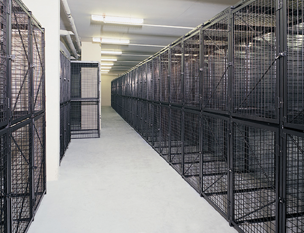
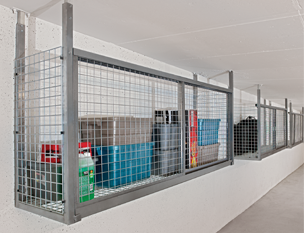
Images are conceptual product visualizations. Final configurations must follow the approved project drawings.
More on Partitions
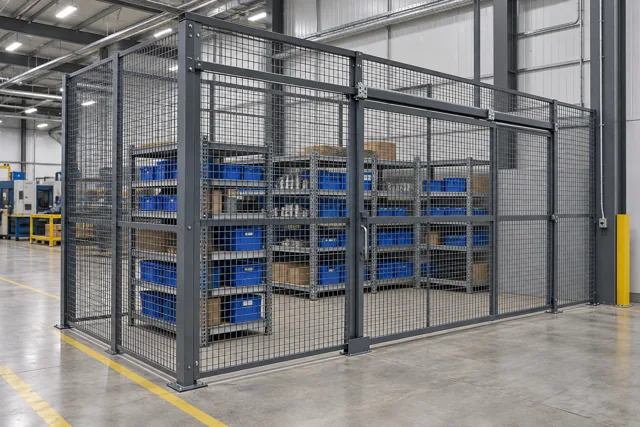
Wire-Mesh Storage Cages: Plan Access from Receiving to Retrieval
Plan a wire-mesh storage cage around receiving, access control, carts and retrieval. Coordinate the gate, storage layout and daily operating rules.
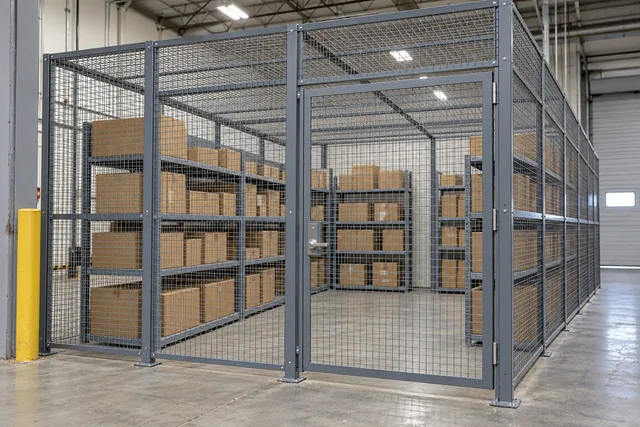
DEA Storage Cages: Define the Regulatory Scope Before Ordering
A DEA storage-cage project must begin with the applicable security requirements and the type of operation and controlled substances involved.
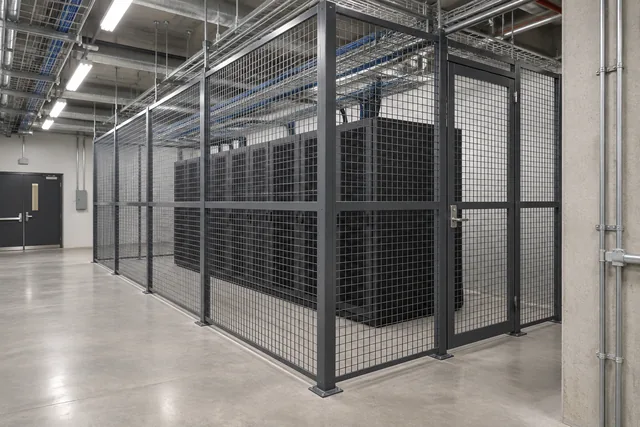
Server Cages: Planning Physical Access Around IT Equipment
A server cage can establish a physical access boundary around equipment, but it does not replace cybersecurity, environmental control or the building's…
© 2025 Cogan Wire and Metal Products Ltd., all rights reserved.