











Tool Crib Inventory: Build a Clear Checkout, Return and Repair Process
A useful tool crib combines a physical access boundary with a clear record of where tools are, who has them and whether they are ready for use. Define checkout, return and repair handling before adding more shelves. A locked enclosure controls entry, but it does not by itself keep an accurate inventory.
Give each item a stable identity and home
Assign a practical identifier to each tracked tool or kit and a location code to its normal storage position. Keep the tool identifier separate from the shelf location so a layout change does not require renaming the asset. For kits, record the expected contents as well as the case identifier.
Use the level of detail the operation can maintain. A small crib may use a controlled register, while a larger operation may use an existing inventory system. The important point is consistency: the person issuing a tool and the person receiving it back should use the same identity, location and status.
Separate the four operating states
Distinguish available, checked out, awaiting return review and unavailable for repair or assessment. Otherwise, a tool physically present in the crib can appear available even when its condition has not been resolved. Assign responsibility for changing each status and closing exceptions.
| State | Minimum useful record | Physical arrangement |
|---|---|---|
| Available | Tool ID and normal location | Assigned ready-for-use shelf or cabinet |
| Checked out | Recipient, issue time and expected return | Location record shows it is away |
| Returned for review | Return time and reported condition | Clearly separated return position |
| Unavailable | Issue description and responsible person | Controlled location apart from available stock |
For a kit returned with a missing item, keep the kit status and the missing component record connected. Replacing a case on its shelf should not silently close the exception. Use a defined review process appropriate to the tool before restoring its available status.
Fit the enclosure to the process
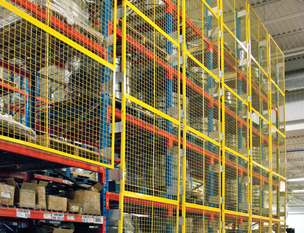
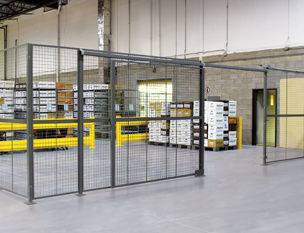
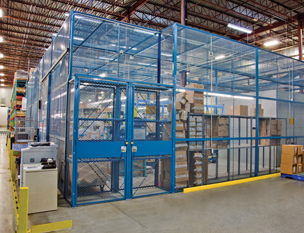
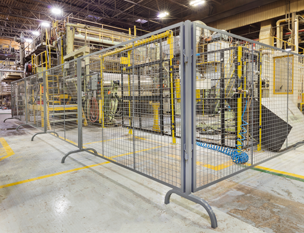
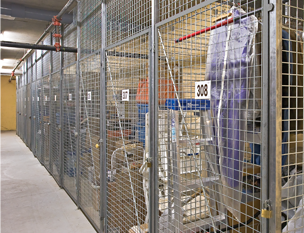
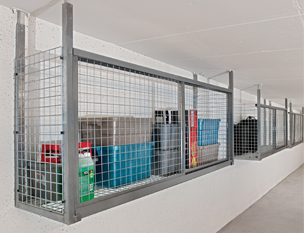
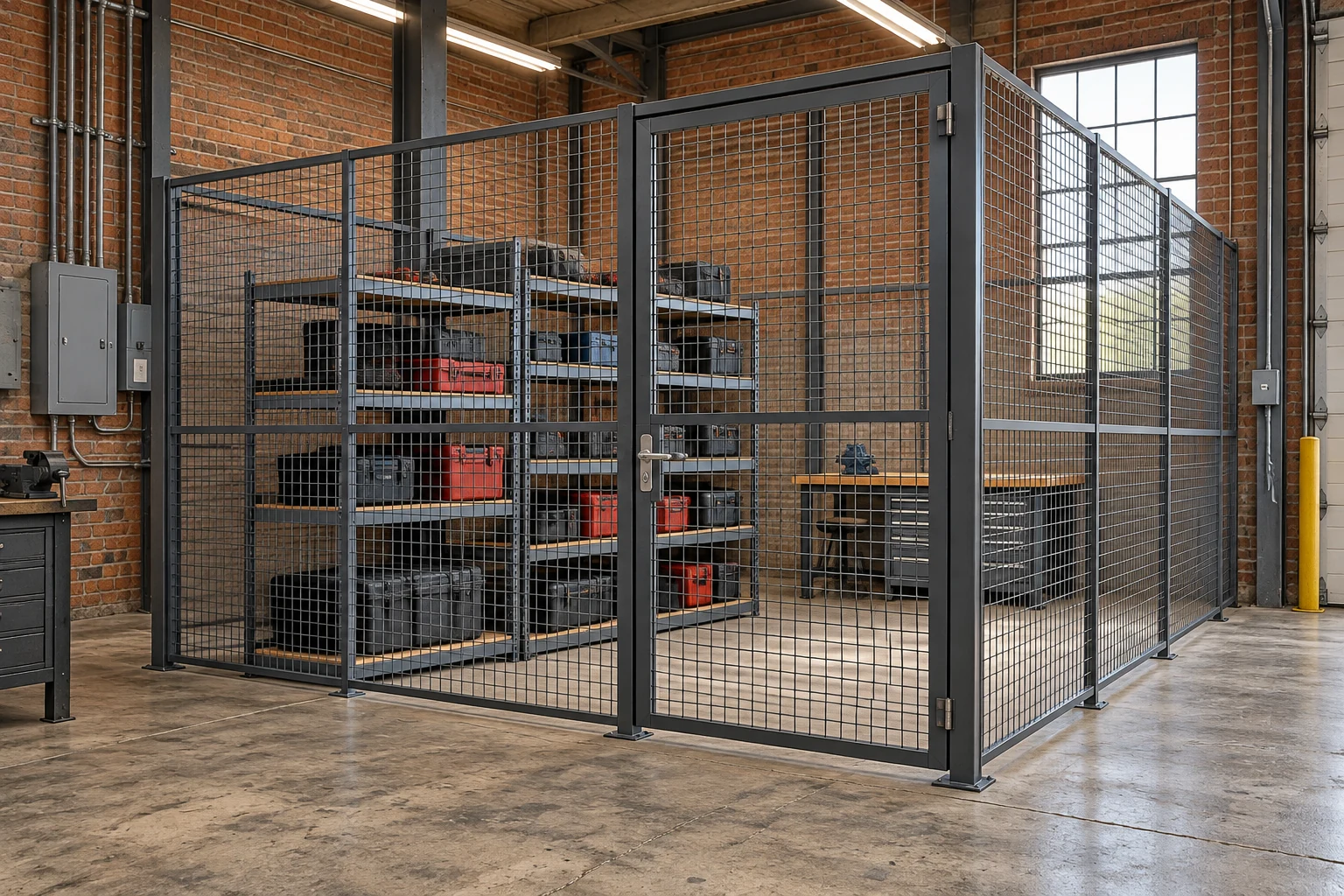
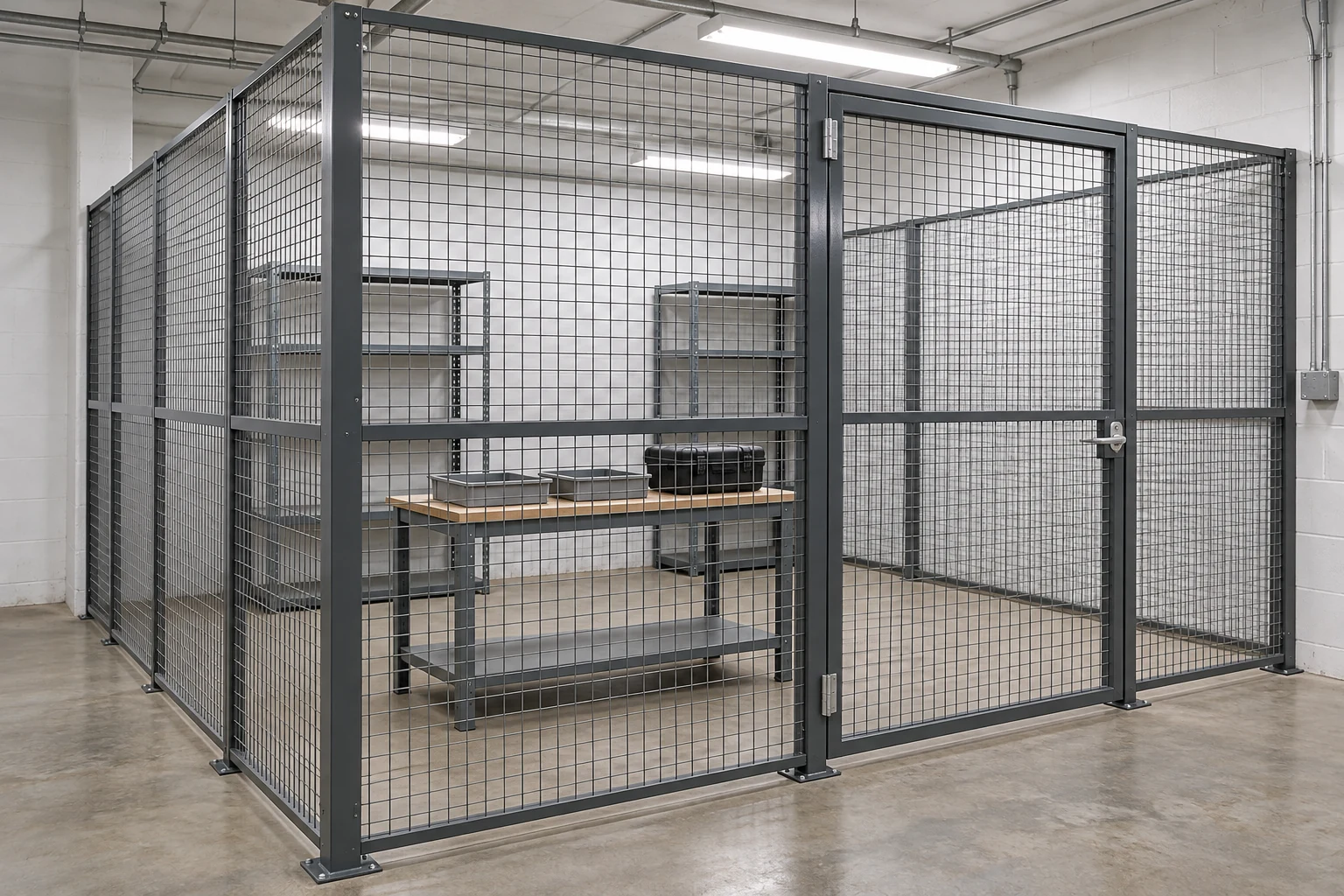
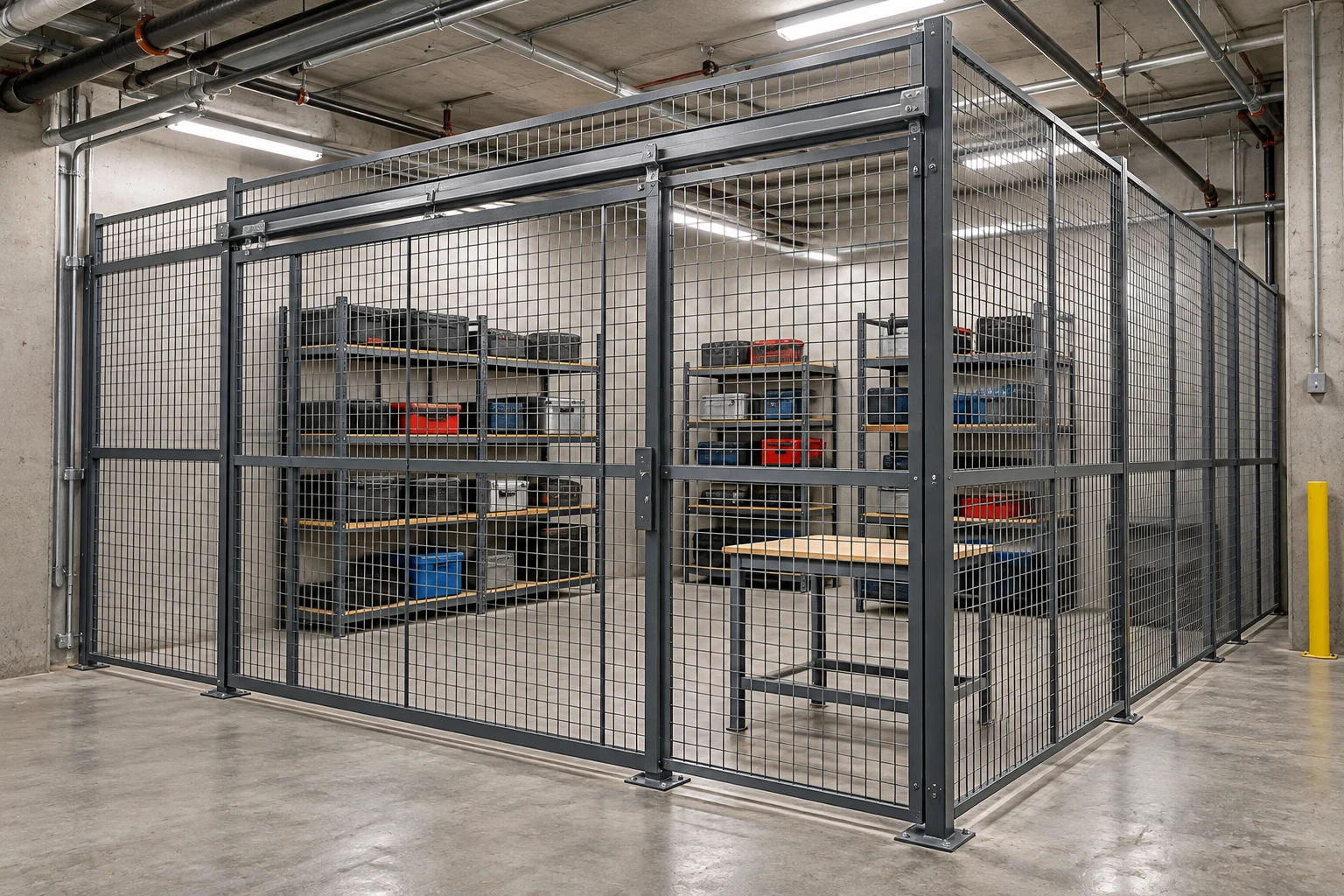
Cogan's wire-mesh partition system can form a controlled-access storage area while retaining visibility through the panels. Plan the gate, shelves and any service arrangement around the way staff issue and receive tools. The enclosure supplies a boundary; records and operating responsibilities supply accountability.
The tool crib layout guide covers the floor plan. For the operating process, ask where a returned item is placed, where staff check it and how it reaches its normal location. Avoid an arrangement that requires crossing the same narrow opening repeatedly with incoming and outgoing items.
Keep shelves and work surfaces supported by their own specified structures. Do not assume partition mesh is intended to carry a workbench, heavy tool board or storage attachment. Identify proposed attachments and building interfaces when the enclosure is designed.
Make checkout quick enough to use consistently
Record the item, recipient, time and expected return point as part of the handover. Decide how exceptions are handled when the normal attendant is unavailable. A process that depends on informal borrowing after hours will produce gaps even if daytime records are accurate.
Use the existing site rules for who may access or operate particular tools. The inventory record should support those rules without pretending that possession of a key or a checkout entry establishes training or authorization. Keep personal information limited to what the operating record requires and restrict access appropriately.
Check the physical stock against the record
Choose a practical counting routine based on use and the value or importance of the items. Count both the contents at each location and the open checkout records. Investigate differences before changing the recorded quantity; a tool in a return tray may be present but not yet available.
Useful operating measures include overdue checkouts, unresolved returned items and kits with missing components. Compare these over time rather than assuming a new enclosure automatically reduces losses. Document the measurement period and process changes so a later comparison has context.
For a new crib or revised enclosure, send a measured plan, shelf layout, expected users and checkout/return flow when you request a Cogan quote. If the existing cage is being moved, also review the partition relocation guide. Keeping the physical boundary and daily process aligned makes the storage area easier to manage.
Frequently asked questions
Does a locked tool crib provide inventory control on its own?
No. It controls physical access, while tool identities, checkout records, return review and location checks establish inventory accountability.
Should returned tools go directly back to available stock?
Use the site's defined return review first. Keep items with unresolved condition or missing-component issues separate from tools marked available.
Is specialized software required to start a tool crib process?
Not necessarily. Use a record system the operation can maintain consistently, and define the same identifiers, statuses and responsibilities regardless of the software used.
Images are conceptual product visualizations. Final configurations must follow the approved project drawings.
More on Partitions
Wire-Mesh Cage Roofs: Close the Security Boundary Without Losing Service Access
Plan a wire-mesh cage roof around security gaps, structural supports, sprinklers, lighting and maintenance access before approving the enclosure.
Relocating Wire-Mesh Partitions: What Can Be Reused?
Assess panels, posts, gates and new site conditions before relocating a wire-mesh enclosure. Build a reuse inventory and a revised layout.
Wire-Mesh Storage Cages: Plan Access from Receiving to Retrieval
Plan a wire-mesh storage cage around receiving, access control, carts and retrieval. Coordinate the gate, storage layout and daily operating rules.
© 2025 Cogan Wire and Metal Products Ltd., all rights reserved.