



Removable Warehouse Guardrails: Planning Maintenance Access
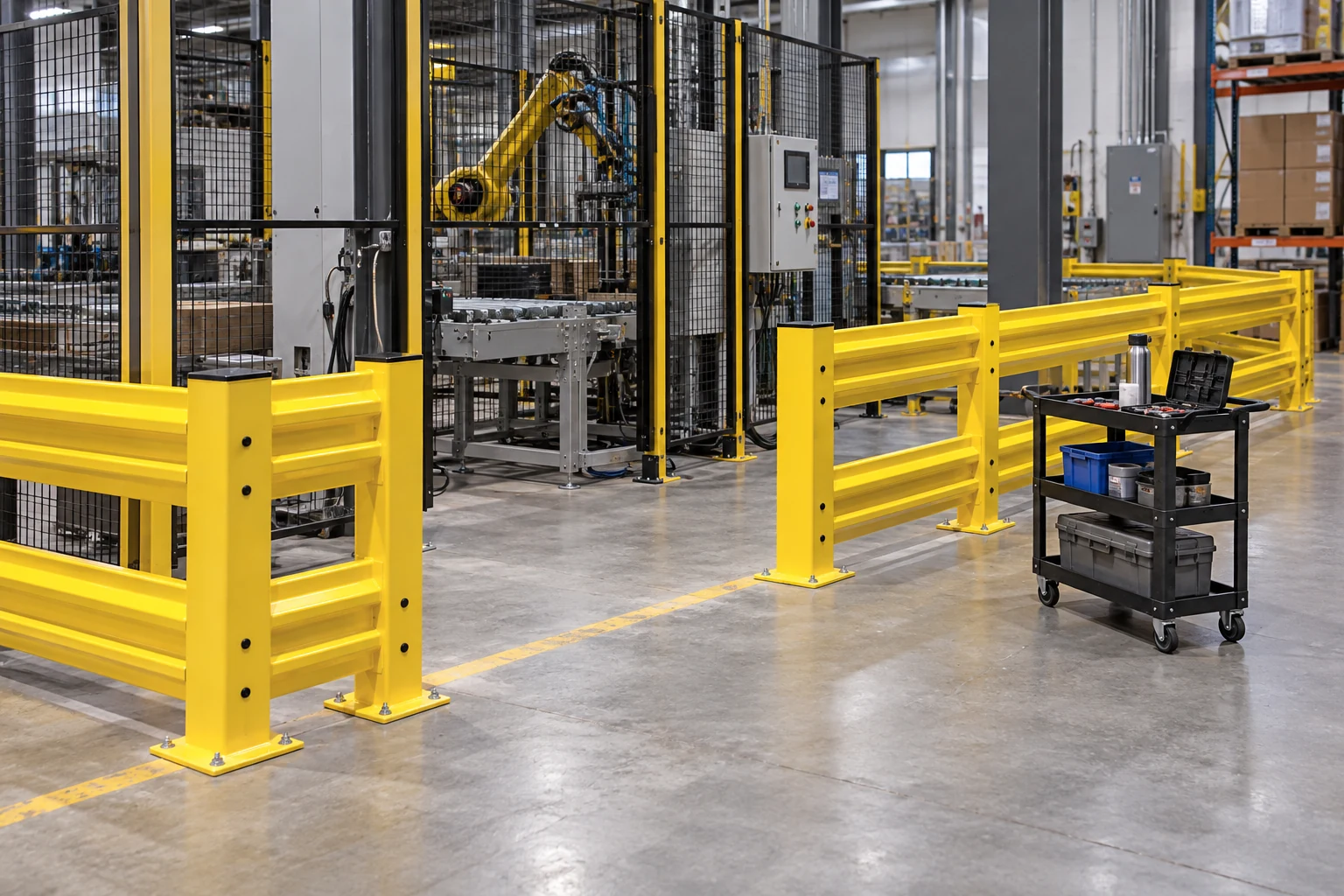
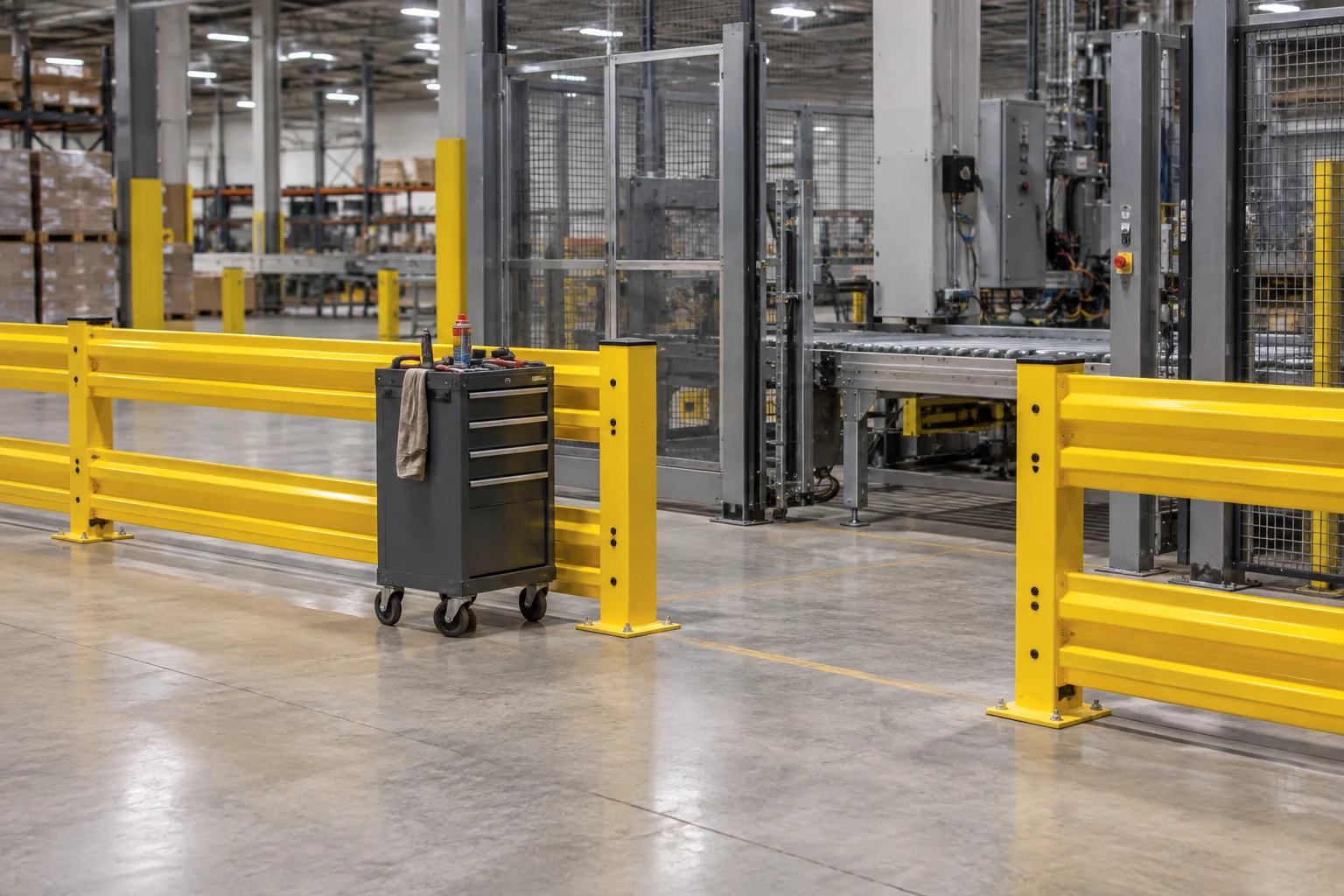
A removable guardrail can provide temporary equipment access within a planned protective boundary. Its value depends on a defined opening, the correct manufacturer-specified components, and a clear process for controlling the area while the rail is out and restoring it afterward.
Define the task that needs access
List the maintenance or handling operation that cannot pass through the normal opening. Record the dimensions of the component being removed, the equipment used to move it, and the space needed for workers. A service opening should be sized for the real task rather than chosen from the width of the nearest rail.
Also record frequency. An opening used every shift creates different operating demands from one used during a planned shutdown. Review whether the proposed arrangement can be operated and restored consistently without creating a routine shortcut through a protected area.
Use the designed lift-out components
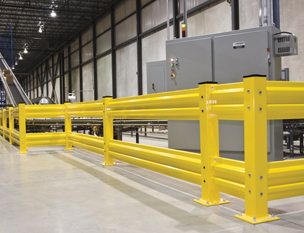
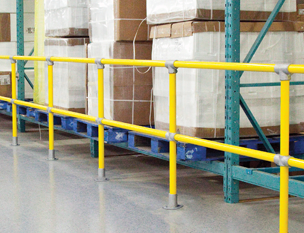
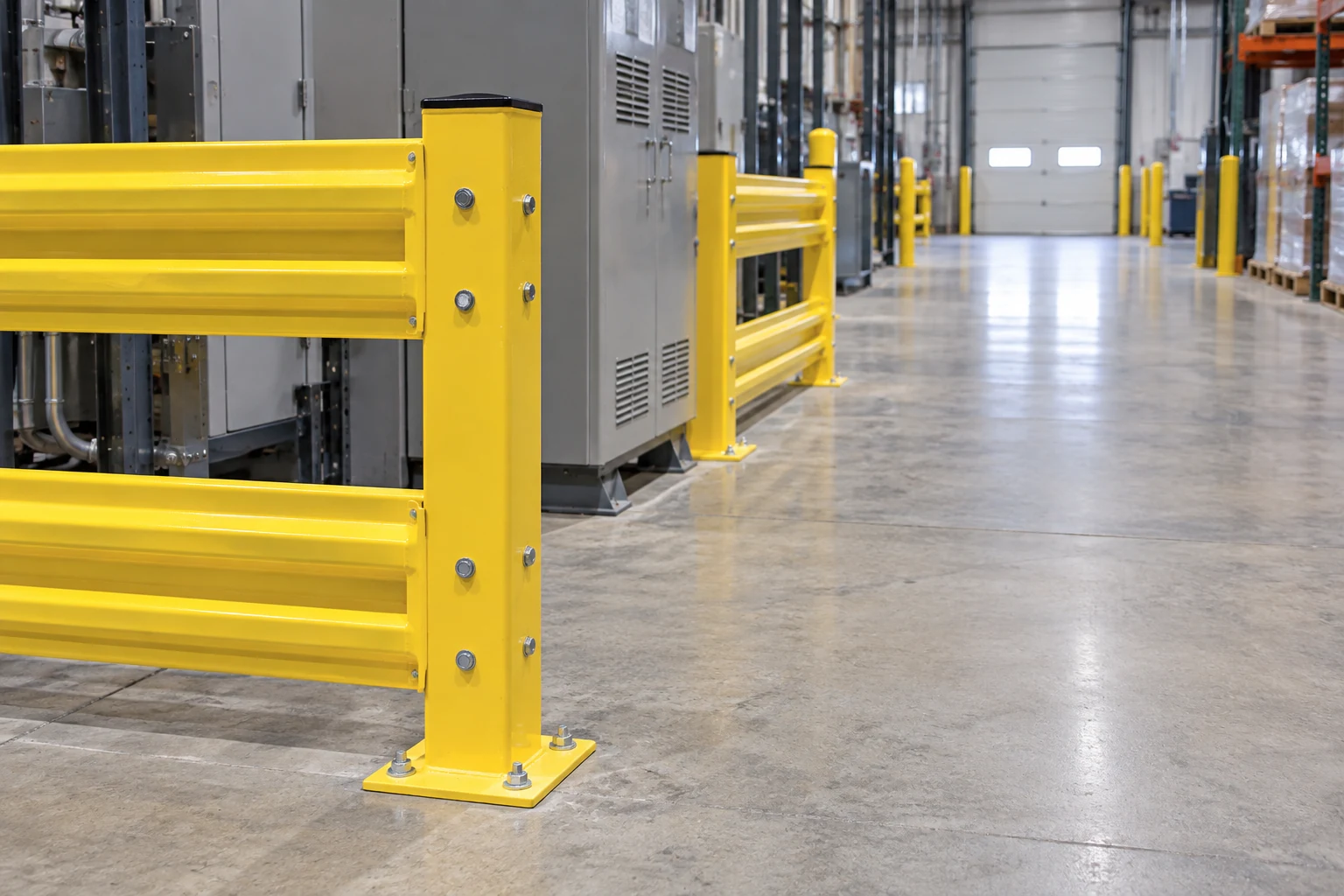
Cogan offers lift-out rails that fit into saddles attached to the guardrail columns. The arrangement is a product option; it is not an instruction to loosen ordinary bolted rails whenever access is needed. Specify the lift-out configuration and obtain the current installation and operating information for that assembly.
Discuss how the selected components affect the barrier's documented performance and installation requirements. Keep the quoted arrangement identifiable so replacement parts can be ordered correctly. A general description such as “removable yellow rail” is not enough for future maintenance procurement.
Plan the temporary condition
| Stage | Decision to document |
|---|---|
| Before removal | Who controls access and authorizes the work? |
| During the task | How is conflicting traffic kept out of the opening? |
| Rail storage | Where can components be placed without becoming an obstruction? |
| Reinstatement | Who checks that the specified assembly is restored? |
These questions belong in the work plan because an opening changes the protection at that location. A maintenance task can involve people who do not normally work in the area, making a clear temporary arrangement especially useful.
Check the complete access envelope
Measure the approach to the opening as well as the opening itself. Columns that remain in place, adjacent machinery, overhead services and turning space can limit what passes through. If a large replacement machine may be needed later, identify that anticipated requirement during the initial layout review.
After the task, inspect the components for damage and follow the manufacturer's reinstatement instructions. If repeated removal leads to missing parts, damage or rails left out, revisit the design and operating process. The long-term objective is controlled access with dependable restoration of the boundary.
Questions buyers ask
Are removable rails intended to stay out during ordinary production?
The operating plan should define when they may be removed and how the affected area is controlled. Do not assume normal protection remains while a rail is absent.
Can a lift-out opening be any width?
Available configurations and project conditions govern the opening. Confirm the complete assembly with the supplier.
Can an existing bolted system be converted?
Have the manufacturer review compatibility, condition and installation details before changing the assembly.
Product references and next step
Review Cogan lift-out brackets and the heavy-duty guardrail system. Include the maintenance task and access envelope in your quote request.
More on Guardrails
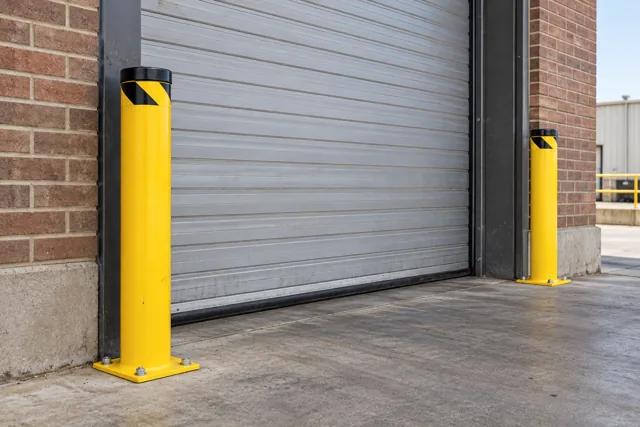
Warehouse Bollard Spacing: Measure the Opening and the Exposure
Plan warehouse bollard spacing around clear openings, vehicle and load movement, the protected asset and installation conditions.
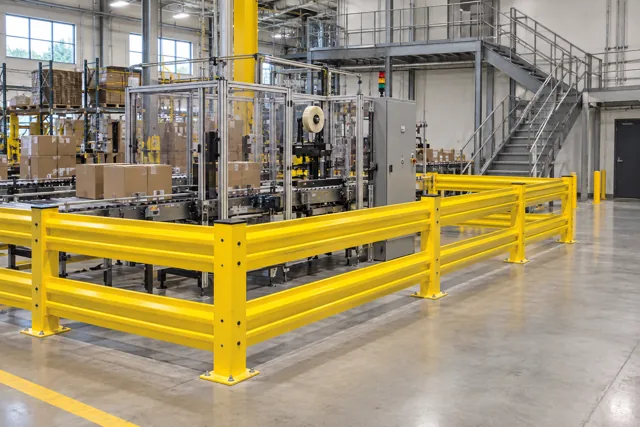
Guardrail vs Handrail: Which System Does Your Warehouse Need?
Understand warehouse impact guardrails, fall-protection guardrails and graspable handrails before selecting a protective system for your facility.
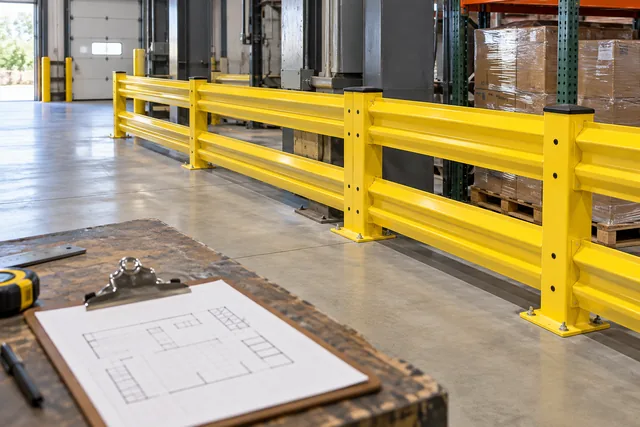
Warehouse Guardrail Cost: What a Complete Quote Should Include
Warehouse guardrail cost depends on the configured system and installation scope, not only the length of rail.
© 2025 Cogan Wire and Metal Products Ltd., all rights reserved.