


Single vs Double-Rail Guardrails for Industrial Facilities
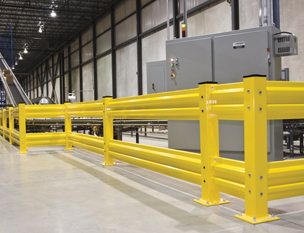
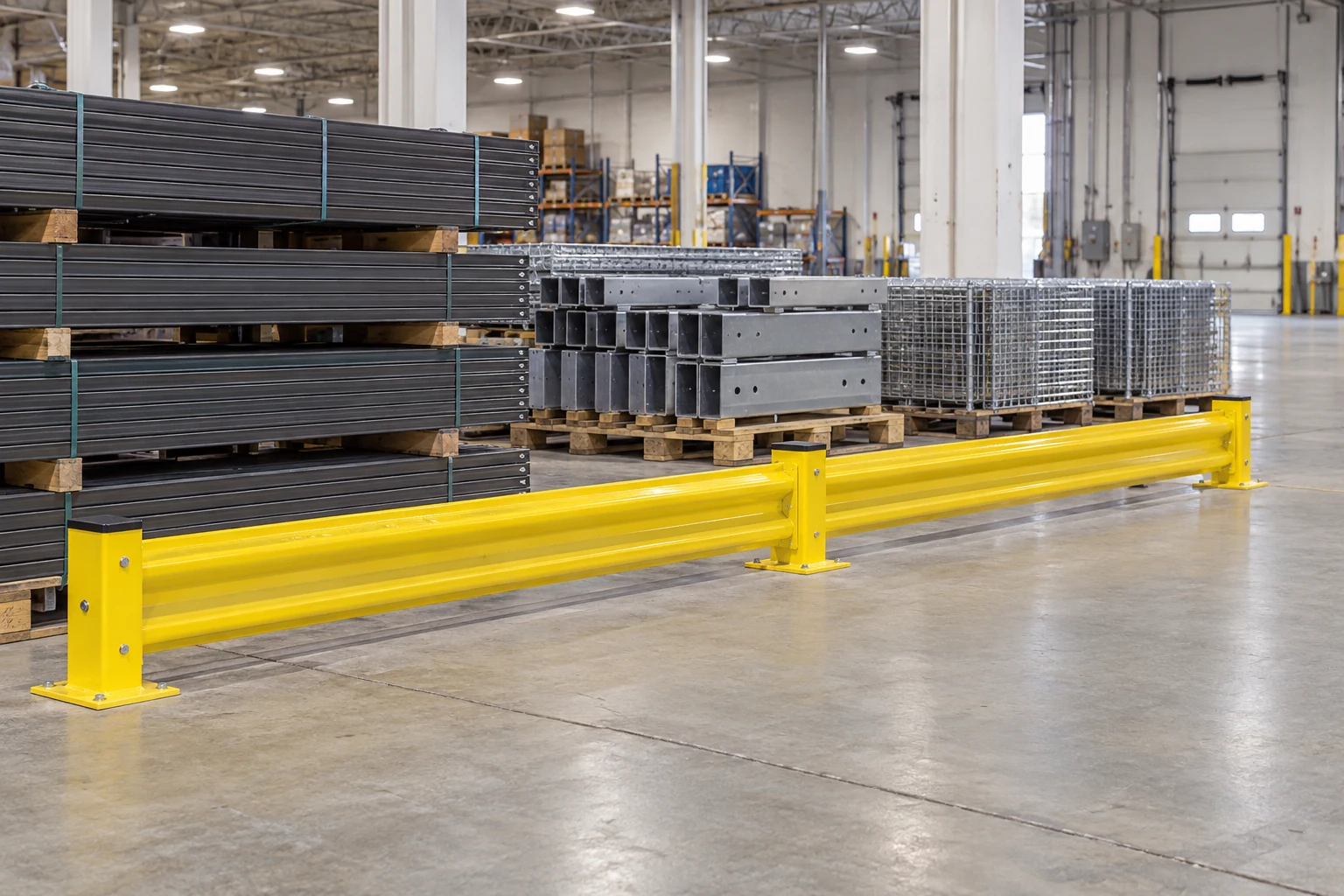
Single- and double-rail guardrails provide different vertical coverage. Choosing between them starts with the equipment or area being protected and the expected contact exposure. The number of rails does not, by itself, establish the complete system's impact performance or suitability for an elevated edge.
Look at the protected asset in elevation
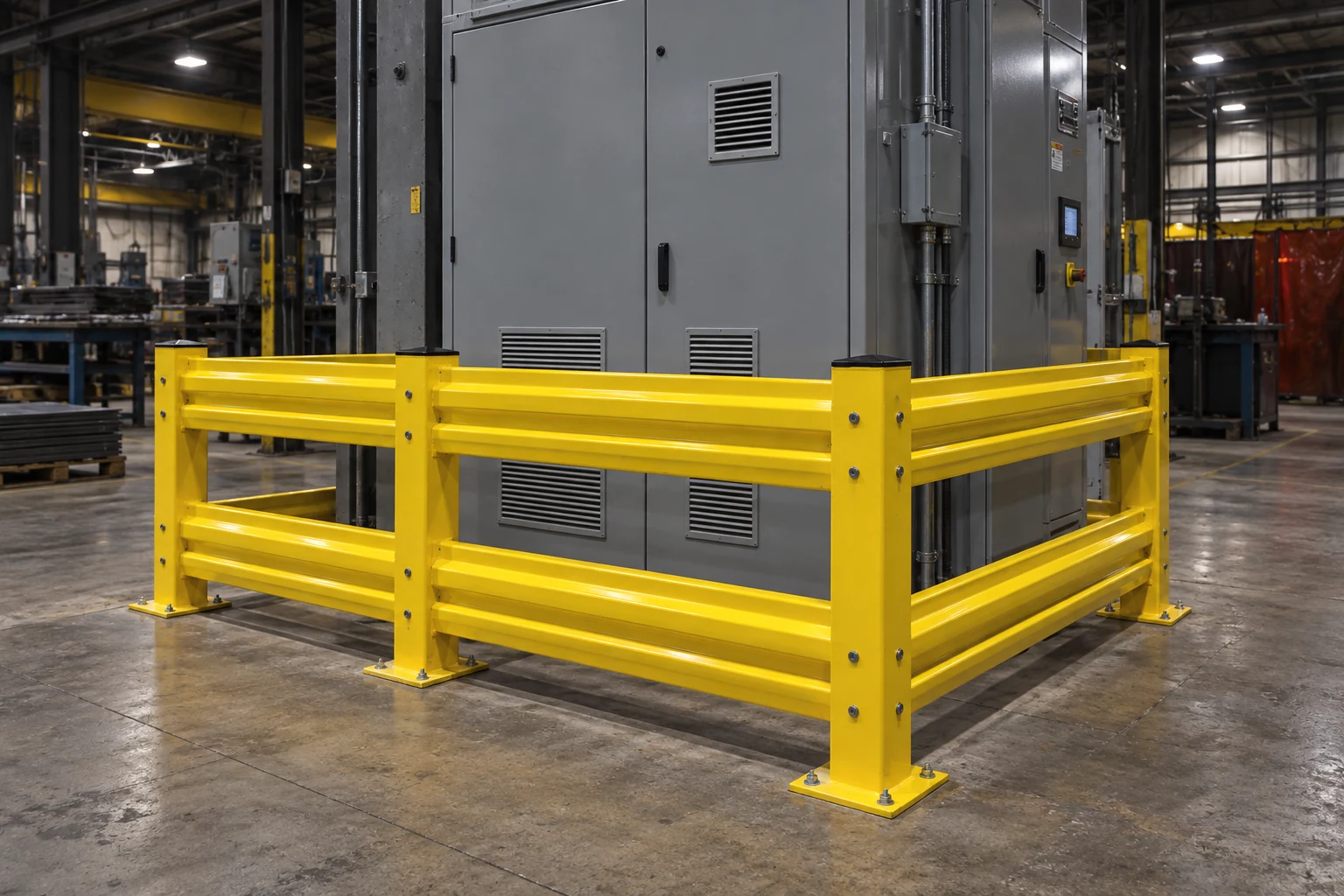
A floor plan shows where protection is needed, but a side view helps explain the rail arrangement. Record the vulnerable parts of the asset, projecting equipment and the vehicles or loads passing nearby. Confirm that the chosen layout does not leave an important exposure outside the intended protective boundary.
At a conveyor or machine, include the operating equipment rather than just its floor footprint. At a wall or office, consider doors and service access. A second rail may change the boundary, but it can also affect access to equipment that was previously reachable.
Compare the configuration, not just the rail count
| Item | Single-rail planning | Double-rail planning |
|---|---|---|
| Coverage | Review the height of the single barrier element | Review the combined vertical coverage |
| Posts | Select the documented single-rail configuration | Select the documented double-rail configuration |
| Access | Check the opening around and above the rail | Check whether service access becomes restricted |
| Performance | Verify the complete installed system | Verify the complete installed system |
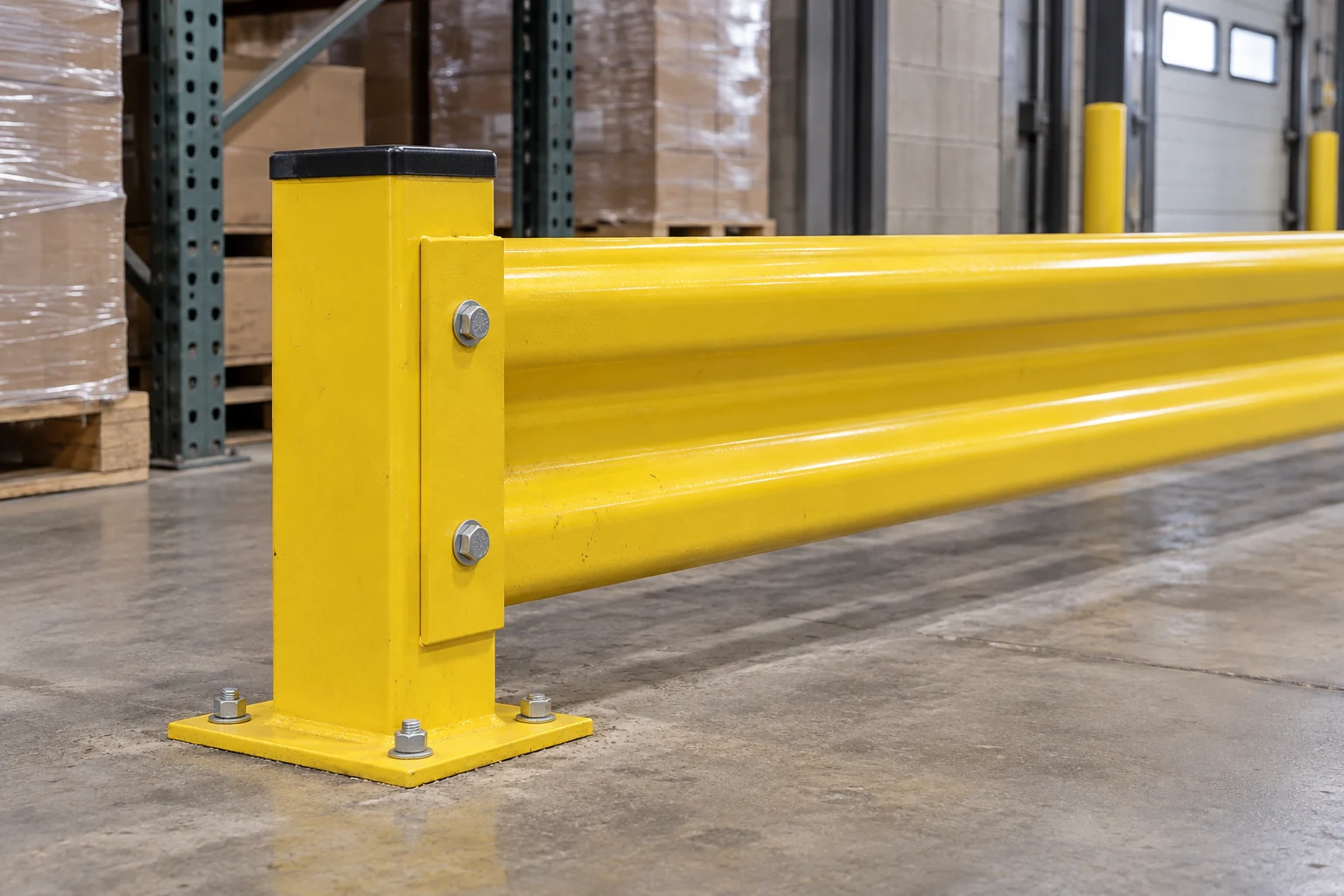
Cogan offers both configurations within its heavy-duty guardrail family. The supplier should identify the appropriate columns, rails, connection details and anchoring for the chosen arrangement. Combining parts because they appear to fit is not a substitute for that specification.
Account for inspection and cleaning
Operations staff need to reach controls and inspect equipment. Maintenance staff may need a larger opening to remove a component. Record those tasks during selection, especially when a barrier surrounds an asset on several sides.
Where periodic access is needed, a manufacturer-specified lift-out arrangement may be worth discussing. It should be designed into the layout, with a process for controlling the area while protection is removed and confirming that the assembly is restored afterward.
Confirm what happens at the ends
Rail count does not solve an exposed corner or an unplanned opening. Trace the barrier run from each vehicle approach. Identify places where a truck or load could pass around an end and reach the asset. Resolve those locations with the overall layout rather than adding height without addressing the approach.
Prepare the quotation with plan and elevation sketches, asset photographs and known access requirements. Compare suppliers on the same scope. A price for two rails with omitted posts or anchors is not comparable with a complete installed assembly.
Questions buyers ask
Is double-rail always the better choice?
Not automatically. It provides a different arrangement, but suitability depends on the exposure, access requirements and documented system performance.
Can I add another rail later?
Ask the manufacturer to review the existing posts, components and anchors before modifying the assembly. Do not assume every single-rail installation is ready for conversion.
Is this the same choice as mezzanine handrails?
No. Elevated-edge protection has its own requirements. Confirm the intended application before treating an industrial impact guardrail as fall protection.
Product references and next step
See Cogan's heavy-duty guardrail configurations and column options. Ask for a project-specific quote.
More on Guardrails
Warehouse Bollard Spacing: Measure the Opening and the Exposure
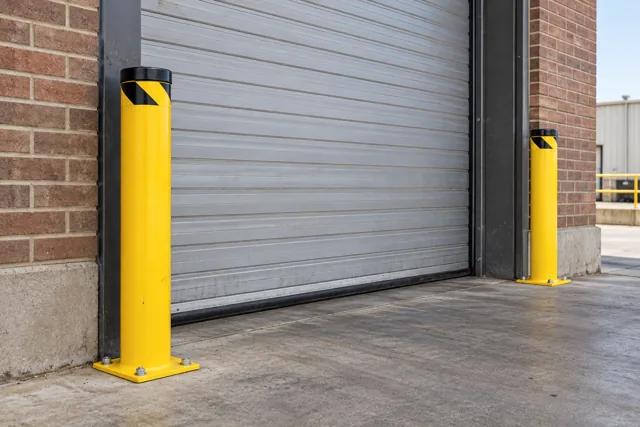
Plan warehouse bollard spacing around clear openings, vehicle and load movement, the protected asset and installation conditions.
Guardrail vs Handrail: Which System Does Your Warehouse Need?
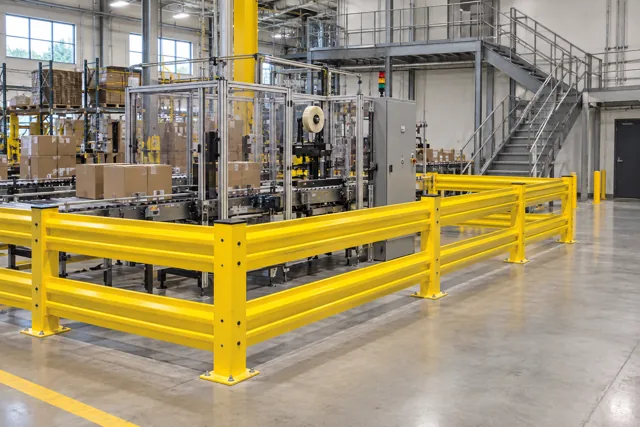
Understand warehouse impact guardrails, fall-protection guardrails and graspable handrails before selecting a protective system for your facility.
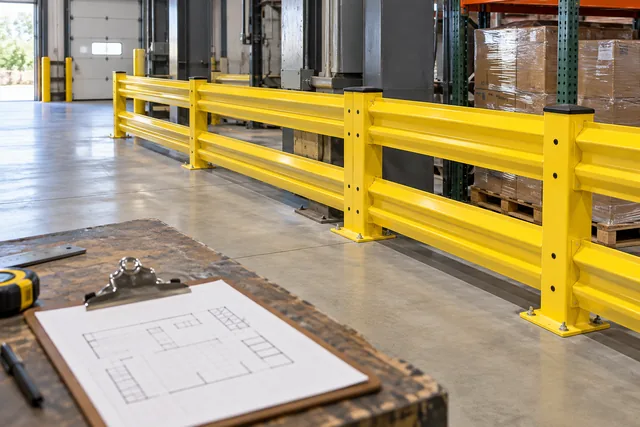
Warehouse Guardrail Cost: What a Complete Quote Should Include
Warehouse guardrail cost depends on the configured system and installation scope, not only the length of rail.
© 2025 Cogan Wire and Metal Products Ltd., all rights reserved.