






Cantilever Rack Bracing: What to Check Before Changing a Row
Cantilever rack bracing is part of the structural system and must be reviewed before a row is extended, shortened or altered. Do not remove a diagonal to create access or assume that adding columns repeats the existing design automatically. Start with the original drawings and have the proposed configuration assessed as a complete row.
Understand what the braces connect
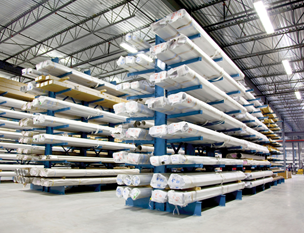
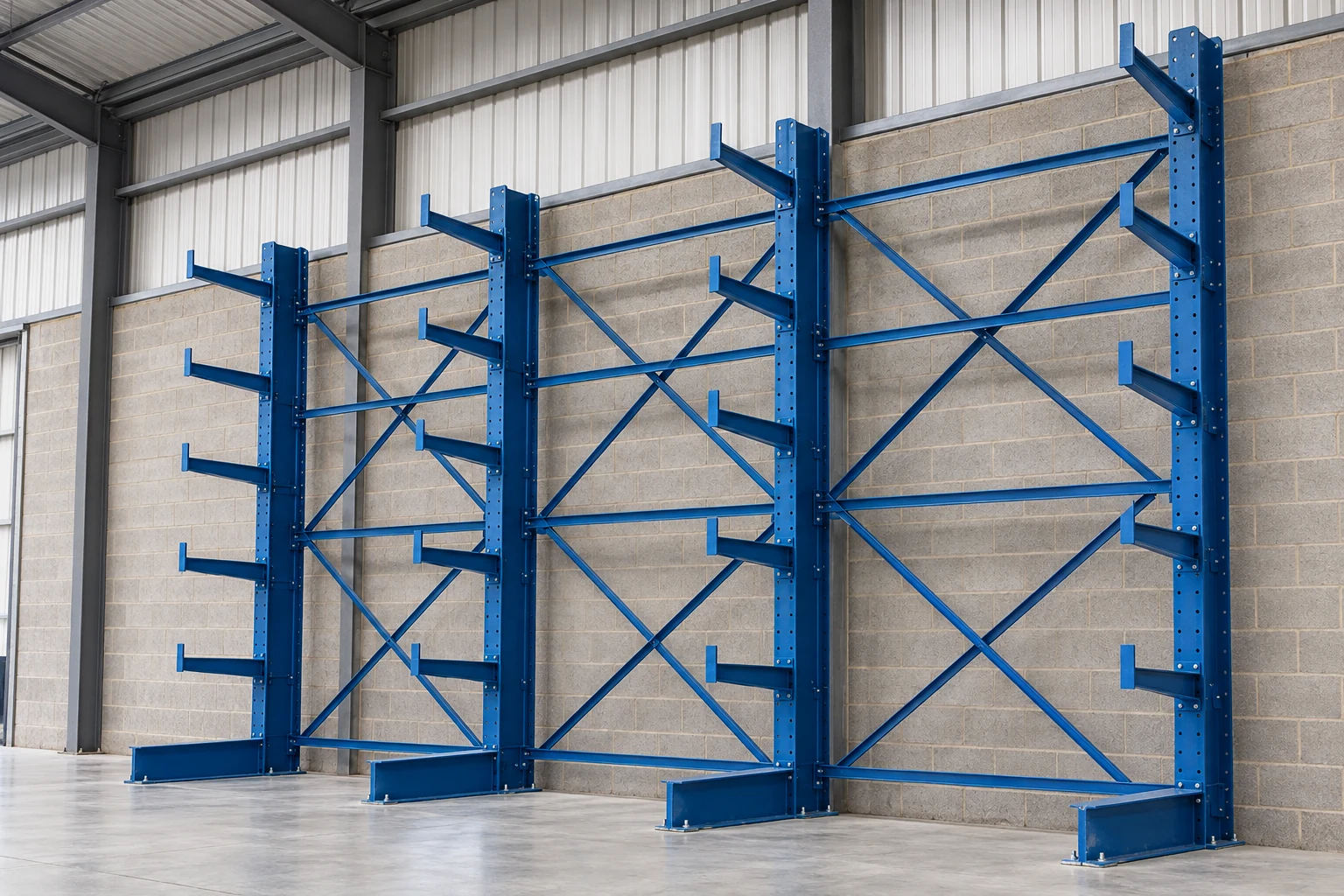
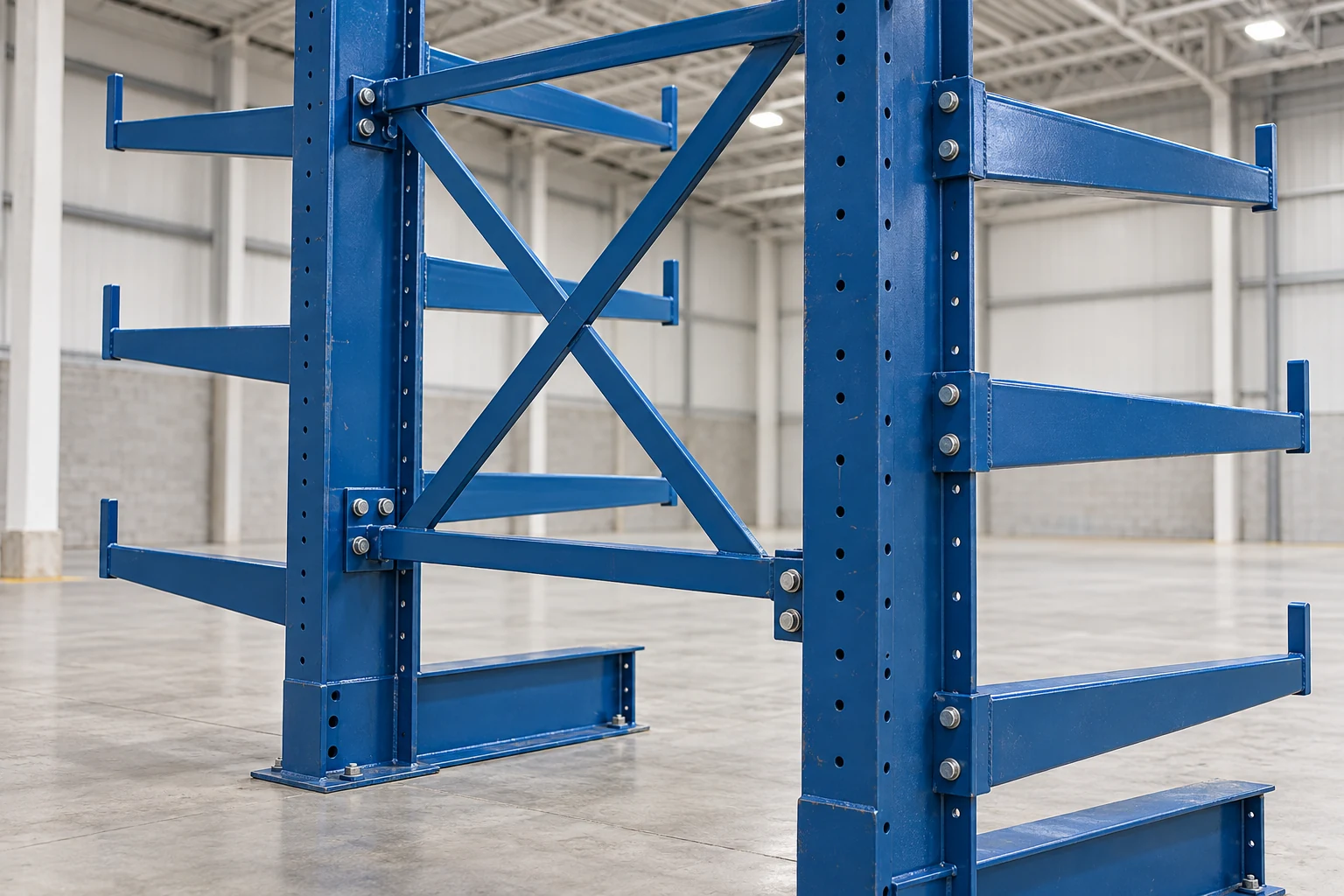
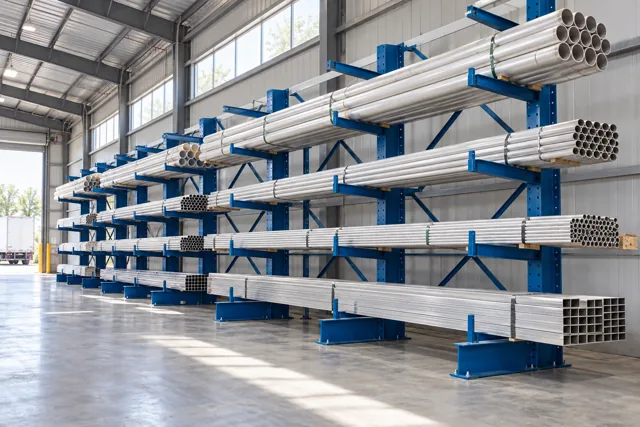
Cogan's cantilever column information describes horizontal and cross braces connecting columns to provide stability along the rack. Their arrangement is linked to the column assembly. A brace should therefore be identified by its location, connections and purpose in the documented system, not treated as spare steel behind the stored material.
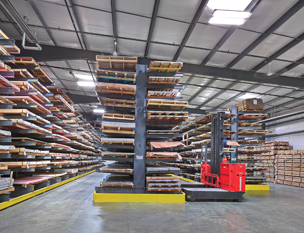
Distinguish the rear bracing plane from the projecting storage arms. The open front of a cantilever rack allows access to long stock, but it does not mean the space between columns can be opened wherever convenient. A proposed passage through the back of the row needs a design review before any component is moved.
Document the existing row accurately
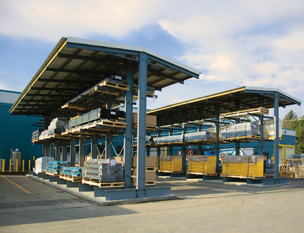
Locate the rack drawings, load information and original project identification. Mark each column and bay on a simple plan. Record whether the row is single-sided or double-sided and whether it has a roof, cladding or other project-specific features.
Photograph the whole row and the brace connections. Include every end bay and any area that differs from the drawings. If a component appears missing, bent or altered, record the observation and escalate it through the site's rack-condition procedure; do not fill the gap with an improvised member.
| Proposed change | Information the reviewer needs |
|---|---|
| Extend the row | Existing end configuration, proposed bays and loads |
| Shorten the row | New end location and components to remain |
| Change column spacing | Load lengths, support requirements and complete proposed layout |
| Create rear access | Required opening and alternative routes |
| Add a roof or enclosure | Proposed assembly and site exposure |
| Replace damaged bracing | Component identification, condition record and surrounding connections |
Treat new end bays as a design question
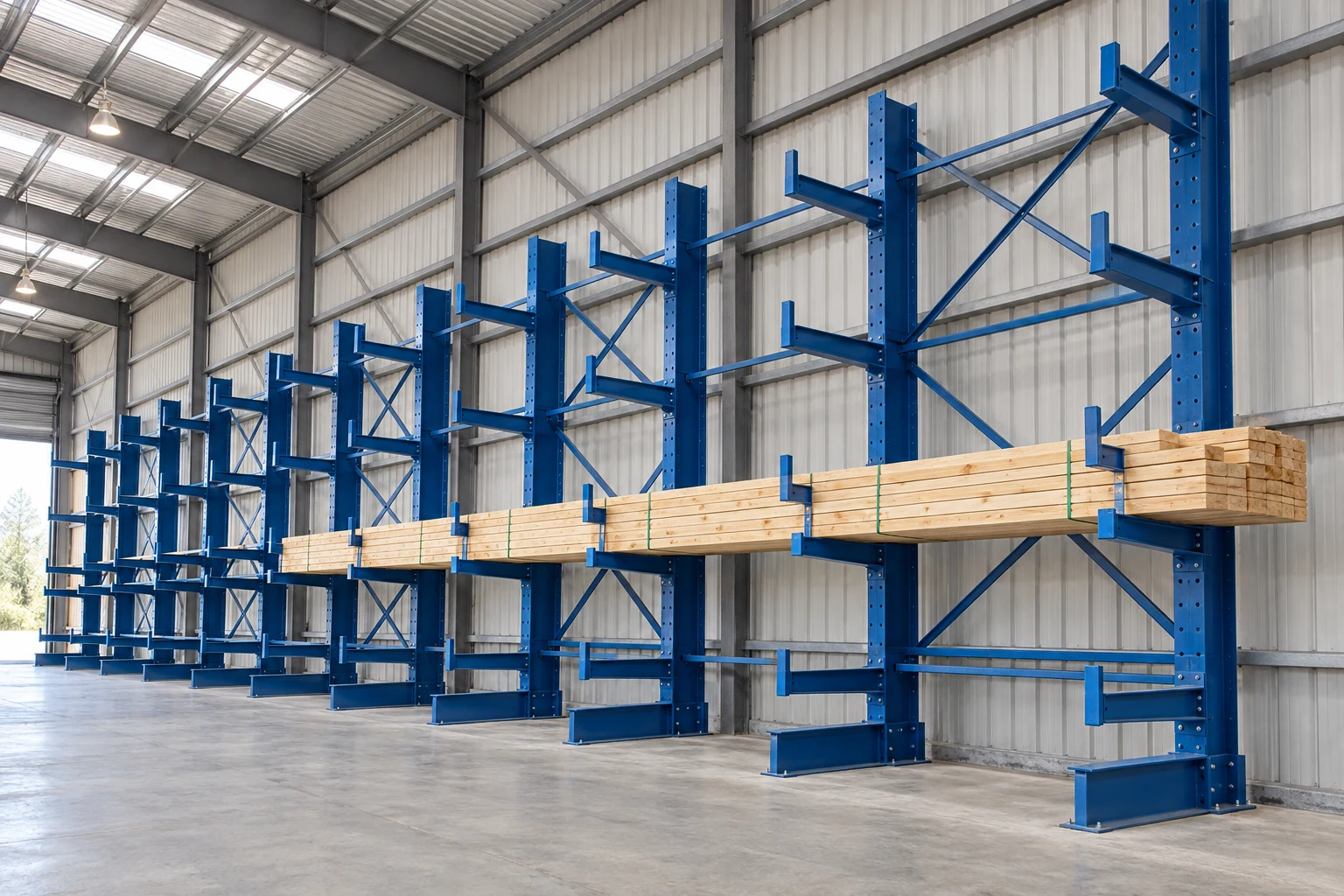
When a row is shortened, a bay that used to be internal can become an end bay. When a row is extended, the previous end becomes an internal connection in a different arrangement. Neither change should be approved by counting how many braces remain.
The manufacturer or qualified designer should confirm the bracing arrangement, component compatibility and connection requirements for the revised system. Product information can help identify the system, but it is not a substitute for the drawings applicable to the actual height, spacing and loading.
Coordinate bracing with inventory and handling
Provide a current load schedule when requesting a change. Include stock lengths, weights and how the material is supported across arms. A layout change intended to accommodate longer inventory can affect both storage support and the row configuration.
The mixed-length inventory guide helps organize those inputs. The capacity guide explains why individual component ratings do not replace a complete-system assessment. If the request also involves new arms, use the replacement arm checklist to identify those components separately.
Plan the work and update the record
Once a revised arrangement is approved, define the installation scope, unloading and isolation requirements, access and responsibilities with the site team. This article is a planning checklist, not a method for removing braces from a loaded rack. Use the approved work instructions for the actual system.
Keep the revised drawings and load information with the rack records. Make sure the installed arrangement is checked against them before the affected locations return to use. A clear closeout avoids leaving future operators with an old drawing that describes a different row.
When you request a Cogan project quote, include the original identification, existing and proposed plans, photographs and load schedule. Explain the operational problem the change is intended to solve; a different access or storage arrangement may resolve it without the initially proposed alteration.
Frequently asked questions
Can a cantilever cross brace be removed to make a passage?
Not without an approved redesign. The brace is part of the structural system, and the required access should be reviewed before altering the rack.
Does extending a row simply repeat the existing braced bays?
Do not assume that. The new ends, internal connections, column spacing and loads need to be checked as part of the revised complete row.
What records help identify replacement bracing?
Provide original drawings, project identification, a marked bay plan and photographs of the member and its connections. Include the reason for replacement and any surrounding damage observations.
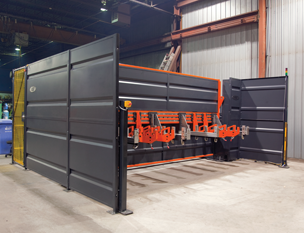
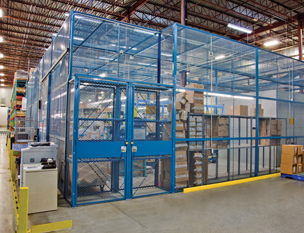
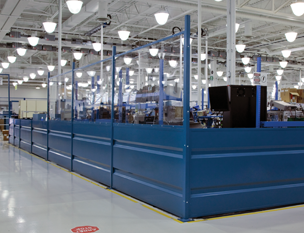
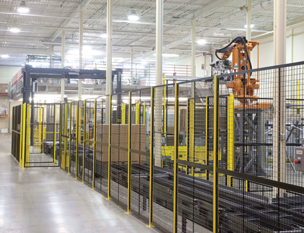
Images are conceptual product visualizations. Final configurations must follow the approved project drawings.
More on Cantilever Racking
Replacement Cantilever Rack Arms: Check Compatibility Before Ordering
Identify replacement cantilever rack arms by the original system, connection, length, load arrangement and complete rack documentation.
Cantilever Rack Inspections: What to Record and When to Escalate
Organize cantilever rack checks around the approved configuration, visible condition, stored loads and a clear process for reporting concerns.
Cantilever Racking for Mixed-Length Stock: Build an Inventory Plan
Organize mixed-length pipe, tube and lumber before specifying cantilever racking. Record load dimensions, support needs, picking methods and stock changes.
© 2025 Cogan Wire and Metal Products Ltd., all rights reserved.