





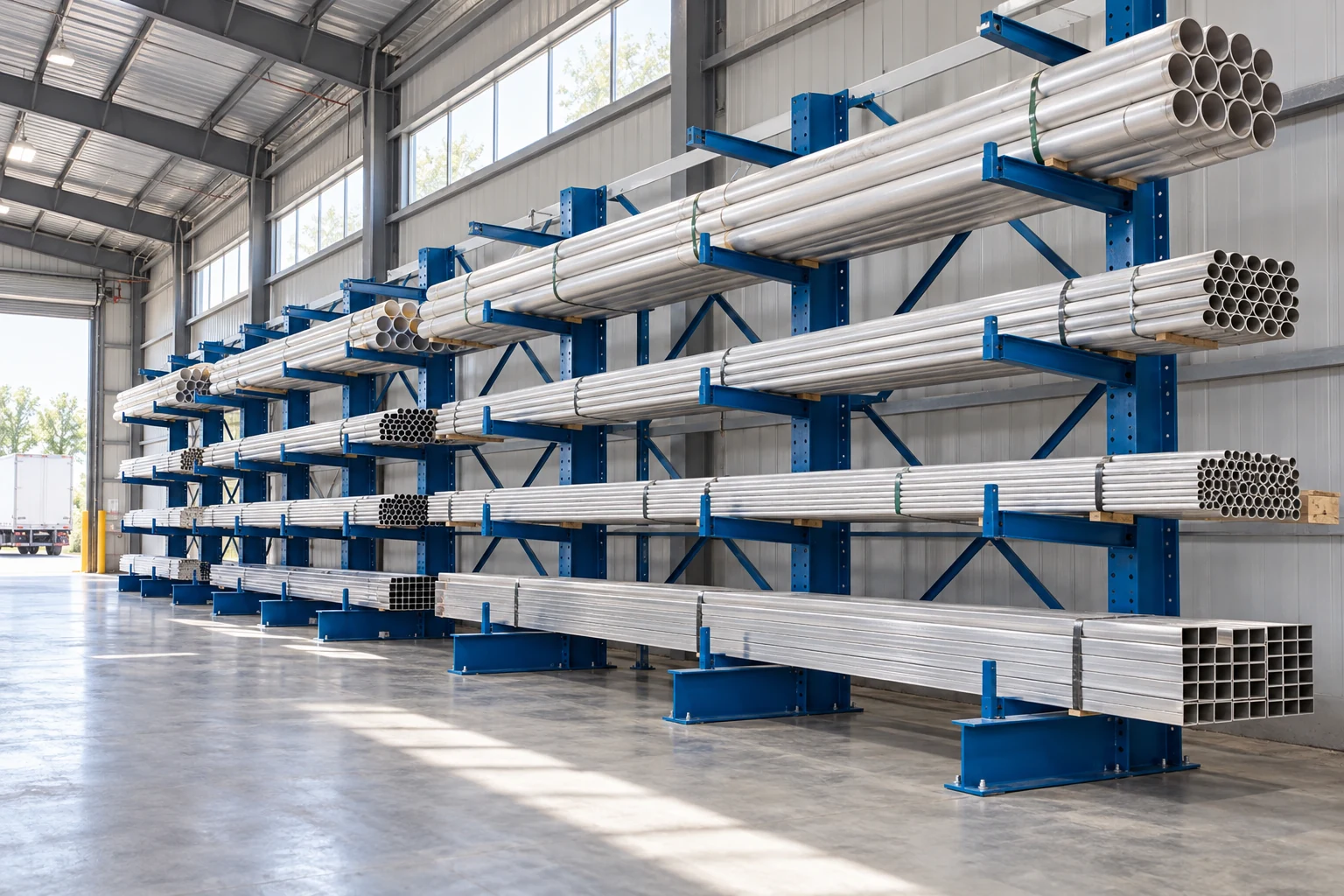
Cantilever Racking for Mixed-Length Stock: Build an Inventory Plan
Plan cantilever racking for mixed-length stock by grouping inventory according to its dimensions, weight, support needs and handling method. Keep a record of both the full incoming bundle and the smaller quantities that remain after picking. A rack that suits a complete bundle may need a different storage arrangement for short remnants or loose pieces.
The useful starting point is an inventory schedule, not a drawing of evenly spaced arms. Long stock can share a rack family without sharing the same support requirements. Pipe, rectangular tube, timber packs and irregular fabricated items should be described individually before the supplier selects the configuration.
Record the stored unit, not just the material name
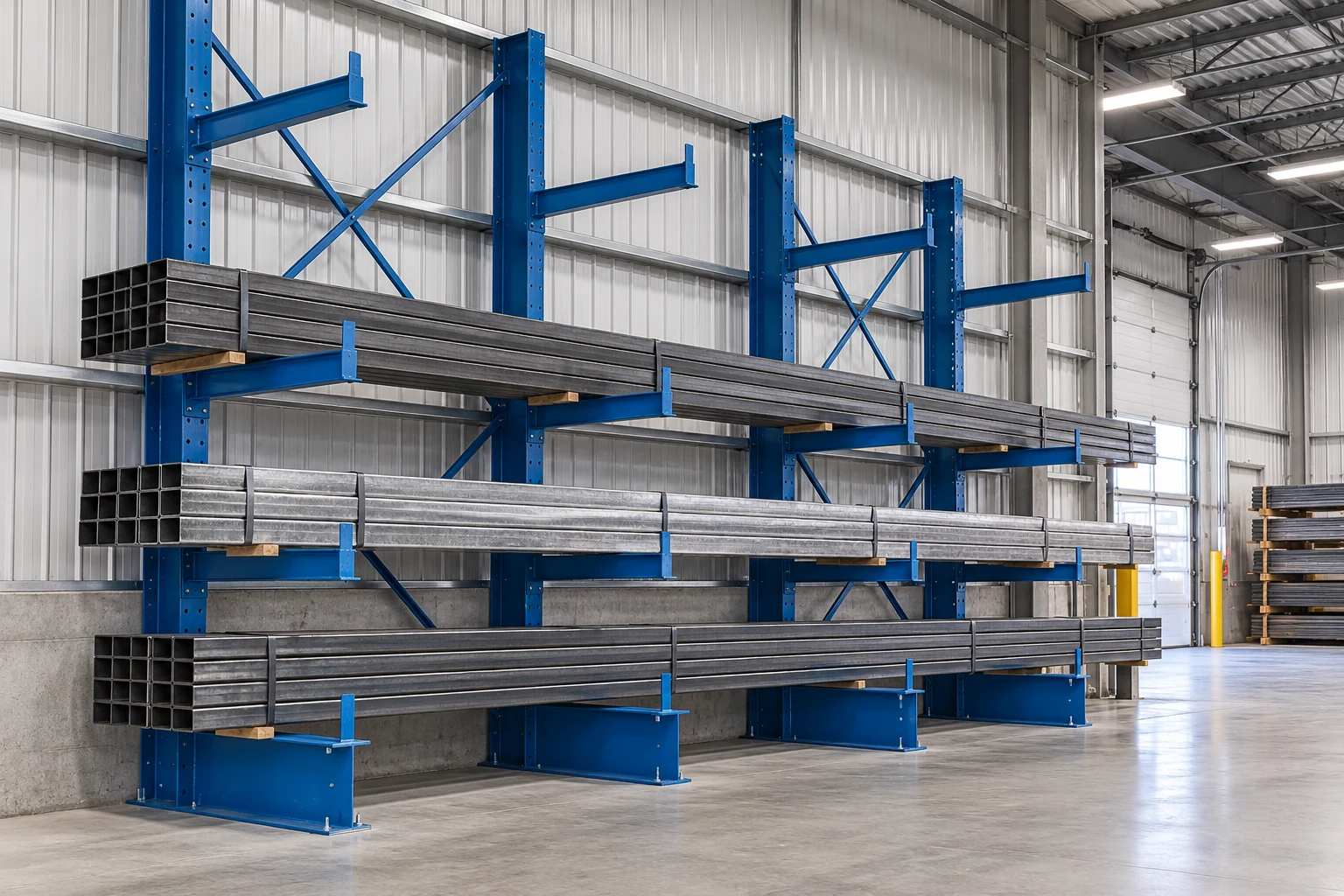
For each stock group, record length, depth, height and weight in its stored condition. Specify whether it arrives strapped, wrapped, nested or loose. Identify materials that can bend, roll or separate when partially used. Include the heaviest expected unit rather than relying on a purchasing description that omits packaging and bundle size.
An inventory line reading “steel tube” leaves important questions unanswered. A useful line distinguishes a strapped bundle of long rectangular tube from loose short lengths of the same material. Even when the total weight is lower, the loose stock may require a different support or containment arrangement.
Separate receiving stock from working stock
Describe how bundles change during the day. Are complete units retrieved, or do workers pick individual lengths? Does a saw return offcuts to storage? Where do damaged or unidentified pieces wait for a decision? Give each condition an intended location instead of allowing miscellaneous material to accumulate wherever space appears available.
Keep short remnants out of locations designed only around long loads unless the supplier has approved a suitable arrangement. Do not bridge a gap with improvised boards or assume one arm is adequate because a piece is light. Support selection belongs to the configured storage design.
| Inventory input | Why the supplier needs it |
|---|---|
| Minimum and maximum length | Helps determine appropriate support positions for each group |
| Stored-unit weight and dimensions | Defines the load case and space requirement |
| Bundle or loose-piece condition | Identifies handling and containment questions |
| Full-unit or individual picking | Influences access and storage organization |
| Remnants and returned stock | Prevents unsuitable leftovers from entering standard locations |
Connect the rack plan to the handling equipment
Specify the actual equipment used to place and retrieve stock, including attachments and the largest handled load. Check its approach, lifting movement and operating envelope against the proposed rack. The open front of a cantilever system provides access, but it does not establish a safe aisle width for every truck and load combination.
For repetitive individual picking, describe how the selected length is reached without disturbing adjacent inventory. For full-bundle movement, identify where incoming stock waits and how the truck approaches the assigned location. These details help distinguish a storage layout that fits on paper from one that supports daily work.
Have the complete support arrangement specified
The rack supplier must select the columns, arms, bases, bracing and any approved accessories for the proposed loads. Load positions and the distribution between supports matter. Do not calculate a system capacity by adding arm ratings from an unrelated configuration.
Use Cogan structural cantilever racking as the product starting point, and provide the inventory schedule with the site plan. Our capacity-planning article explains which configuration details should accompany a capacity discussion. The present inventory exercise supplies the real operating inputs for that discussion.
Keep the plan useful when inventory changes
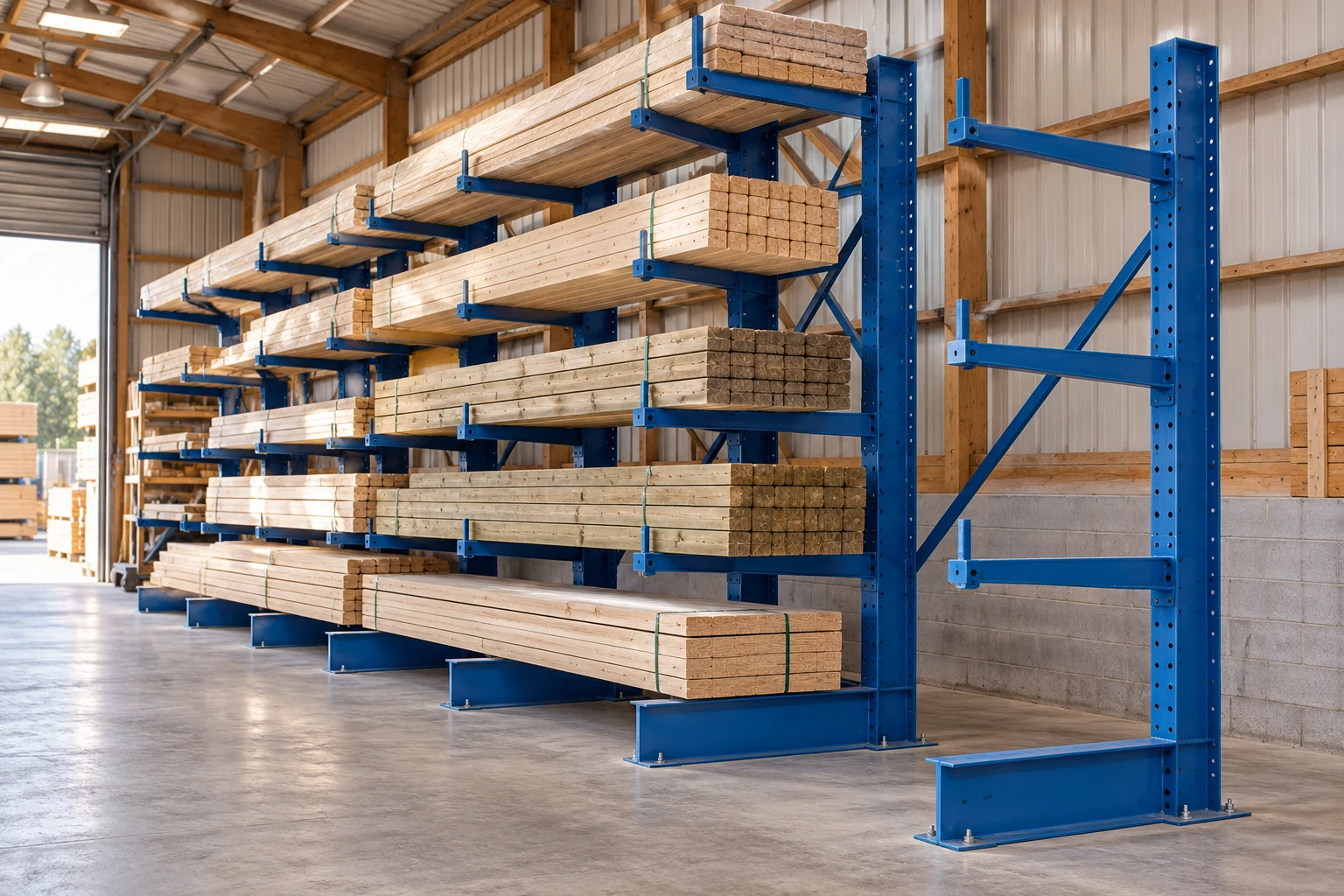
Assign locations by approved load group and make the identification understandable to receiving and picking staff. Record the arrangement supplied for the project and keep the relevant drawings and operating information available. A new SKU should be checked against that arrangement before it replaces an old one.
Review changes in length, weight, bundle depth, handling equipment and picking method. Empty space is not evidence that a new load is suitable. If the business expects a different product mix next year, identify that possibility during the quotation stage so it can be considered explicitly. Send your inventory schedule to Cogan with the measured layout and handling requirements.
Frequently asked questions
Can different stock lengths share cantilever racking?
They can when the configured system provides suitable support and handling access for each approved load group. The supplier needs the minimum and maximum lengths and the stored condition of each group.
Where should short offcuts be stored?
Give remnants a specifically planned location or approved accessory arrangement. Do not place short pieces between widely spaced supports or add improvised decking to make them fit.
Is total bundle weight enough to choose a rack?
No. Dimensions, load distribution, support needs, stored condition and handling method also affect the configuration. Provide those details with the maximum expected unit weight.
Sources and further planning
- Cogan structural cantilever racking
- Cantilever racking system guide
- Capacity and configuration planning
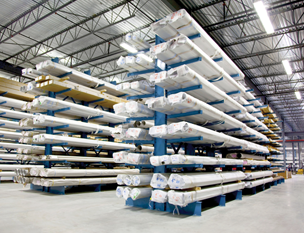
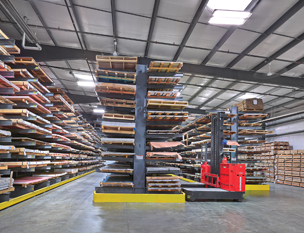
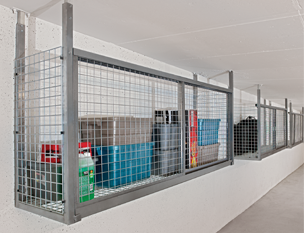
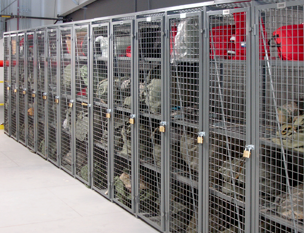
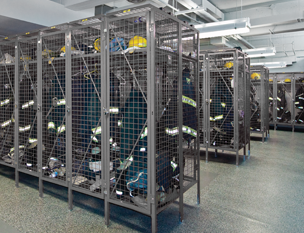
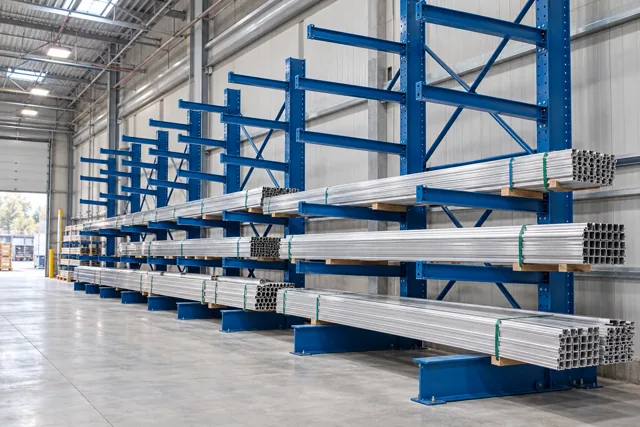
Images are conceptual product visualizations. Final configurations must follow the approved project drawings.
More on Cantilever Racking
Replacement Cantilever Rack Arms: Check Compatibility Before Ordering
Identify replacement cantilever rack arms by the original system, connection, length, load arrangement and complete rack documentation.
Cantilever Rack Inspections: What to Record and When to Escalate
Organize cantilever rack checks around the approved configuration, visible condition, stored loads and a clear process for reporting concerns.
Cantilever vs Pallet Racking: Choose for the Load and Picking Method
Cantilever racking offers open-front support on projecting arms, making it a candidate for long or awkwardly shaped materials.
© 2025 Cogan Wire and Metal Products Ltd., all rights reserved.