





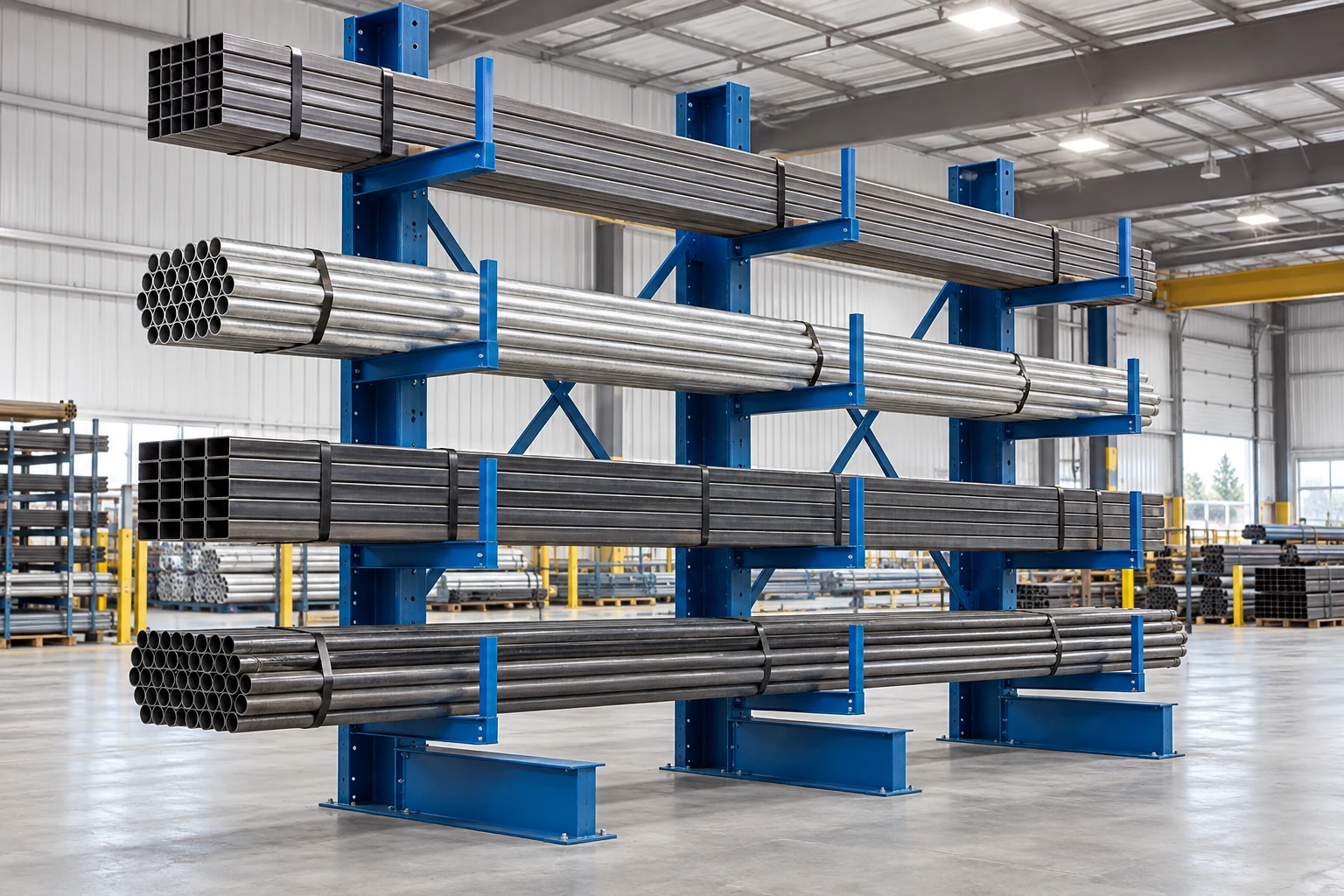
Heavy-Duty Cantilever Rack Capacity: What Buyers Need to Check
Cantilever rack capacity is specific to the configured arms, columns, bases, bracing and load arrangement. An arm rating alone is not the capacity of the entire rack. Begin with the dimensions and weight of each stored load, then have the supplier confirm the complete configuration on the project documents.
Describe the load before selecting the rack
Record the longest and shortest items, bundle depth, maximum bundle weight and the way the material is supported. Include packaging and changes that occur as bundles are opened. A uniform bundle and a collection of individual pieces can behave differently during storage and retrieval.
Identify how many storage levels are needed and how material will be placed on them. The number of arms and their vertical arrangement matter to column selection. Avoid assuming that a rack with more available holes can accept any combination of additional arms and loads.
Distinguish arm, column and system information
| Item | What the buyer should confirm |
|---|---|
| Arm | Rated load for the specified length and loading conditions |
| Column | Allowable configuration and loads on the relevant side or sides |
| Support layout | Number and spacing of supports for the stored material |
| Complete system | Bases, bracing, anchors and floor assumptions |
Dividing bundle weight by a support count can be an initial description of the intended arrangement. It is not a substitute for checking load distribution, material stiffness and the manufacturer's complete design. Do not use a simple calculation to certify a rack.
Use the Cogan approval information
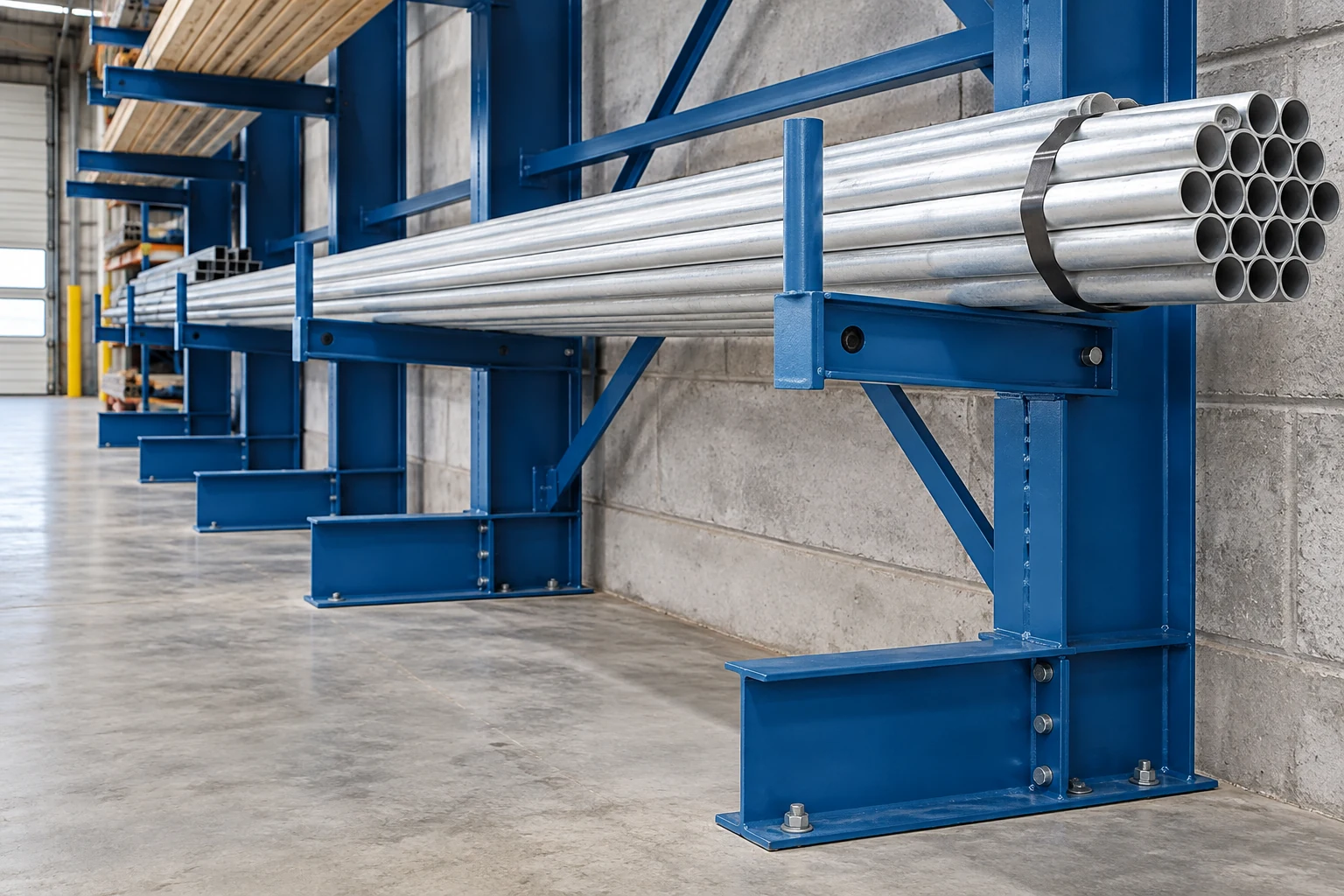
Cogan offers LD and HD structural I-beam column designs. Its product page states that the column type is selected by a Cogan engineer based on the number of arms and maximum load per arm. It directs buyers to the quote and approval drawings for detailed capacities.
That distinction is useful when comparing proposals. Ask for capacity information tied to your arm lengths, storage levels and load layout. “Heavy duty” is a product description, not a universal load rating that can be transferred between different racks.
Review changes before moving arms
Changing arm elevations, adding levels or storing a different load can change the design assumptions. Retain the approved configuration and make it available to the people responsible for storage decisions. Have proposed changes reviewed before the rack is rearranged.
Also plan how loads will be identified and how damaged components will be reported. A capacity document is useful only if staff can connect it to the actual rack and intended materials. Keep the operational loading plan consistent with the approved system.
Questions buyers ask
Is arm capacity the same as rack capacity?
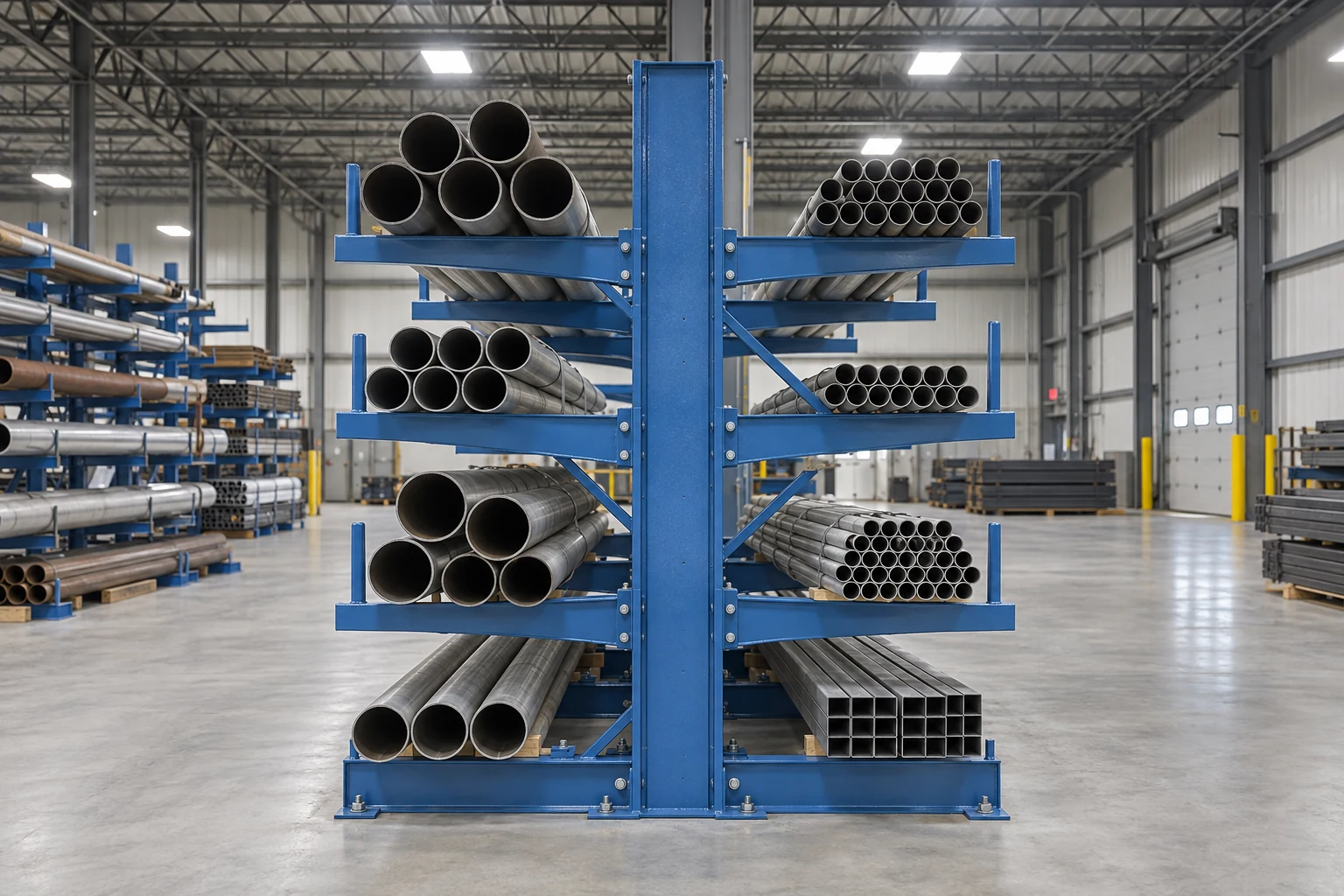
No. The complete rack depends on several components and the approved loading configuration. Check both component and system information.
Can I add arms to unused holes?
Only after confirming that the revised configuration and loads are acceptable. Available mounting positions do not establish spare capacity.
Which Cogan document should govern the project?
Use the current quote, approval drawings and applicable installation information for the actual rack configuration.
Product references and next step
Read Cogan structural cantilever racking and the cantilever racking guide. Send the load schedule with your quote request.
More on Cantilever Racking
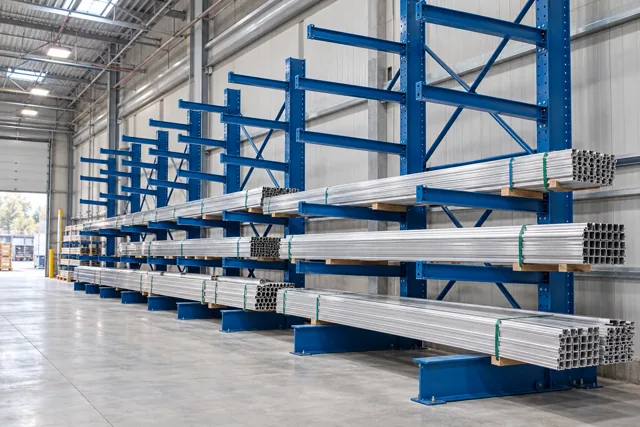
Cantilever Rack Inspections: What to Record and When to Escalate
Organize cantilever rack checks around the approved configuration, visible condition, stored loads and a clear process for reporting concerns.
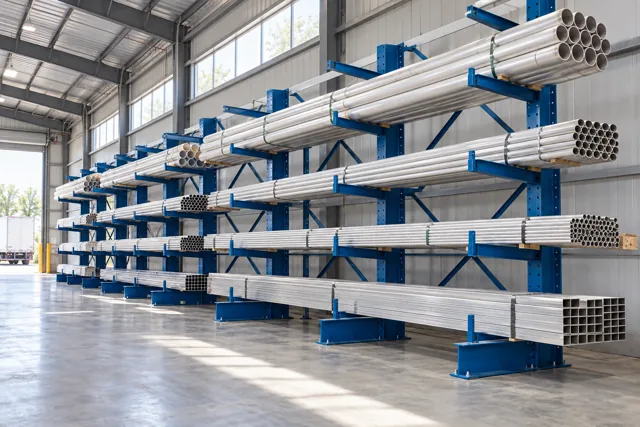
Cantilever Racking for Mixed-Length Stock: Build an Inventory Plan
Organize mixed-length pipe, tube and lumber before specifying cantilever racking. Record load dimensions, support needs, picking methods and stock changes.
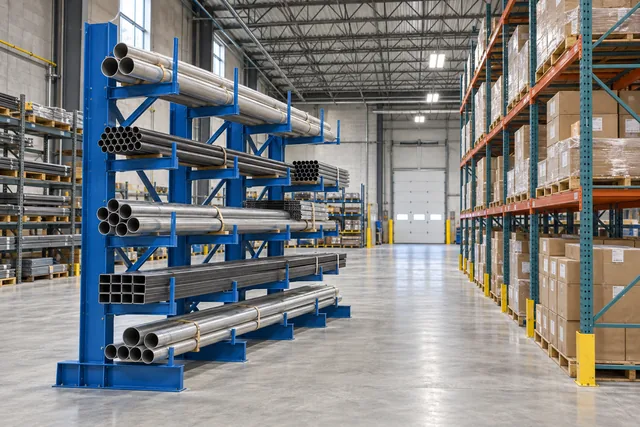
Cantilever vs Pallet Racking: Choose for the Load and Picking Method
Cantilever racking offers open-front support on projecting arms, making it a candidate for long or awkwardly shaped materials.
© 2025 Cogan Wire and Metal Products Ltd., all rights reserved.