




Cantilever Rack Inspections: What to Record and When to Escalate
A cantilever rack inspection should compare the installed system and its stored loads with the approved configuration, then record visible concerns for qualified assessment. A useful check identifies the exact location, what changed and what action was taken. It should not attempt to create a new capacity rating or approve a damaged rack from appearance alone.
The aim is a repeatable reporting process. A note saying “rack looks bent” is less useful than a clear location reference, photographs and a description of the affected column, arm or connection. Give the people responsible for assessment enough information to identify the same component without guesswork.
Keep the approved arrangement available
Retain the drawings, load information and applicable manufacturer instructions for the installed system. Identify each rack row or section in a way that matches the operating layout. Staff should be able to connect a stored load and a reported concern to the relevant configuration information.
Include changes in the record. Moving arms, changing storage levels or introducing a different load is not automatically covered by the original arrangement. Our cantilever inventory-planning article explains why length, stored condition and handling method belong alongside weight in the load schedule.
Observe the components and the stored material
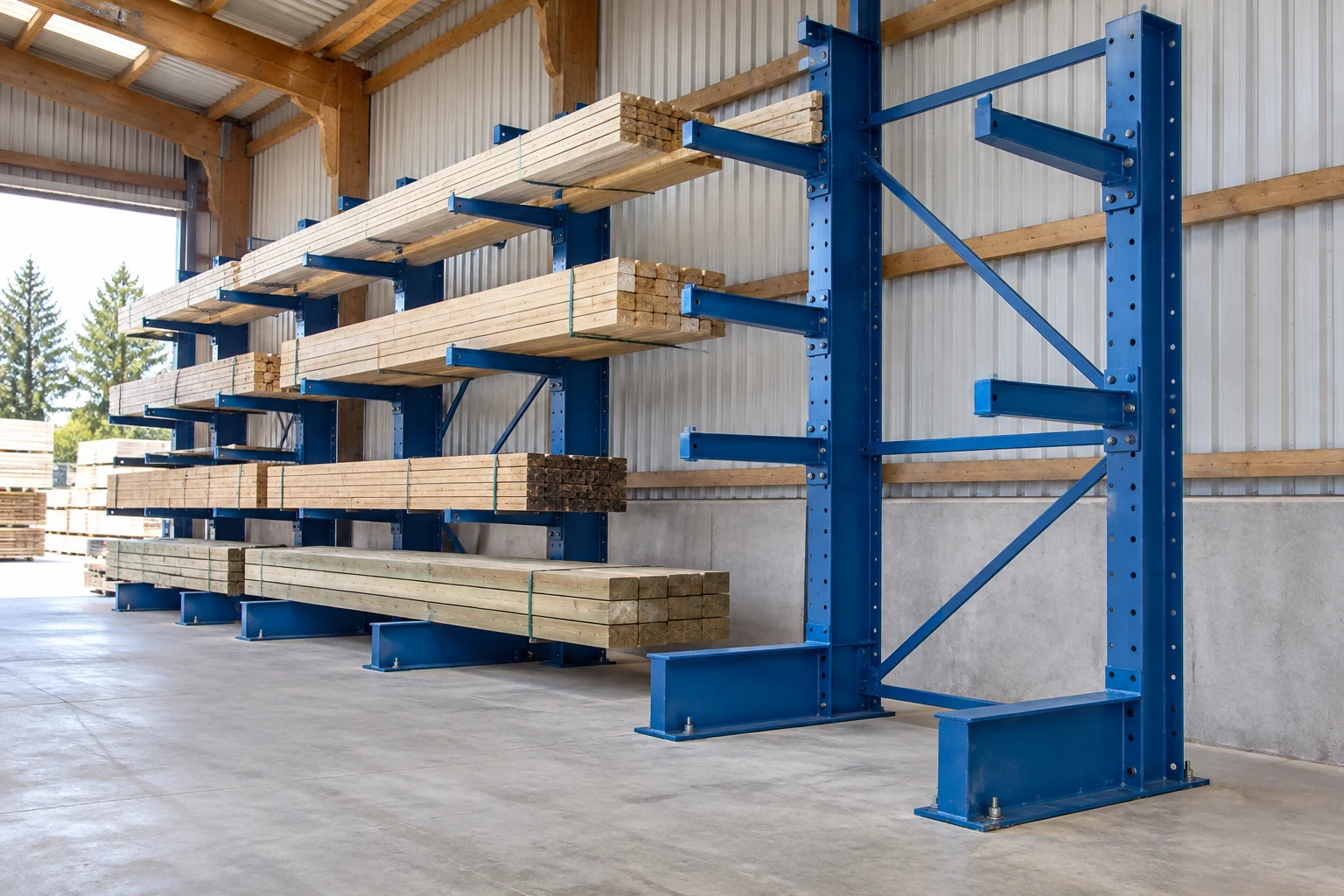
From appropriate accessible positions, look for visible changes to columns, arms, bases, bracing and connections. Report missing components, movement, deformation, corrosion or contact damage. Identify concerns with the supporting floor or anchorage for the responsible assessor rather than trying to infer remaining performance from a photograph.
Also observe the inventory. Record material that appears to differ from its assigned load group, pieces that no longer have the intended support, or bundles that have changed condition. Do not climb the rack or enter an exposed area to obtain a closer photograph. Use the site's approved inspection and access arrangements.
| Record field | Useful detail |
|---|---|
| Location | Rack row, section and level using the site's identifiers |
| Component or load | Column, arm, base, connection, bracing or stored material |
| Observation | What is visible, when it was noticed and any known contact event |
| Photographs | Context view plus a clear view from an appropriate position |
| Immediate action | Area controls and the person or team notified |
| Follow-up | Assessment reference, corrective action and release decision |
Escalate concerns through a defined process
Make reporting responsibilities clear before an incident occurs. When damage or an unsafe condition is suspected, follow the facility's process for controlling access and arranging qualified assessment. The appropriate immediate action depends on the condition and site; a generic blog cannot prescribe a safe unloading sequence for an unknown damaged structure.
Do not straighten a component, add a weld, drill new holes or substitute a connection as an informal repair. Ask the manufacturer or responsible engineer what information and corrective action are required for that specific system. Installing a new-looking part does not by itself establish that the surrounding rack and supporting conditions are acceptable.
Include configuration changes in the review
An inspection can find a mismatch even when no obvious damage is visible. Examples include a new material length, a changed bundle size or a different truck attachment that alters the handling process. Compare those operating changes with the approved rack information.
Keep capacity discussions tied to the configured system. Our cantilever capacity guide explains why adding unrelated arm ratings is not a valid way to establish the complete arrangement's capacity. Contact Cogan about the actual structural cantilever system and its project records.
Close the record after the assessment
Track the concern until the assigned competent person or responsible professional has determined the required action. Record which components were addressed and whether the approved storage arrangement changed. Make any revised operating information available to receiving and picking staff.
Establish inspection frequency and responsibilities using applicable requirements, manufacturer instructions and the site's operating exposure. Avoid inventing a universal interval from another warehouse's practice. For a review of a Cogan installation, provide its identifying documents, location plan, photographs and description of the concern through the project contact process.
Frequently asked questions
Can a visual inspection establish remaining rack capacity?
No. Visual observations help identify and report concerns. They do not replace a qualified assessment of the configuration, loads, components and supporting conditions.
What should be recorded after a truck contacts a rack?
Follow the site's immediate safety procedure, then record the location, known event details and observations from appropriate positions. Arrange assessment before assuming the affected system is suitable for continued use.
Should inspections also check the stored loads?
Yes. Inventory dimensions, support, bundle condition and handling changes can create a mismatch with the approved arrangement even without obvious visible rack damage.
Sources and further planning
- Cogan structural cantilever racking
- Cantilever capacity and configuration
- Mixed-length inventory planning
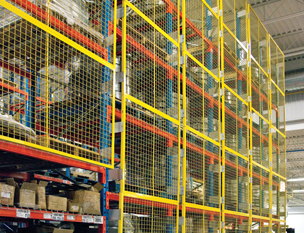
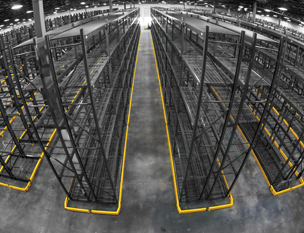
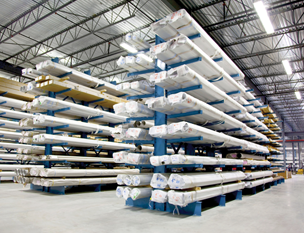
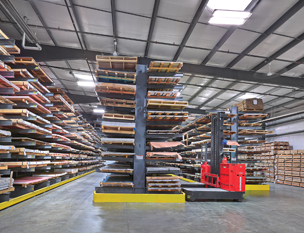
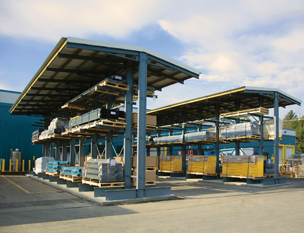
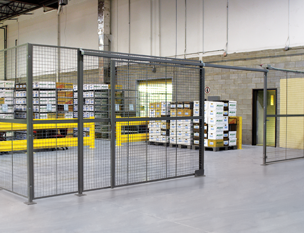
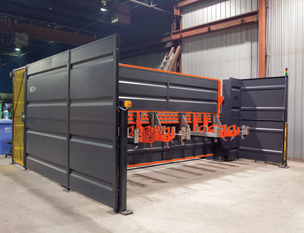
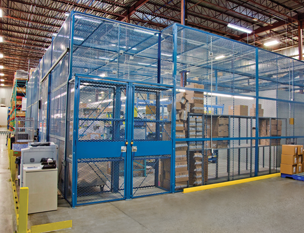
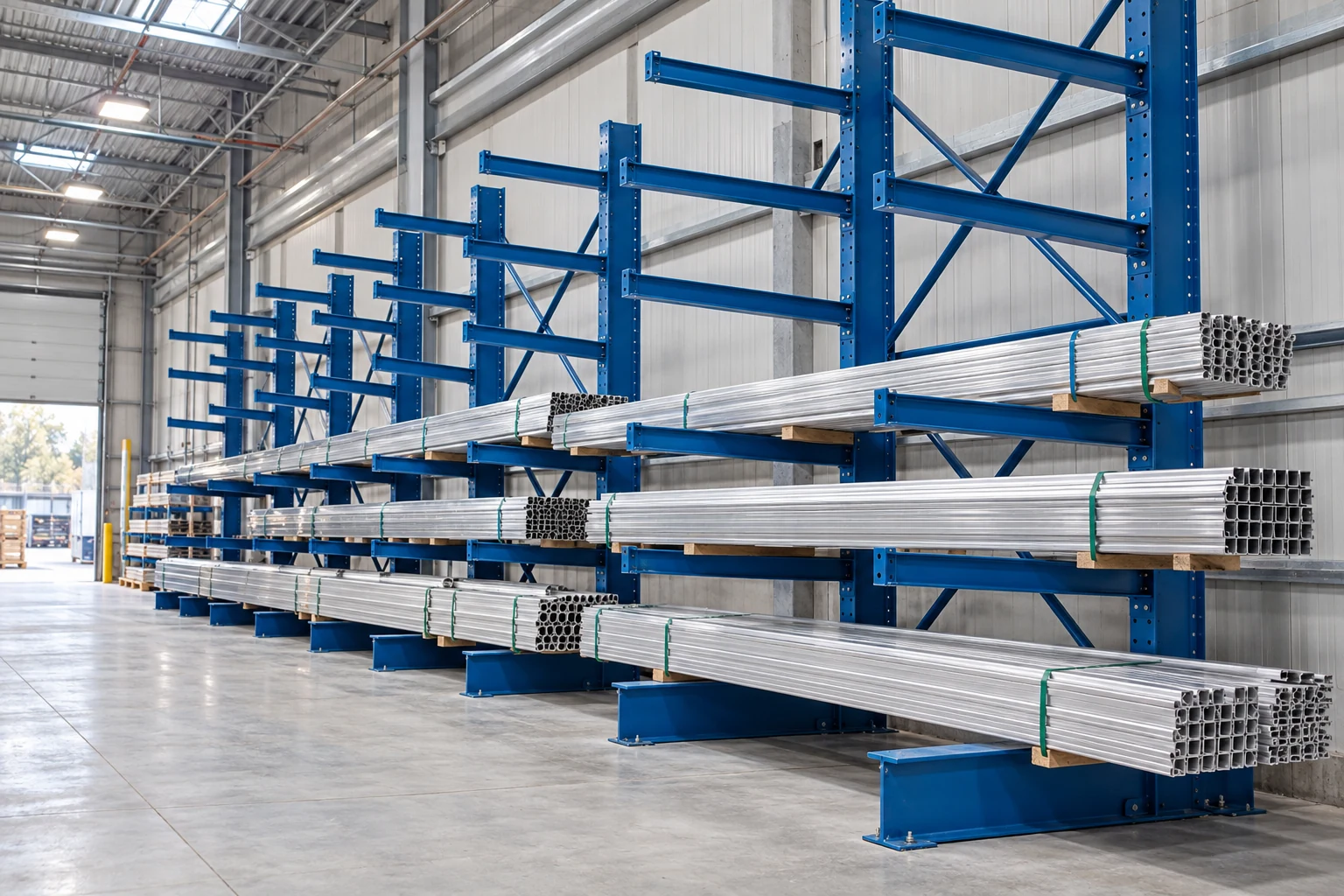
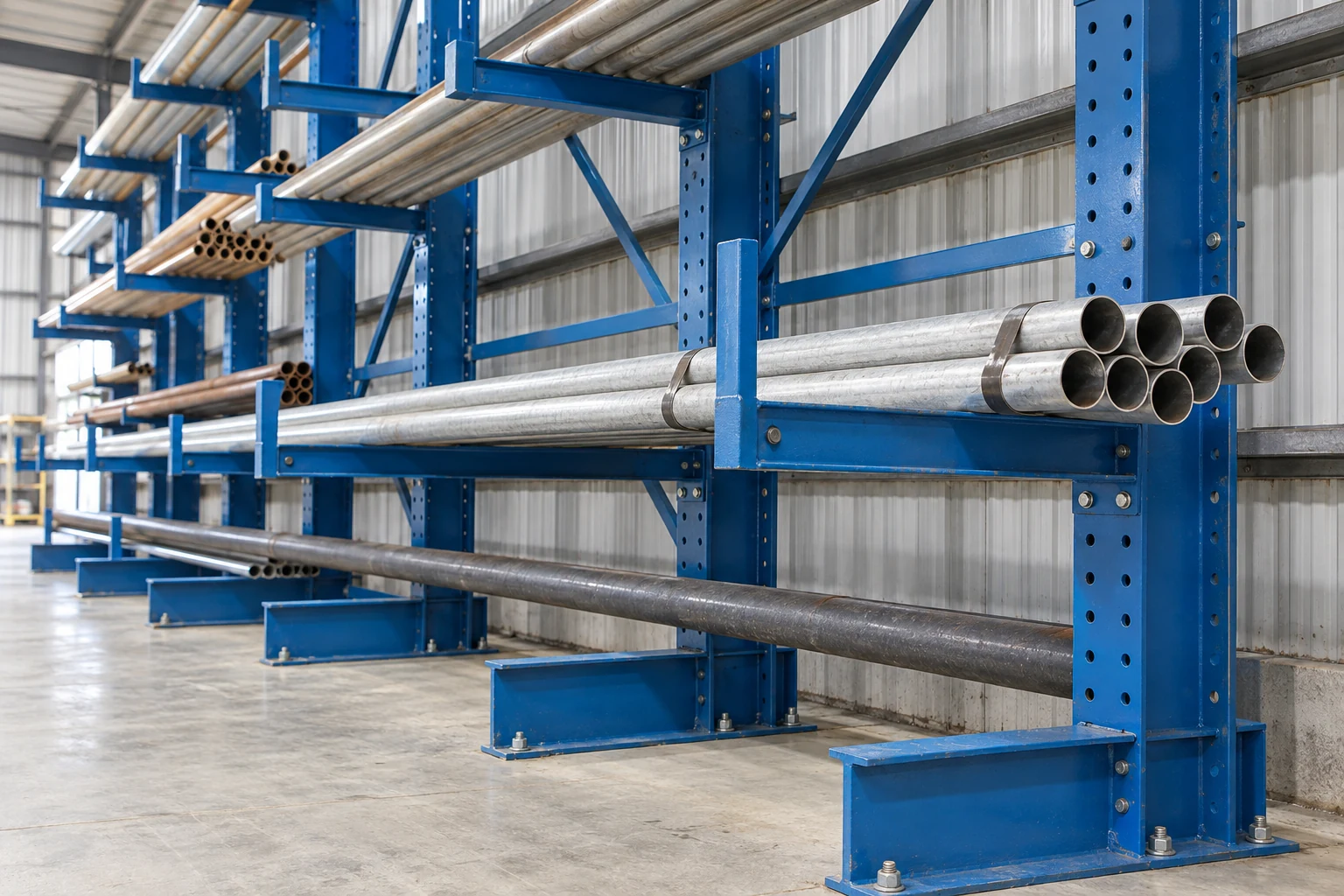
Images are conceptual product visualizations. Final configurations must follow the approved project drawings.
More on Cantilever Racking
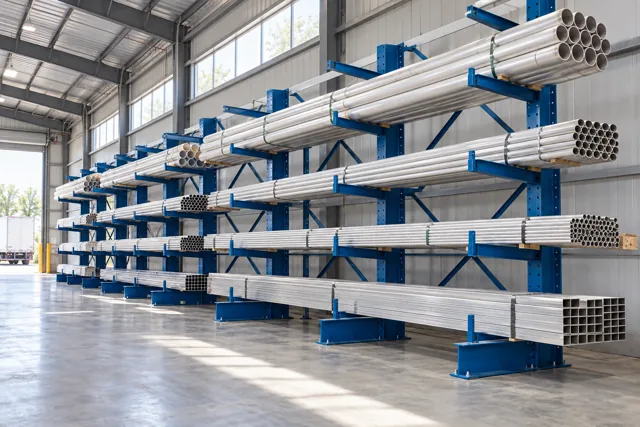
Cantilever Racking for Mixed-Length Stock: Build an Inventory Plan
Organize mixed-length pipe, tube and lumber before specifying cantilever racking. Record load dimensions, support needs, picking methods and stock changes.
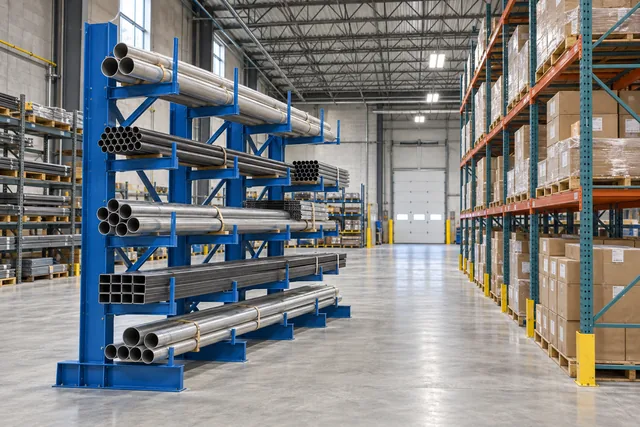
Cantilever vs Pallet Racking: Choose for the Load and Picking Method
Cantilever racking offers open-front support on projecting arms, making it a candidate for long or awkwardly shaped materials.
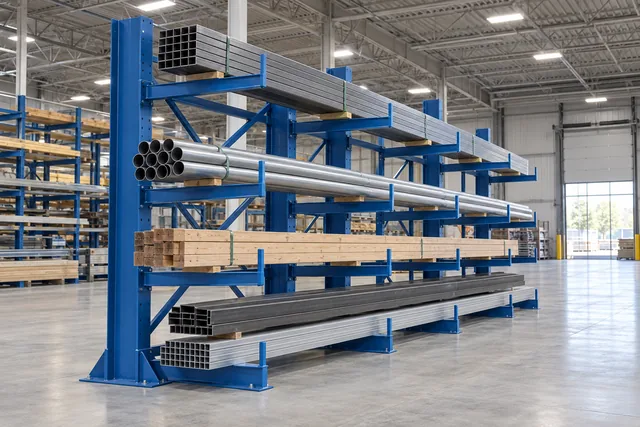
How to Order Cantilever Racking: A Quote-Ready Checklist
To order cantilever racking, provide a load schedule, a measured layout, the handling method and the site's installation conditions.
© 2025 Cogan Wire and Metal Products Ltd., all rights reserved.