


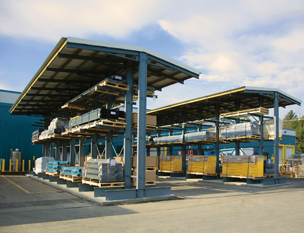

Single-Sided vs Double-Sided Cantilever Racks
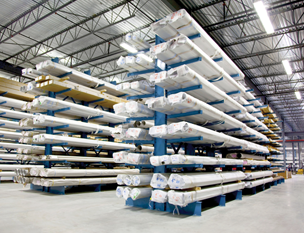
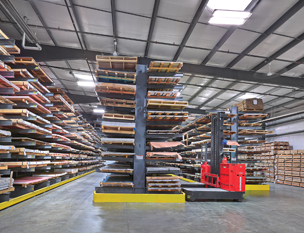
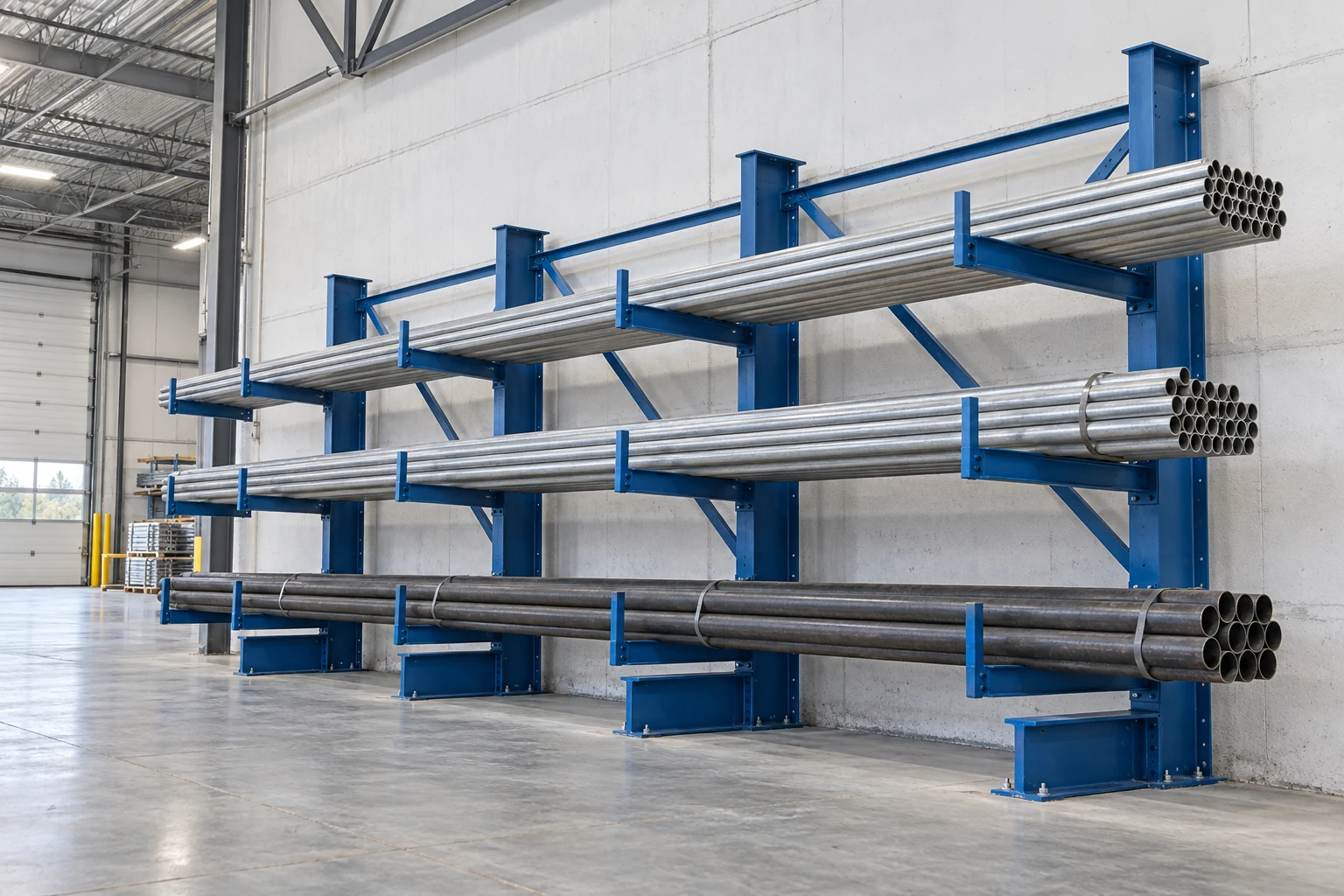
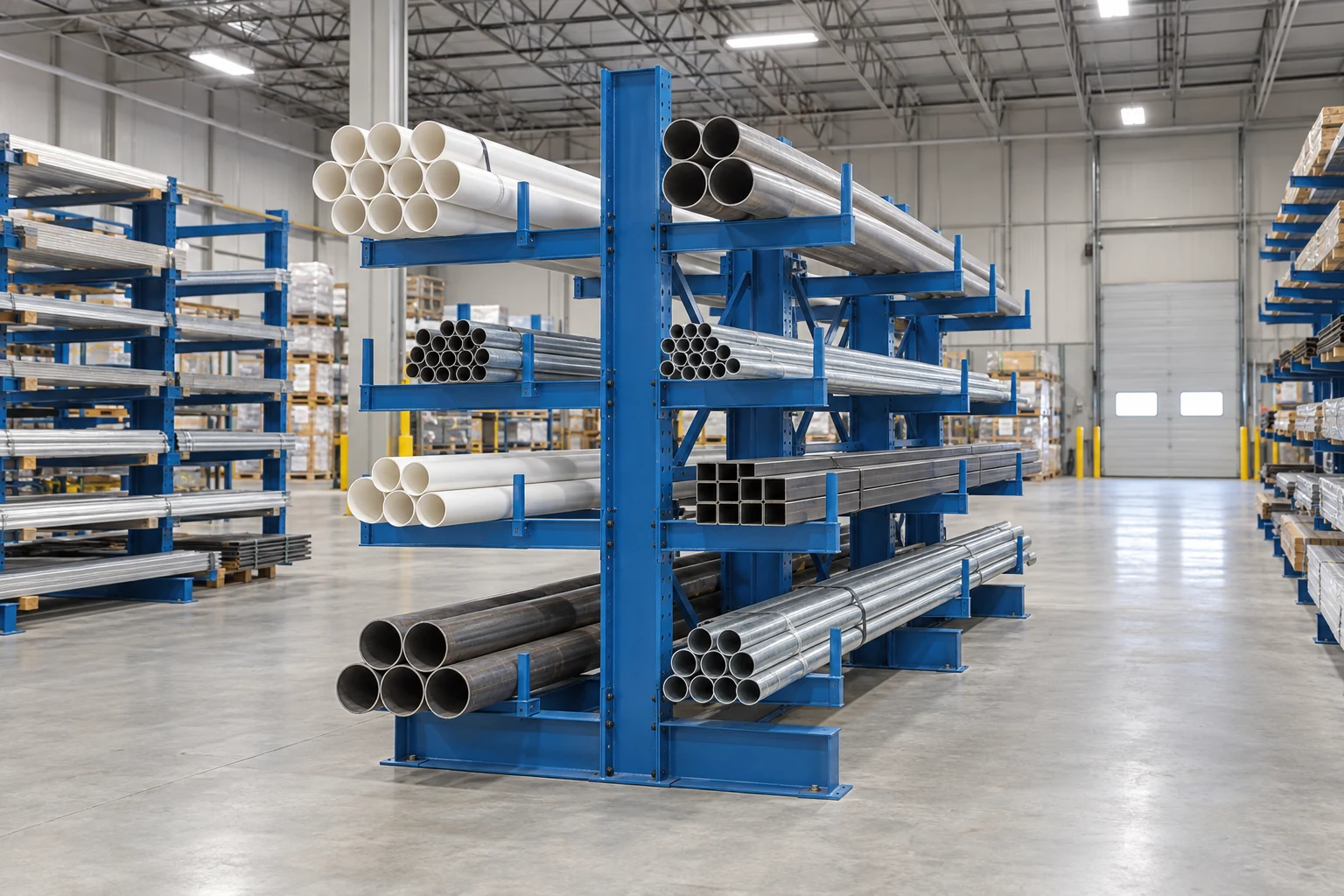
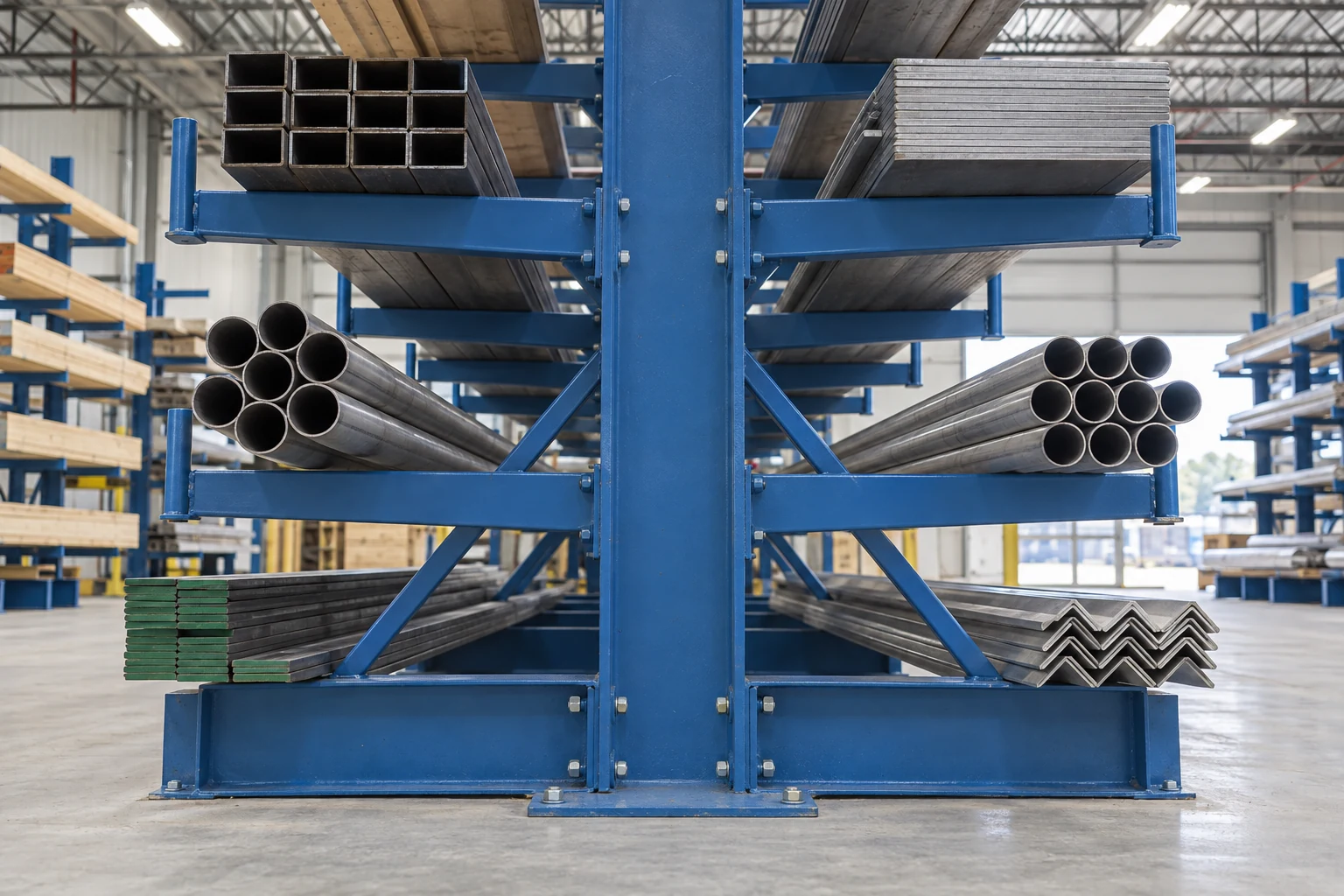
Single-sided cantilever racks provide storage access from one side of the columns; double-sided configurations provide arms on both sides. The choice depends on available access, load distribution, handling routes and the approved structural arrangement. Double-sided does not automatically mean twice the usable capacity of a given floor area.
Begin with access to the stored material
A wall-side location may suit a single-sided arrangement because loading takes place from the open side. A freestanding row can offer access from two sides, but both approaches need sufficient space for the handling equipment and its loads.
Trace actual travel routes before comparing layouts. Access to the rear of a double-sided row can require another aisle, and that aisle occupies floor space. Include turning, staging and any fixed obstructions in the comparison rather than counting storage arms alone.
Compare complete layout options
| Planning item | Single-sided | Double-sided |
|---|---|---|
| Loading access | One working face | Two working faces |
| Typical placement consideration | Perimeter or one-sided access area | Row with usable access on both sides |
| Floor-space comparison | Include the working aisle | Include both approaches and turning space |
| Capacity review | Approved one-sided configuration | Approved loads and configuration on each side |
Cogan offers both configurations. Ask for a project-specific comparison using the same inventory profile and handling assumptions so that the result reflects the operation you need to support.
Confirm the loading assumptions
Do not assume that loads on opposite sides simply cancel each other. The rack must be designed for the intended loading conditions, including the way stock is removed and replenished. Obtain the allowable arrangement from the supplier rather than relying on a balancing rule developed on the warehouse floor.
Record arm lengths, quantities and elevations for each side. If the load profile differs between sides, explain that during design. The project documents should make those differences understandable to the people managing storage.
Plan future changes realistically
An existing single-sided installation should not be treated as convertible merely because there appears to be space for additional arms. Bases, columns, connections, bracing, anchoring and surrounding access all require review before the configuration changes.
If a future expansion is likely, tell the supplier at the start. That allows the design discussion to consider the anticipated use without representing an unapproved future arrangement as present capacity. Keep the original and revised drawings clearly identified when changes are made.
Questions buyers ask
Is double-sided always more space-efficient?
Not necessarily. Compare usable storage with all necessary aisles, turning space and access included.
Can I load only one side of a double-sided rack?
Follow the approved loading conditions for that rack. Do not infer allowable arrangements from its appearance.
Can I convert a single-sided rack later?
Ask the manufacturer to review the entire system and layout before any conversion.
Product references and next step
Review Cogan cantilever rack configurations and the cantilever guide. Request a layout comparison using your inventory schedule.
More on Cantilever Racking
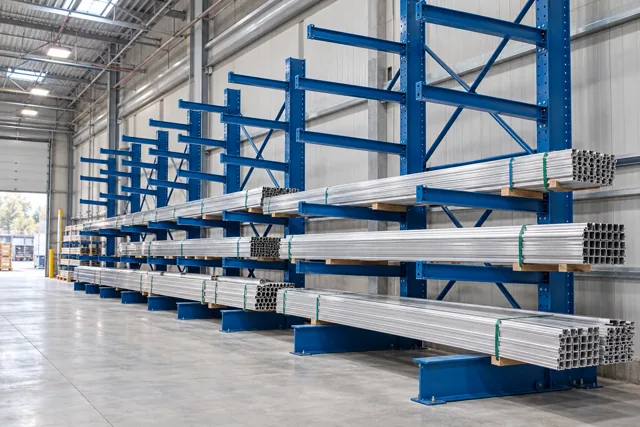
Cantilever Rack Inspections: What to Record and When to Escalate
Organize cantilever rack checks around the approved configuration, visible condition, stored loads and a clear process for reporting concerns.
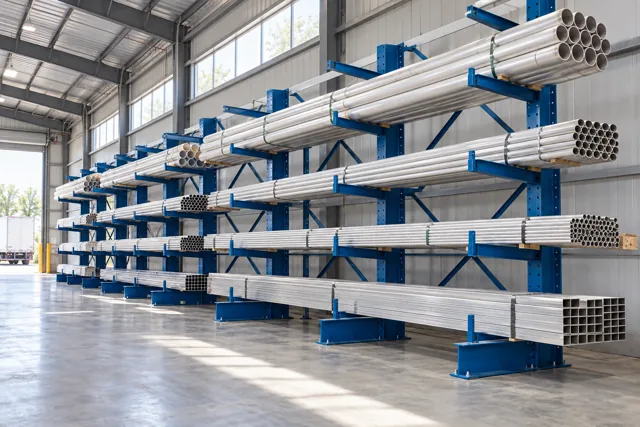
Cantilever Racking for Mixed-Length Stock: Build an Inventory Plan
Organize mixed-length pipe, tube and lumber before specifying cantilever racking. Record load dimensions, support needs, picking methods and stock changes.
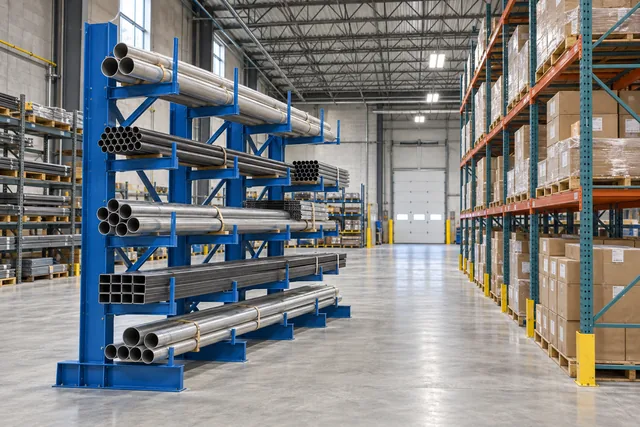
Cantilever vs Pallet Racking: Choose for the Load and Picking Method
Cantilever racking offers open-front support on projecting arms, making it a candidate for long or awkwardly shaped materials.
© 2025 Cogan Wire and Metal Products Ltd., all rights reserved.