



Cogan Blog
Insights, guides, and industry trends on mezzanines, industrial storage, and warehouse optimization.
Articles are compiled from publicly available industry sources for informational purposes only. Images are illustrative and actual products may vary.
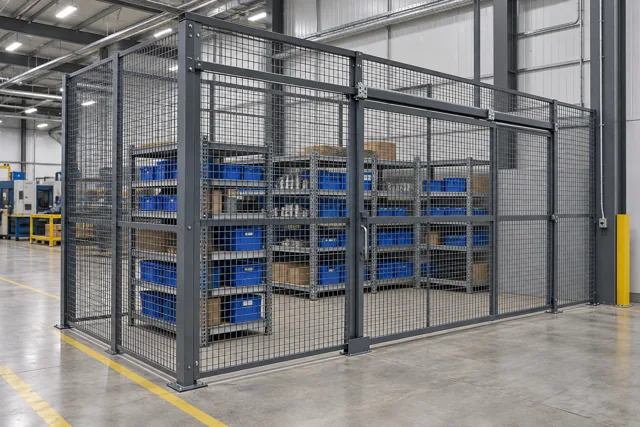
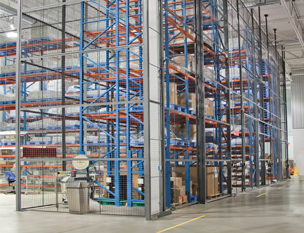
Wire-Mesh Storage Cages: Plan Access from Receiving to Retrieval
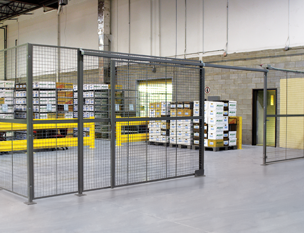
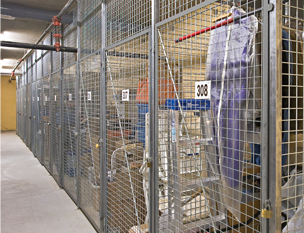
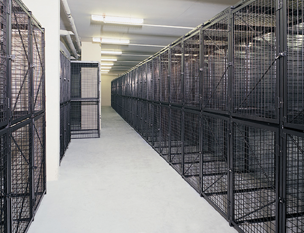
A wire-mesh storage cage should support a defined receiving and retrieval process. Plan who may enter, how incoming goods are checked, where carts wait and how items leave the enclosure. Then select the gate and internal layout around those movements. A secure boundary is easier to operate when authorized access is practical and predictable.
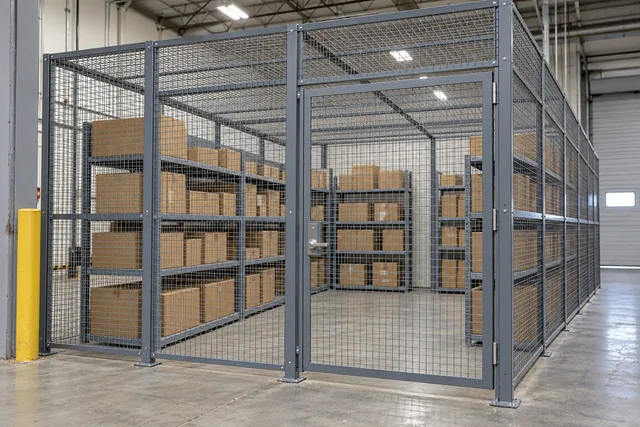
DEA Storage Cages: Define the Regulatory Scope Before Ordering
A DEA storage-cage project must begin with the applicable security requirements and the type of operation and controlled substances involved. A product called a “DEA cage” does not, by its name alone, establish compliance for a facility. The registrant and its qualified advisers need to define the required arrangement before fabrication.
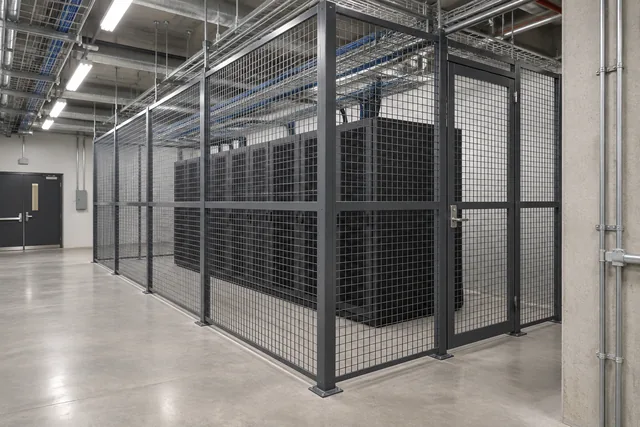
Server Cages: Planning Physical Access Around IT Equipment
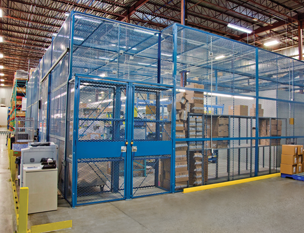
A server cage can establish a physical access boundary around equipment, but it does not replace cybersecurity, environmental control or the building's fire-protection design. Plan the enclosure with IT, facilities and security so the boundary supports the equipment's operation and maintenance requirements.
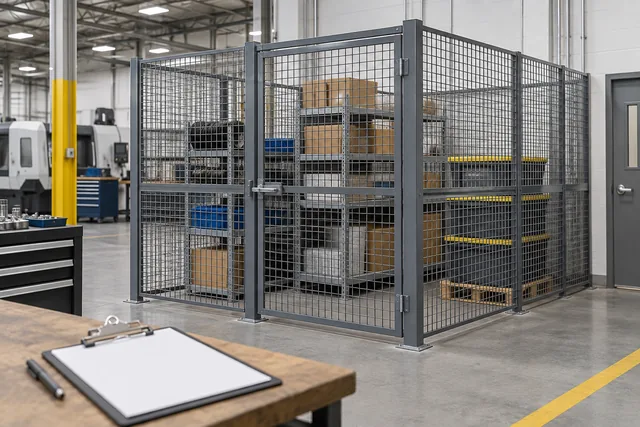
Wire-Mesh Partition Cost: Comparing Complete Enclosure Quotes
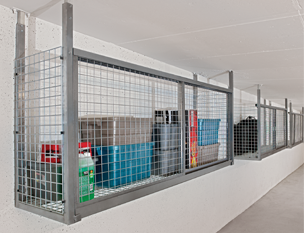
Wire-mesh partition cost depends on the enclosure's dimensions, support arrangement, doors, roof requirements and installation scope. A panel price alone does not represent the cost of a usable storage cage or divided workspace. Compare proposals against one clear layout and operating requirement.
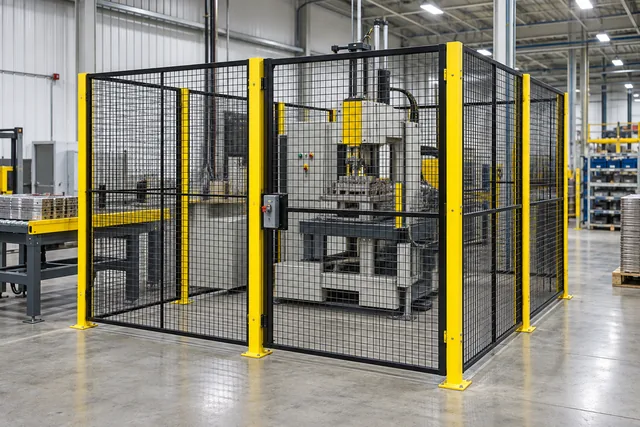
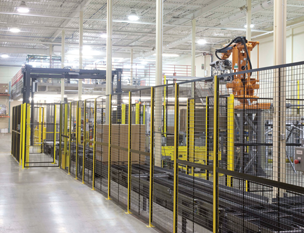
Machine Guarding Fences: What to Define Before Ordering Panels
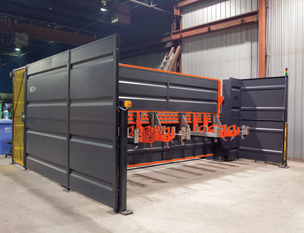
A machine guarding fence is one part of a safeguarding design. Before ordering panels, define the machine hazards, access tasks, required separation and any safety-related gate or control functions. Fence height and color alone cannot establish that the complete machinery installation is adequately safeguarded.
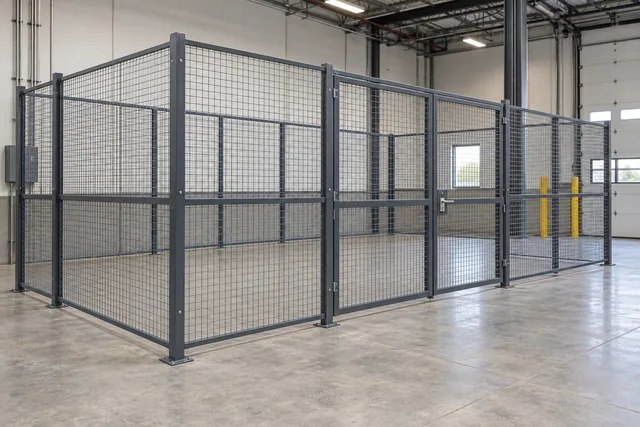
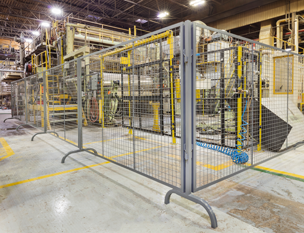
Wire-Mesh Partition Installation: A Site-Readiness Checklist
Prepare for a wire-mesh partition installation by confirming the approved layout, supporting conditions, access openings and building interfaces. The appropriate instructions depend on the selected enclosure and gate configuration. A general checklist can organize the project, but it should not replace the relevant manufacturer documents.
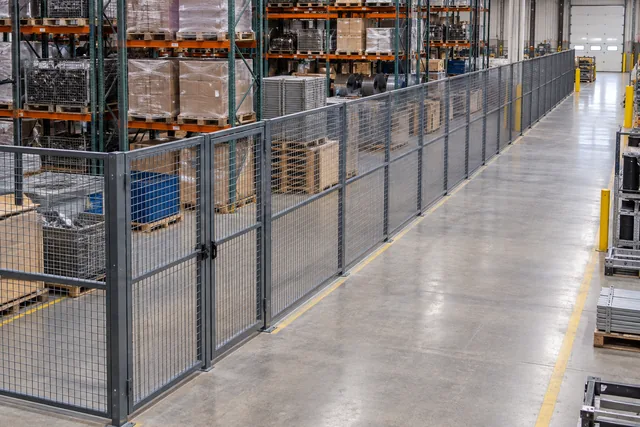
Industrial Partition Walls: Dividing a Warehouse Without Blocking Work
An industrial partition layout should define the area that needs separation while preserving the movement, access and services required around it. Start with the reason for the boundary and the work performed on both sides. A partition is most useful when its doors and dimensions fit the operation it encloses.
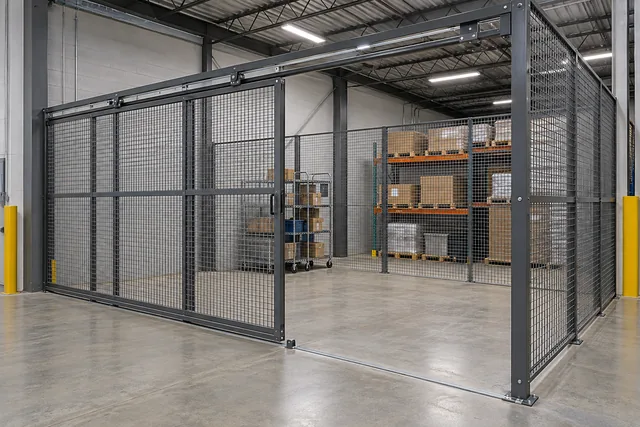
Sliding vs Swing Gates for Warehouse Partitions
Choose a partition gate by its clear opening, operating space and access task. A swing gate needs room for its leaf to move; a sliding gate needs an appropriate travel and support arrangement. Neither should be selected from opening width alone.
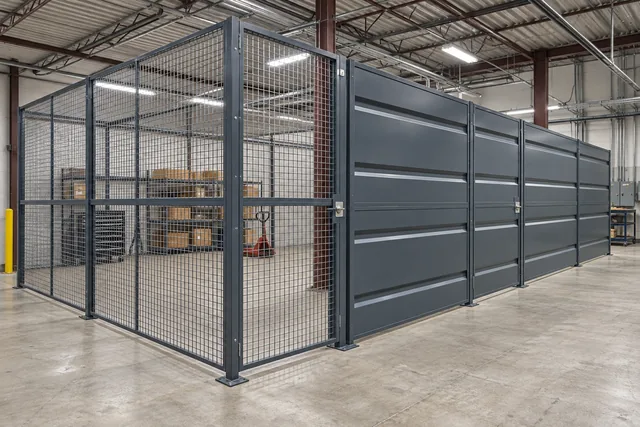
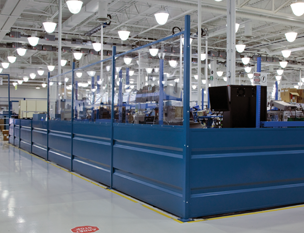
Wire Mesh vs Sheet Metal Partitions: Visibility or Privacy?
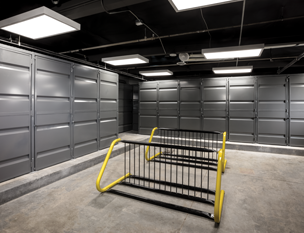
Wire-mesh partitions provide a visible, open enclosure; sheet-metal partitions provide an opaque boundary. The choice starts with whether the area needs visibility, privacy or a defined combination. Then review access, support and the specific hazards or security requirements of the application.
© 2025 Cogan Wire and Metal Products Ltd., all rights reserved.