


Cogan Blog
Insights, guides, and industry trends on mezzanines, industrial storage, and warehouse optimization.
Articles are compiled from publicly available industry sources for informational purposes only. Images are illustrative and actual products may vary.
Guardrail vs Handrail: Which System Does Your Warehouse Need?
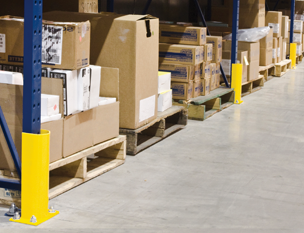
A handrail provides a graspable support for a person. A fall-protection guardrail forms a protective boundary at an exposed edge. A warehouse impact guardrail is selected to help protect people, equipment or areas from vehicle contact under specified conditions. These functions are different even when a product name includes the same word: rail.
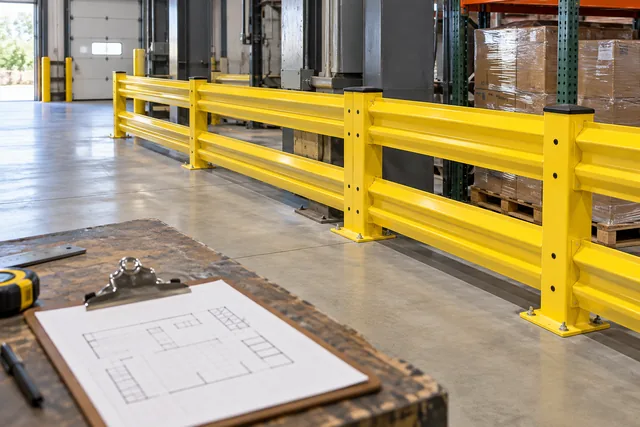
Warehouse Guardrail Cost: What a Complete Quote Should Include
Warehouse guardrail cost depends on the configured system and installation scope, not only the length of rail. Posts, corners, rail levels, access openings, anchoring, delivery and site work can all change the total. A useful comparison begins with the same measured layout and requirements for each quotation.
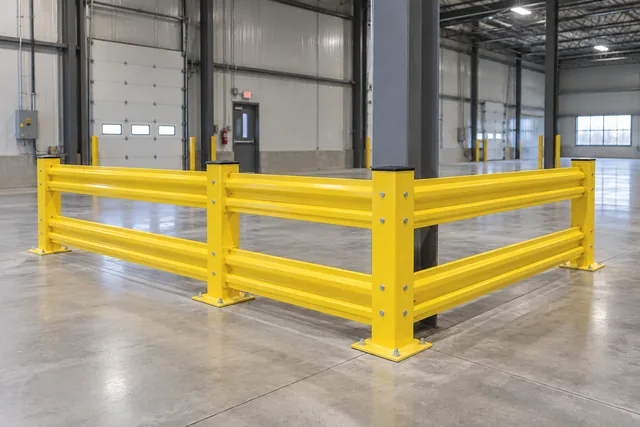
Warehouse Guardrail Installation: What to Survey Before Ordering
Before ordering warehouse guardrails, survey the floor, the proposed post positions, the surrounding traffic and the access that must remain available. The survey helps the supplier specify a complete system and helps the installer identify issues before drilling begins. It does not replace the installation manual or project-specific engineering.
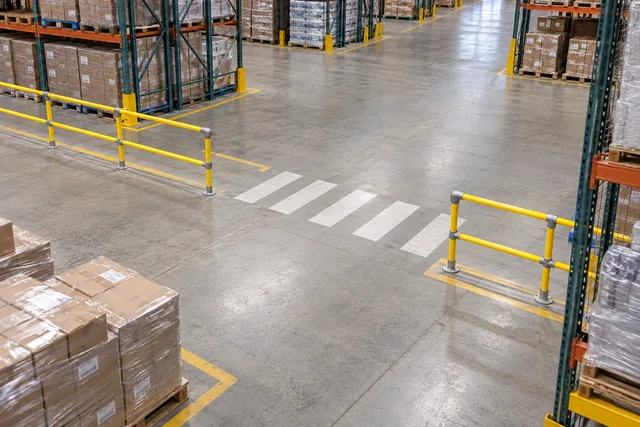
Warehouse Traffic Management: Where Barriers Fit in the Plan
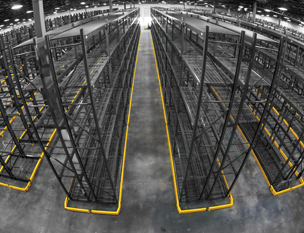
Warehouse traffic management combines routes, operating practices and physical layout. Barriers can help define boundaries and protect selected areas, but they should be placed as part of that wider plan. Start with the movement of vehicles, loads and people, then decide where a physical boundary will improve the arrangement.
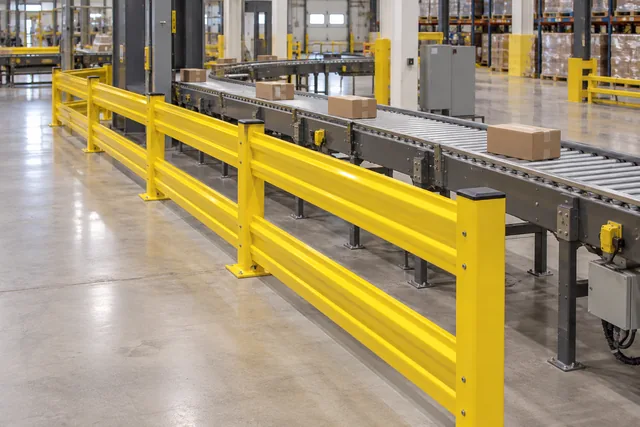
Guardrails Around Conveyors and Production Equipment
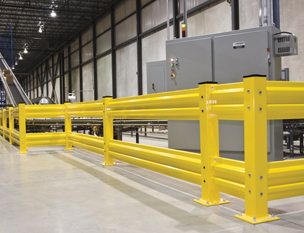
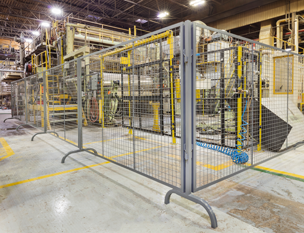
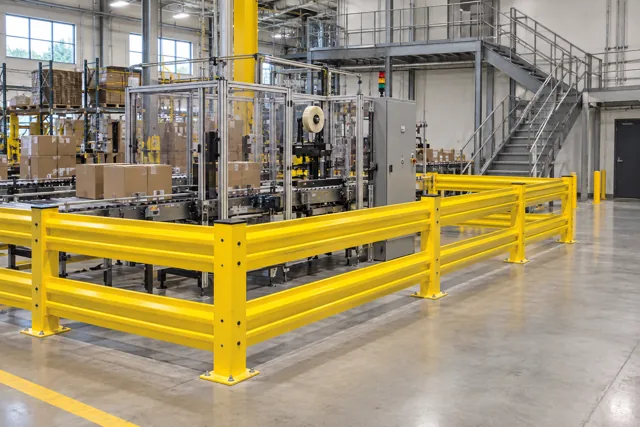
Guardrails around conveyors and production equipment should address vehicle exposure while preserving operation, inspection and service access. They do not replace the machine's own safeguarding. A useful layout treats the vehicle boundary and the machinery hazard controls as related but separate design questions.
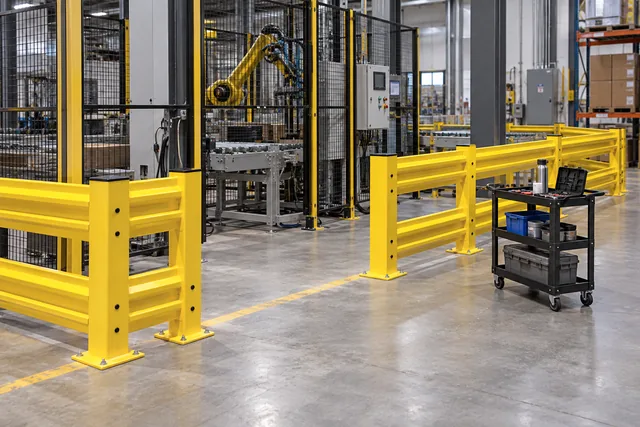
Removable Warehouse Guardrails: Planning Maintenance Access
A removable guardrail can provide temporary equipment access within a planned protective boundary. Its value depends on a defined opening, the correct manufacturer-specified components, and a clear process for controlling the area while the rail is out and restoring it afterward.
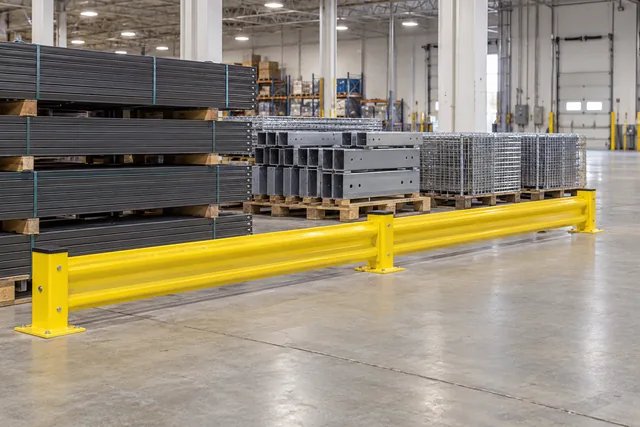
Single vs Double-Rail Guardrails for Industrial Facilities
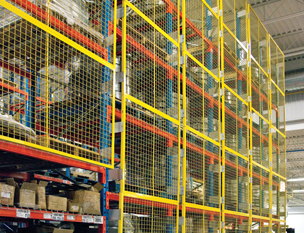
Single- and double-rail guardrails provide different vertical coverage. Choosing between them starts with the equipment or area being protected and the expected contact exposure. The number of rails does not, by itself, establish the complete system's impact performance or suitability for an elevated edge.
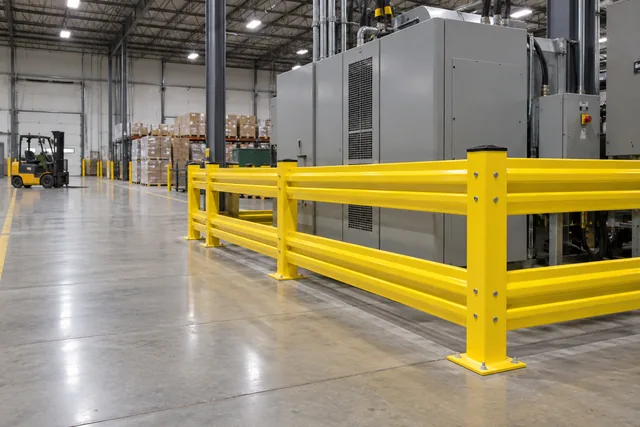
Forklift Barriers: How to Read an Impact-Rating Claim
A forklift barrier rating describes performance under specified conditions. It should be read with the tested configuration, vehicle mass, speed, impact direction and installation requirements. A headline number alone cannot establish whether a barrier suits a particular warehouse exposure.
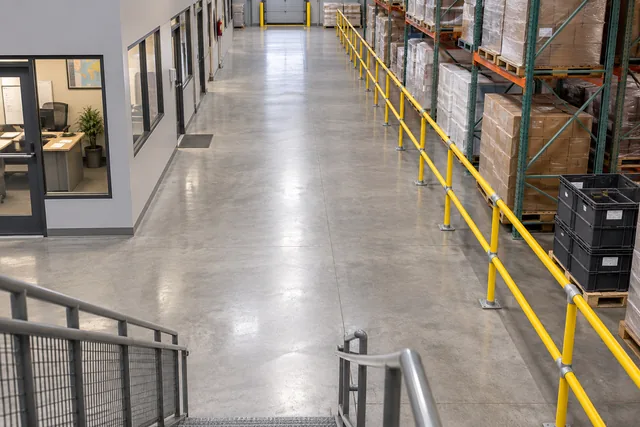
Pedestrian Safety Barriers: Planning Warehouse Walking Routes
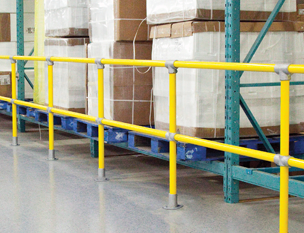
A pedestrian barrier should make the intended walking route clear and guide people toward planned crossings. Its layout must account for the places employees actually go, the vehicles they encounter, and the access needed for normal work. Choosing a rail is only one part of that plan.
© 2025 Cogan Wire and Metal Products Ltd., all rights reserved.